











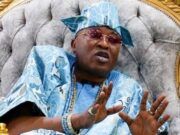





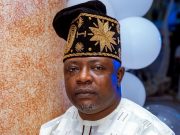














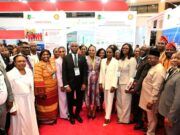







The Speaker of the Lagos State House of Assembly, Rt. Hon. Mudashiru Ajayi Obasa, has urged parliamentarians worldwide to convert commitments against hunger and malnutrition into concrete laws, budgets, and oversight mechanisms.
Obasa made this call at the Third Global Parliamentary Summit on Hunger and Malnutrition held 16 -17 November at the Parliament of Kenya in Nairobi. It is the first time the summit has been held in Africa.
Represented by a high-powered delegation of legislators, senior assembly staff, and senior legislative aides, Speaker Obasa shared Nigeria’s and Lagos State’s experiences and outlined both the legislative steps already taken and those still required.
“We are not treating the issues of hunger and malnutrition in Lagos or Nigeria with levity. Under President Bola Ahmed Tinubu’s Renewed Hope Agenda, the Federal Government has approved the National Nutrition Bill 2026 and the revised National Policy on Food and Nutrition.
“The approvals will help to establish a comprehensive framework for strengthening governance, sustainable funding mechanisms for nutrition programmes, improving institutional coordination, and ensuring effective implementation of food and nutrition interventions nationwide.”
On Lagos State’s part, Obasa noted that the state, with limited arable land and over 22 million residents, cannot significantly expand farmland. Instead, it is prioritising productivity, efficiency, and strategic partnerships through a five-point strategy centred on technology, interstate collaboration, investment in farmers, reduction of post-harvest losses, and improved access to affordable, nutritious food.
He highlighted major interventions by the state government, including the Imota Rice Mill, a large-scale agricultural and industrial facility located in Ikorodu, commissioned in January 2023.
With a capacity to produce 2.8 million 50kg bags of rice yearly while generating 1,500 direct jobs and 254,000 indirect jobs for residents and citizens alike, it stands as the largest rice mill in Sub-Saharan Africa and one of the largest globally.
Speaker Obasa also cited the ₦500 billion Offtake Guarantee Fund ‘Produce for Lagos’ Initiative, a state government-led collaboration with the private sector to tackle supply chain inefficiencies and enhance access to agricultural produce.
This also aims to provide working capital for bulk traders and logistics operators, and credit support for food producers across the state to ensure a stable food supply for Lagos and beyond while boosting private sector investment in agriculture and food systems.
As part of this initiative, the Lagos Fresh Food Hub, Obasa said, has already constructed and commissioned functional mid-level food hub facilities in Mushin, Abijo (Ibeju-Lekki), and Agege while construction of its 500-hectare central food logistics hub has reached 70 per cent completion.
The facility, located in Epe, Lagos State, is expected to feature cold-chain storage, dry-chain infrastructure and other facilities intended to improve food handling and distribution. It will also address challenges affecting the preservation, transportation, and distribution of agricultural produce.
On the legislative front, Speaker Obasa emphasised concrete actions already taken. “In September 2021, the Lagos State House of Assembly passed the Anti-Open Grazing of Livestock Law, which makes it unlawful for cattle rearers to occupy unapproved public areas and private land with their livestock for grazing. It also prohibits the act of moving cattle around public places by herders.”
Further, he said, “Through our Appropriation Laws, we have prioritised the agriculture and food systems sector, allocating more than ₦80 billion across recent budget cycles. We are currently advancing the Food Hub Bill, which will formalise market operations, reduce the constraints of informal trading, improve food safety standards, and strengthen coordination across the value chain.”
He added that legislation, adequate funding, and rigorous oversight remain essential: “As legislators, we back every effort to combat hunger and malnutrition with concrete laws and oversight. The Lagos State House of Assembly will continue to deepen this work. We will maintain and increase budgetary allocations for resilient agrifood systems. We will strengthen oversight mechanisms and refine laws to promote climate-smart agriculture.”
He concluded by reaffirming Lagos State’s readiness to share experiences and collaborate with other legislatures: “Lagos stands ready to share its experiences, to learn from the innovations of other legislatures across the world, and to work in solidarity with every parliament represented here. Together, let us legislate for a hunger-free future.”
The two-day summit, organised by the Parliament of Kenya, the Food and Agriculture Organisation of the United Nations (FAO), and the Spanish Agency for International Development Cooperation (AECID), brought together more than 200 parliamentarians from over 60 countries. The theme was “Legislating for Resilient Agrifood Systems and Zero Hunger in a Changing Climate.”
In his keynote address, President William Ruto of Kenya said ending hunger requires legislation, budgets, and oversight, which are parliaments’ core responsibilities. He warned that Africa could account for nearly 60% of the world’s hungry by 2030 if action is not accelerated, despite holding more than 60% of the world’s remaining uncultivated arable land.
He further called for domestic resource mobilisation, reduced reliance on food imports, stronger irrigation, expanded school feeding programmes, and laws protecting food-security programmes from political cycles. President Ruto underscored his message with the memorable line: “A right without a budget line is a slogan.”