










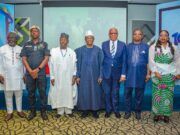













The International Press Centre (IPC) and the Nigeria Union of Journalists (NUJ), Oyo State Council, have charged journalists to move beyond routine campaign coverage and embrace issue-based, citizen-centered, and accountability journalism ahead of Nigeria’s 2027 general elections.
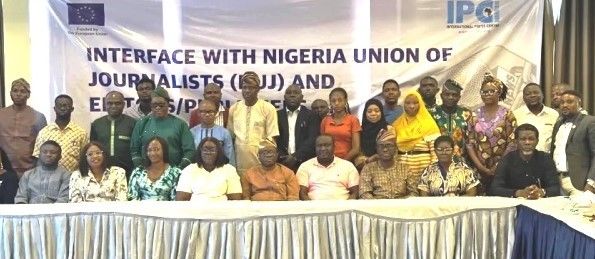
The call was made during an interface with journalists, editors and publishers on Professional and Democratic Accountability Journalism ahead of the 2027 General Elections, organised by the IPC in Ibadan, Oyo State, under Component 4 (Support to Media) of the European Union Support to Democratic Governance in Nigeria (EU-SDGN) programme.
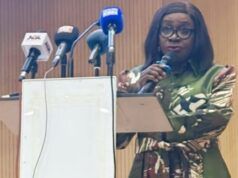
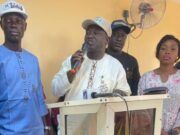
In his welcome remarks delivered Melody Lawal, the Executive Director of the IPC, Mr Lanre Arogundade, said the approaching elections presented an important opportunity for media practitioners to reassess their reporting approaches and strengthen their capacity to provide citizens with credible, balanced, inclusive and public-interest information.
He noted that elections went beyond political campaigns, rallies, candidates and the announcement of results, stressing that they also involved citizens’ aspirations, concerns and expectations of leadership, as well as their right to make informed decisions about the country’s future.
According to him, the media has a strategic responsibility to facilitate informed public discourse, scrutinise political promises, hold public officials accountable and ensure that citizens’ voices are adequately represented in the democratic process.
Arogundade warned that sensationalism, unverified claims, inflammatory rhetoric and the unchecked spread of misinformation and disinformation could undermine public confidence, deepen social divisions and weaken democratic institutions.
He, therefore, urged journalists to move beyond event-driven electoral coverage to more substantive reporting that interrogates campaign promises, examines candidates’ manifestoes, verifies political claims and monitors the performance of elected officials.
He challenged media organisations to give greater attention to issues affecting Nigerians, including the economy, education, healthcare, security, employment and infrastructure, rather than concentrating disproportionately on political rallies, defections and other campaign activities.
The IPC executive director also called for more inclusive electoral reporting, urging journalists to ensure that women, young people, persons with disabilities and other often-underrepresented groups receive adequate visibility in political discourse.
On the changing information environment, Arogundade observed that digital platforms had created new opportunities for information sharing and public participation but had also increased the speed and scale at which false information, manipulated content, hate speech and divisive narratives could spread.
He stressed that fact-checking and verification must remain integral to responsible electoral reporting, cautioning journalists against sacrificing accuracy for speed.
He further emphasised the need to protect journalists’ safety and professional independence, noting that media practitioners should be able to carry out their legitimate duties without intimidation, harassment or unlawful interference.
Arogundade urged participants to contribute actively to the engagement by sharing experiences, asking critical questions and developing practical strategies for improving electoral reporting across print, broadcast and online media.
He said the success of the engagement should be measured not merely by attendance or the quality of discussions, but also by the stories published, claims verified, citizens’ concerns amplified and accountability questions raised in the months leading to the 2027 general elections.
He expressed appreciation to the NUJ Oyo State Council for its support in facilitating the engagement, thanked the resource persons for accepting the invitation and acknowledged the European Union for providing funding support for the programme.
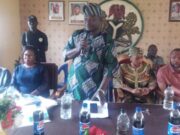
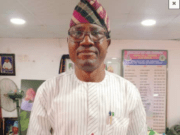
In his remarks, the Chairman of the NUJ Oyo State Council, Mr Akeem Abas, similarly urged journalists to embrace professionalism, accuracy, fairness and accountability in their coverage of the 2027 electoral process.
Abas commended the IPC for convening the interface, describing it as a timely initiative to prepare journalists for their responsibility in strengthening democratic accountability.
He maintained that journalists must move beyond reporting political rallies, defections and campaign promises to interrogating candidates’ manifestoes, testing political claims against facts and tracking campaign promises against measurable government action.
He said citizens deserved reliable information on issues that shape their daily lives, particularly security, education, healthcare, unemployment and the economy.
The NUJ chairman also warned against the dangers of misinformation, disinformation and fake news, insisting that speed must never take precedence over accuracy, sensationalism must not replace substance, and political interests must not compromise professional judgement.
Abas emphasised the importance of conflict-sensitive reporting, urging journalists to use language that promotes peaceful participation rather than inflaming political tensions. He added that media practitioners must hold all political actors accountable without fear or favour and protect their credibility through strict adherence to professional ethics.
Highlighting the NUJ Oyo State Council’s commitment to professional development, Abas said his administration had promoted capacity building in digital journalism and artificial intelligence, encouraged responsible reporting and fact-checking, and advocated editorial independence, fairness and compliance with the NUJ Code of Ethics.
He added that the council remained committed to journalists’ welfare, professional development, constructive engagement with media chapels and stronger institutional unity.
According to him, a well-trained, ethical and adequately supported journalist is better equipped to serve the public interest.
Abas urged participating journalists to listen to citizens, identify their priority concerns, amplify their voices and deploy accountability scorecards to assess political promises and monitor government performance.
He also called for stronger collaboration among the IPC, NUJ, the Nigeria Association of Women Journalists (NAWOJ) and media organisations to promote transparent, responsive and accountable governance.
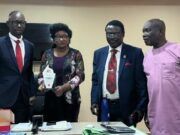
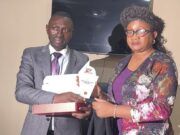
In recognition of Arogundade’s contributions to press freedom and professional journalism, Abas announced plans to honour him at the grand finale of the NUJ Oyo State Council’s 60th anniversary celebration scheduled for November 7, 2026, in Ibadan.
The Diamond Jubilee celebration is themed, “Oyo NUJ @ 60: Celebrating the Past, Defending the Present and Shaping the Future.”
Abas said the planned recognition reflected Arogundade’s contributions to strengthening the journalism profession and advancing press freedom.
He urged journalists to approach the 2027 electoral process with courage, fairness, accuracy and professionalism, stressing the need to verify every political claim, track campaign promises and scrutinise government performance.
He noted that journalists’ responsibility extended beyond reporting elections to helping protect the integrity of the democratic process through credible, ethical and accountable journalism.
Both the IPC and the NUJ reiterated the importance of placing citizens at the centre of electoral reporting and strengthening the media’s role in promoting democratic accountability ahead of the 2027 general elections.
Packaged by Adekunle Adegboyega