




















































The National Orientation Agency (NOA) has reaffirmed its commitment to advancing disability inclusion in Nigeria, with the Director General, Mallam Lanre Issa-Onilu emphasising that the absence of perfect data must never delay meaningful action.
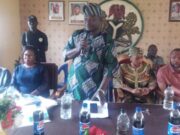
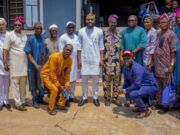
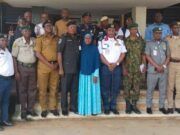
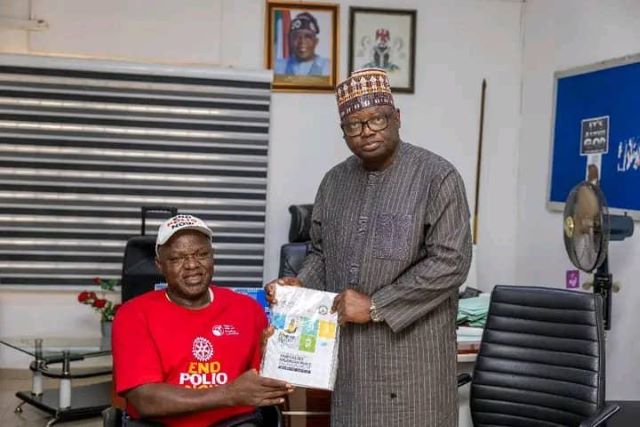
The DG NOA made this commitment during a courtesy visit to the Agency by the National Commission for Persons with Disabilities (NCPWD), where he also stressed that accessible facilities—such as inclusive building design, dedicated parking spaces, and user-friendly public amenities—should be implemented proactively in line with already existing relevant laws.
The DG called for a shift from charity-based support to empowerment, insisting that people with disabilities (PWDs) be equipped with the knowledge, skills and confidence to assert their rights and live up to their full potentials at local and national levels.
He also underscored the importance of political and social inclusion, urging the removal of systemic barriers that restrict full participation of PWDs in society. He warned against tokenism, calling instead for a society where accessibility, dignity, and full participation are guaranteed for all.
Issa-Onilu highlighted the NOA’s extensive nationwide presence, media platforms, and grassroots structures as key assets that can help drive awareness, sensitisation, and community-level engagement regarding the rights of people with disabilities.
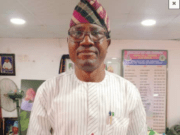
In his response, the Executive Secretary of the National Commission for Persons with Disabilities, Hon. Ayuba Burki Gufwan, expressed deep appreciation for NOA’s support and reaffirmed his Commission’s readiness to strengthen cooperation with the Agency to ensure full implementation of the Discrimination Against People with Disabilities (Prohibition) Act, 2018.
He highlighted the chronic challenges confronting PWDs, including unreliable population data, underfunding, low staff remuneration, incomplete enforcement of accessibility standards, and limited employment opportunities.
He noted that while census figures once placed Nigeria’s PWD population at 2.6 million, current estimates range between 35.5 and 38 million far higher than officially recorded. Drawing a comparison with South Korea, she explained how strong institutional backing and employment guarantees ensure that no PWD is left behind, urging similar standards for Nigeria.
The Executive Secretary stressed that disability inclusion should extend to all who are committed to supporting PWDs, not just those living with disabilities themselves.
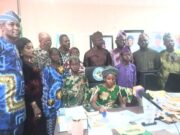
Both organisations agreed on the urgent need for concrete action, stronger public sensitisation, and systemic adjustments to build a more inclusive, equitable society for millions of Nigerians living with disabilities.
To this end, it was agreed that a Joint Committee of the NOA and NCPWD be established to design areas of collaboration to enhance nationwide awareness, strengthen implementation of the Disability Act, and ensure full inclusivity of PWDs in national life.
Federal Ministry of Information and National Orientation, Nigeria Lanre Issa-Onilu National Commission for Persons with Disabilities- NCPWD, Nigeria.