

































































President Bola Tinubu has assured state governments that he will not assent to the Central Gaming Bill just passed by the National Assembly.
He insisted that lottery and gaming do not fall within the Constitutional responsibility of the federal government.
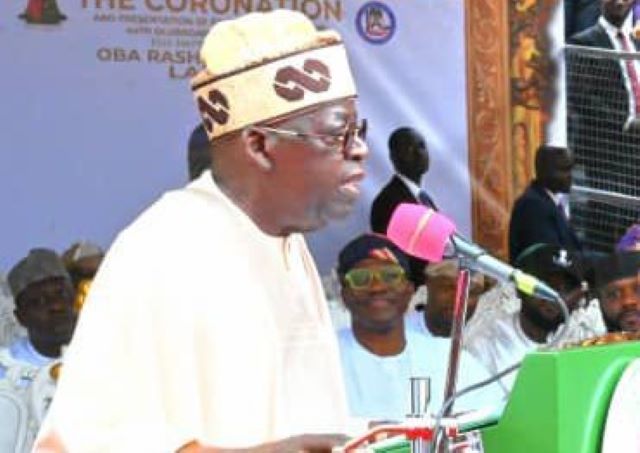
The President spoke in Abuja during the All Progressives Congress (APC) National Executive Committee (NEC) meeting on Friday.
He stressed that, as a “constitutional democrat,” he understood the limits of his executive and legislative authority.
“I know where my constitutional powers start and where they end,” Tinubu told party leaders, including governors and federal lawmakers.
The National Assembly on December 2, passed the Central Gaming Bill, which seeks to grant the Federal Government powers to regulate lottery and gaming activities across the states and the Federal Capital Territory (FCT).
The move, however, has drawn sharp criticism, particularly from the Lagos State Government.
Through its Attorney-General, and represented by legal luminary, Chief Wole Olanipekun (SAN), Lagos wrote to the Attorney-General of the Federation (AGF), Prince Lateef Fagbemi (SAN), warning against presidential assent to the bill.
The letter cautioned that signing the bill into law would amount to a disregard of a subsisting judgment of the Supreme Court, which last year nullified the National Lottery Act on the grounds that it fell outside the legislative powers of the National Assembly.
In the December 12 letter, Olanipekun specifically urged the AGF to advise President Tinubu to withhold assent, arguing that the new bill was illegal and unconstitutional in light of the apex court’s decision that lottery is a residual matter reserved for state governments.
Speaking at the APC NEC meeting, President Tinubu appeared to align with that position, despite the fact that the executive arm and the majority of lawmakers belong to the same political party.
He said: “What I want you to forget is centralised lotto. Go and read the Constitution again. It is a residual matter.
“Residual matters belong to the legislative authority of the states.”
He warned proponents of the bill to desist from further action, making it clear that he would not sign the legislation it transmitted to him.
“Don’t tread near it. There’s no need for us to argue. I am a constitutional democrat. Lottery, lotto law, centralised lotto, gaming, whatever it is, I have read it. I know it is coming, and I won’t sign it,” President Tinubu said.
Olanipekun, in his letter to the AGF, reminded the Federal Government of its duty to uphold and defend the judgments of the Supreme Court, particularly in Suit No. SC.1/2008 between the Attorney-General of Lagos State and others versus the Attorney-General of the Federation and others.
He recalled that the apex court, in a unanimous judgment delivered on November 22, 2024, nullified the National Lottery Act, holding that the National Assembly lacked the constitutional vires to legislate on lottery and gaming.
The senior advocate expressed concern that, despite the judgment, the National Assembly went ahead on December 2, to pass another legislation on the same subject, styled as the Central Gaming Bill.
Olanipekun wrote: “We are further informed that the said legislation purports to repeal the National Lottery Act, as if it were an existing law that had not already been nullified by the Supreme Court.
“For emphasis, and as rightly acknowledged by your good self at the commencement of the Supreme Court legal year, the National Lottery Act ceased to exist as law on November 22, 2024, when the Supreme Court delivered its judgment in SC.1/2008. The National Assembly cannot subsequently purport to repeal what is no longer in existence.”
He added that the Central Gaming Bill also seeks to regulate online gaming and lottery, as well as gaming activities across state boundaries.
It proposes that revenues generated be distributed by the federal government rather than paid into the Consolidated Revenue Fund, contrary to constitutional provisions on revenue allocation.
Olanipekun noted that the Supreme Court had “flatly rejected” the argument of the AGF and the National Assembly that lottery and gaming qualify as economic activities carried out online or across state boundaries, which would justify federal regulation.
Credit: thenationonlineng.net