









































![L-R: Managing Director, BGL Securities Limited, Arnold A. Dublin-Green; Assistant Vice President, Financial Derivatives Limited, Dr. Ifeoma Nwokolo; CEO, Centre for the Promotion of Private Enterprise [CPPE], Muda Yusuf (speaker); Chairman of the Occasion, Chief Paul Usoro; Dean, Lagos Business School, Information Systems, Prof. Olayinka David-West; Managing Director/CEO, Financial Derivatives Company, Bismarck Rewane; Group Chief Branding & Communications Officer, Dangote Industries Limited, Anthony Chiejina at Dangote Petroleum Refinery & Petrochemicals IPO Roadshow tagged “Back to where it all began” in Port Harcourt. Rivers State on Monday, October 12, 2026…](https://pmparrotng.com/wp-content/uploads/2026/10/Dangote-imagee-180x135.jpg "As Dangote Refinery’s IPO Nears Close, Small Investors Take Center Stage")






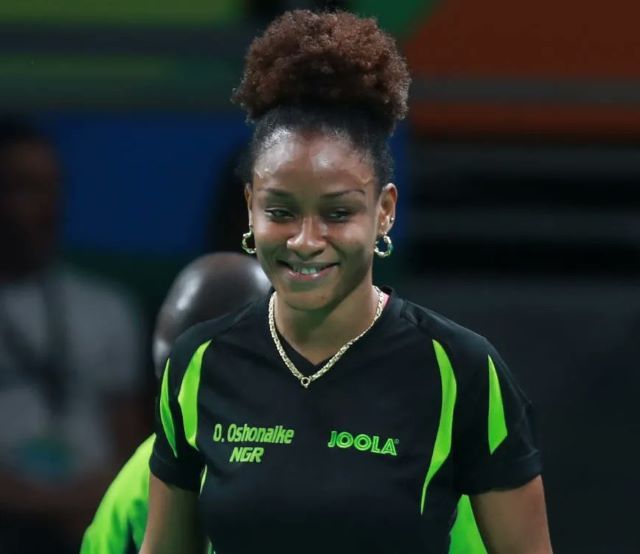
Nigerian table tennis legend Funke Oshonaike has called for severe punishment for athletes, coaches, parents, and sports administrators involved in age cheating, saying the practice undermines the credibility and development of Nigerian sports.
Oshonaike, a seven-time Olympian, said there was “no advantage” in reducing an athlete’s age, insisting that young athletes could succeed at the highest level without falsifying their ages.
Speaking on TVC News’ Diaspora Connect, the veteran athlete said age cheating had become a major problem in Nigerian sports and should no longer be tolerated.
“Reducing your age, there’s no advantage. I cannot see any advantage from it because it can be for now, but at later on, you’re going to really, really feel it,” she said.
Oshonaike pointed out that athletes as young as 15 and 16 were already winning world titles, questioning why Nigerian athletes should feel pressured to manipulate their ages to compete.
She also said responsibility for age cheating extended beyond athletes, with some coaches, administrators, and parents allegedly encouraging or supporting the practice.
“I think it is high time that Nigerians stop all these things. And I think the people that are supposed to be in charge in Nigeria, I think it is high time too, they ban, they discipline, and they punish anybody found doing something like that,” Oshonaike said.
She urged sports authorities to enforce stronger sanctions against anyone found guilty, arguing that accountability was necessary to restore integrity to Nigerian sports.
The former national champion also advised young athletes to concentrate on developing their abilities rather than seeking shortcuts.
“To a lot of young people growing up that want to go into sports, please, there’s no advantage in age cheating. Just concentrate, love the sport, be focused, be passionate, and be disciplined,” she said.
Oshonaike said Nigeria could produce more world-class athletes if greater attention was paid to grassroots development.
According to her, talent identification should begin in primary schools, with genuine competitions organised from the local government level through the states and eventually to national competitions.
“Everything has to start from grassroots. It is very, very important. But that is what we are not getting again in Nigeria,” she said.
She stressed that Nigeria had enough sporting talent and should focus on identifying and nurturing it rather than looking elsewhere for athletes.
“We have a lot of talent in Nigeria. We just have to nurture them like they nurtured me,” she said.
Oshonaike, who represented Nigeria at seven Olympic Games between 1996 and 2024, also reflected on her journey into table tennis and the challenges of combining education with elite sport.
She recalled starting the sport as a young girl in Shomolu, Lagos, before moving to a training camp in Kwara State in 1991. Her sporting commitments sometimes affected her education, but she eventually pursued higher education and later trained as a nurse in Germany.
She said her decision to pursue nursing was driven partly by her passion for helping people, adding that discipline and focus had been important throughout both her sporting and professional careers.
Beyond sports, Oshonaike used the platform to encourage women to support one another and become more involved in leadership.
She expressed hope that Nigeria would see more women elected to the Senate, more women become governors and, eventually, a woman emerge as president.
“Women, we are very, very strong together. We are strong. Believe me. Let’s stay together. Let’s work together. Let’s lift each other up,” she said.
For Oshonaike, the fight against age cheating is ultimately about protecting the future of Nigerian sport by ensuring that young athletes are allowed to develop honestly, compete fairly, and succeed on merit.
Credit: tvcnews.tv