



























Political leaders from the Northeast and North-Central geopolitical zones have begun consultations to mobilise support for President Bola Ahmed Tinubu ahead of the 2027 general elections, citing improved security and the administration’s contributions to their communities’ development.
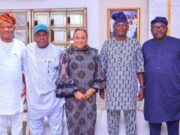
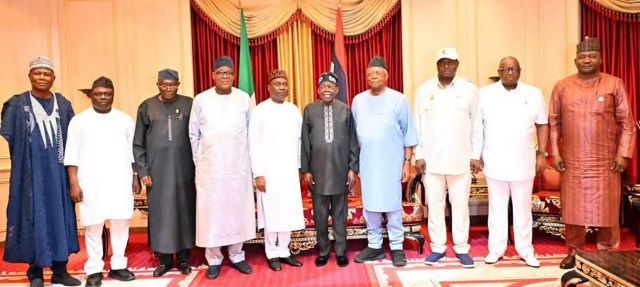
The leaders, led by elder statesman and former Minister of Defence, General Theophilus Danjuma (rtd.), met with President Tinubu at the State House, Abuja, on Thursday, where they discussed political cooperation, security, and other issues affecting their communities.
Among those in the delegation were Plateau State Governor Caleb Mutfwang; his Taraba State counterpart, Agbu Kefas; former Speaker of the House of Representatives, Hon. Yakubu Dogara; Minister of Defence, General Christopher Musa (rtd.); and National Chairman of the ruling All Progressives Congress (APC), Professor Nentanwe Yilwatda.
Speaking with journalists at the State House after the meeting, Dogara said the delegation visited the president to express solidarity with his administration and explore strategies to strengthen political support for him across their communities.
He said the consultations were particularly significant as political activities gathered momentum ahead of the next general elections.
“We’re all here to show solidarity to Mr. President and then, in the spirit of the season, which you know is all about politicking, to discuss matters that affect our community and how we can best help in mobilising support for the President, who has done so much for our community.
That is basically the reason why we’re here,” the former speaker explained.
Dogara also expressed satisfaction with what he described as remarkable improvements in the security situation across parts of the country previously affected by insurgency, banditry, and other violent crimes.
According to him, although isolated security challenges persist, sustained government interventions have considerably reduced the frequency and severity of attacks in several troubled areas.
He recalled the dangerous security situation along the Abuja-Kaduna corridor, where travellers previously faced frequent attacks and kidnappings, noting that the situation had substantially improved.
“The issues relating to insecurity that have accentuated over time—we have noticed that there is a remarkable decline in these issues.
“Of course, there are pockets of crisis in some places, short of declaring victory, but there has been remarkable improvement.
“To travel from here to Kaduna, everybody knows what it was. At one point, they even brought down a moving train, but right now, some of those crises are not there,” he said.
The former speaker attributed some of the improvements to the contributions of capable individuals appointed into strategic positions in the administration, particularly those familiar with the security challenges confronting affected communities.
He expressed optimism that continued commitment to the current interventions would produce more sustainable peace and stability.
“We believe that through some strategic placement of our sons and daughters within the government, they have shown remarkable leadership in dealing with these challenges.
“We believe that if these efforts are sustained going forward, we will arrive at a place where most of us will be very, very comfortable.” Dogara added.
Also speaking, Plateau State Governor Caleb Mutfwang said political and community leaders in his state were making significant progress in rebuilding trust and promoting reconciliation among communities previously divided by ethnic and religious tensions.
He explained that the renewed engagement among leaders was beginning to encourage similar cooperation at the grassroots, particularly among young people.
“We are making tremendous progress, trying to make sure that leaders come together at various levels to rebuild the broken walls of trust, to rebuild understanding.
“Once people begin to see that kind of cohesion among leaders, it inspires them. It cascades down, and so this is what we are doing at the moment,” the governor said.
Mutfwang noted that political leaders on the Plateau were deliberately demonstrating unity through regular engagement and consistent messages encouraging peaceful coexistence.
He said the approach was beginning to yield encouraging results, with youth leaders from different ethnic and religious backgrounds initiating dialogue independently of government intervention.
“I believe that for us on the Plateau, those of us who are in the front lines of leadership are trying to demonstrate that by being seen together, by saying the same things, and by urging people to unite, to come together.
“People are taking responsibility, even among the youths. We are seeing a new vista in that direction, where youth leaders across the divides of faith and ethnicity are beginning to have conversations without even government support,” he stated.
Describing the development as a significant breakthrough in the state’s peacebuilding efforts, Mutfwang expressed confidence that sustained dialogue, cooperation, and responsible leadership would help overcome longstanding divisions.
“This is quite encouraging to me that there is light at the end of the tunnel, and by the grace of God, we will continue to sustain these initiatives.
“Hopefully, a lot of the things that have happened in the past will become stories of the past, and we will be able to build a better, stable, and prosperous future,” the governor said.
Credit: thenationonlineng.net