
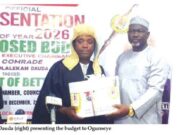

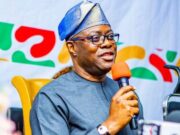






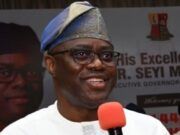
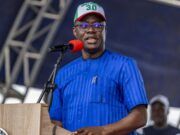


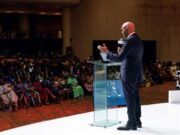



















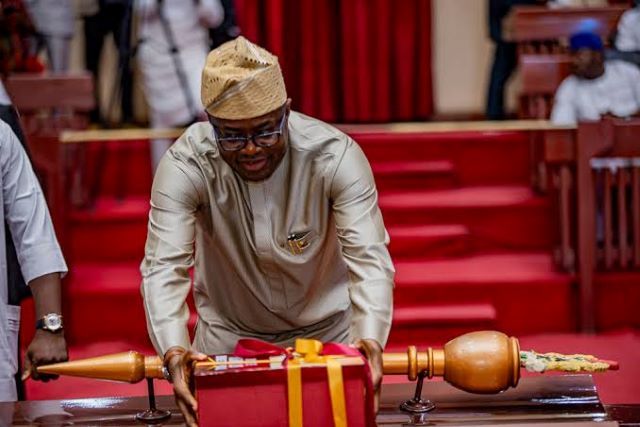
Oyo State Governor Seyi Makinde has presented a proposed budget of ₦1.15 trillion for the 2027 fiscal year to the Oyo State House of Assembly.
He described it as the “Budget of Sustained Progress” and the final budget presentation of his administration ahead of the May 29, 2027, handover.
Presenting the appropriation bill before lawmakers, Makinde said the budget was designed to consolidate the achievements of his government, sustain public services, and ensure continuity in the state’s development beyond his tenure.
The governor expressed appreciation to the people of Oyo State for giving him the opportunity to serve, noting that his administration had made significant progress since assuming office in 2019.
He recalled some of his government’s early decisions, including the removal of the ₦3,000 education levy previously paid by parents of senior secondary school students and the opening of the Freedom Bridge leading to the state secretariat, which he described as symbolic gestures of accessible and people-oriented governance.
Reviewing his administration’s infrastructure achievements, Makinde highlighted the completion of the 65-kilometer Moniya-Iseyin Road within the first two years of his government. He explained that the project was strategically designed to connect the state’s consumption and production corridors, reduce transportation difficulties, and improve access to markets for farmers and businesses.
On agriculture, the governor said his government established the Oyo State Agribusiness Development Agency to transform the sector from subsistence farming into a commercially viable enterprise.
He cited the Oyo State Agribusiness Transformation Centre at Fasola Farm Settlement, which he said had attracted investments worth over ₦20 billion and generated more than 1,000 direct and indirect jobs.
Governor Makinde also disclosed that the government had biometrically captured over 20,000 farmers, particularly women and other smallholder farmers, to improve access to government interventions and agricultural support.
The governor further highlighted collaborations with development partners, including the World Bank and African Development Bank, through programmes such as the Nigeria Community Action for Resilient Economic Stimulus (NG-CARES), Livestock Productivity and Resilience Support Project (L-PRES), and the Special Agro-Industrial Processing Zones (SAPZ) programme.
He also listed some of his administration’s achievements in revenue generation, education, and business development, disclosing that Oyo State’s internally generated revenue increased by over 288 percent, from ₦26.59 billion in 2019 to ₦103.25 billion in the last full financial year.
Makinde added that the state ranked fourth nationally in the 2025 Ease of Doing Business assessment and had brought approximately 65,000 out-of-school children back into classrooms through education interventions and partnerships.
Presenting the proposed 2027 budget breakdown, Makinde announced a total expenditure of ₦1,150,341,378,359.90, comprising ₦670.03 billion for capital expenditure, representing 60.07 per cent, and ₦445.31 billion for recurrent expenditure, representing 39.93 per cent, as stated in his presentation.
He explained that the capital allocation would support infrastructure and other development projects, while recurrent spending would sustain public institutions, personnel, and essential services.
The figures presented for the two expenditure components amount to approximately ₦1.115 trillion, leaving a difference of about ₦35.03 billion against the proposed total expenditure.
Under the sectoral allocations, infrastructure received ₦236.15 billion, representing 21.17 per cent of the budget, while education was allocated ₦195.53 billion, representing 17.08 per cent. Healthcare received ₦93.01 billion, representing 8.34 percent.
The governor said the allocations reflected his administration’s commitment to improving road networks, strengthening educational institutions, and expanding access to quality healthcare, while ensuring that existing infrastructure was properly maintained.
Looking ahead to the transition in 2027, the governor said his administration was preparing a roadmap for the continued development of Oyo State beyond May 29, 2027, urging residents to support continuity through his preferred political successor under the proposed Omituntun 3.0 agenda.
Governor Makinde, therefore, called on lawmakers to scrutinise the proposed budget in the interest of the people, reminding them that their decisions on its approval would have direct consequences for the state’s development.
He thanked the Assembly for its cooperation over the years and urged members to ensure that the budget reflected the needs and aspirations of the people of Oyo State.
Packaged by Adekunle Adegboyega