
























































In a bid to hasten solutions to power outages and disruptions across the country, the President Bola Tinubu-led Federal Government is planning to establish a national call centre where electricity consumers can lodge complaints and have them resolved.
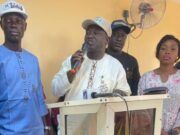
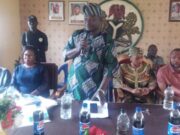
The Minister of Power, Chief Joseph Tegbe, disclosed this on Wednesday at the commissioning of a 3-megawatt hybrid mini-grid project and renewable energy workshop and training centre at the Yakubu Gowon University, formerly the University of Abuja.
According to a statement, Tegbe said the initiative would also provide a dedicated channel for reporting vandalism of critical electricity infrastructure for immediate action and remediation.
“My office is working on a call centre where electricity complaints across the country can be lodged and resolved. This initiative will provide sustainable job opportunities for our youth nationwide.
“In addition, we plan to provide a dedicated channel where vandalism of critical assets can be reported for immediate action and remediation. We are also working through a joint team of the Nigeria Police Force, the Nigeria Security and Civil Defence Corps, and the EFCC to curb the vandalism of electricity assets across the country,” the minister disclosed.
He urged students to support efforts to protect power infrastructure, particularly the newly commissioned solar facility.
“The promise of this investment now places a responsibility on all of us to preserve it. I expect the student community to support our ongoing efforts to stem the tide of vandalism. I therefore charge all of you to report any such act whenever you see it, not just on this solar system, but on other power assets such as transformers and transmission towers.”
The 3MW hybrid mini-grid came under Phase 2 of the Energising Education Programme, which covers seven universities and two teaching hospitals.
The Yakubu Gowon University installation comprises a 3.3MWp solar array with 3MW of AC output capacity and 2 megawatt-hours of battery storage to support critical loads after solar hours. It also includes a dedicated grid connection for non-critical demand outside daylight periods.
Tegbe said the project would benefit 58,726 students, while 388 streetlights installed under the project would improve campus illumination and security.
He said electrifying the university would strengthen research, reduce dependence on diesel generators and ease pressure on institutional budgets.
“This connection between infrastructure and human capability is central to President Bola Tinubu’s Renewed Hope Agenda. Under his leadership, investment in electricity is being directed towards services and productive activities that improve people’s lives.”
“This sustained investment is a testament to this administration’s constancy of purpose. Continuing a national programme through successive phases, bringing projects to completion, and preparing the next phase reflects the discipline that development requires. For the young people who depend on these institutions, that continuity matters. It means that the commitment to their future remains active beyond any single project or ceremony,” he said.
In his remarks, the Managing Director of the Rural Electrification Agency, Abba Aliyu, said the value of the Energising Education Programme went beyond the megawatts delivered, stressing its impact on functional laboratories, institutional budgets and safer learning environments.
“Over the years, the EEP has taught us that when you build, you have to think about what happens five years from now and whether the investment will continue to create value into the future.”
Aliyu said the Renewable Asset Management Company was the agency’s solution to the sustainability challenge facing renewable energy projects.
“The Renewable Asset Management Company is our solution. We must now become rigorous about asking how we protect and preserve the value of what we have built. RAMCO addresses this sustainability challenge. It recognizes that building infrastructure and managing it are two distinct responsibilities, and that modern renewable energy involves decentralisation.
The Federal Government has created a platform to manage, monitor, maintain and optimise assets over time. RAMCO cannot survive alone; it requires the support of all stakeholders in shared stewardship. The ultimate value of this project will depend not only on what we have installed, but on how well it is sustained,” the REA MD said.
He added that the agency had established a Renewable Energy Workshop and Training Centre to build local technical capacity.
Aliyu encouraged the university to turn the facility into a research hub for distributed energy resources by pioneering new academic courses, driving technological innovation and pushing the technical boundaries of the installation.
He revealed that the EEP had so far delivered over 100MW of power across 22 federal institutions and university teaching hospitals.
The Vice-Chancellor of the Yakubu Gowon University, Prof. Akinwunmi Fawehinmi, said reliable electricity is essential for effective teaching, research and a conducive learning environment.
He praised the Federal Government’s intervention and pledged that the university management would ensure the facility is fully utilised and maintained.
The Chairman of the Senate Committee on Power, Senator Enyinnaya Abaribe, also commended the project, saying it was critical to improving the quality of education across the country.
Abaribe also applauded the establishment of RAMCO, stating that sustainability is key to ensuring that projects continue to benefit Nigerians long after commissioning.
Credit: punchng.com