





































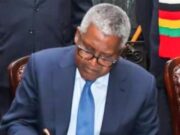





























It was a nostalgic day in Abuja as the Inspector General of Police Kayode Egbetokun reunited with one-time Force Public Relations Officer, Chief Tunji Alapini who retired as an Assistant Inspector General of Police and others.
The event was the 2025 Police Public Relations Officers’ Conference in Abuja on Monday.
It will be recollected that Sir Tunji Alapini, during his time as the FPRO in the early 1990s radically transformed the media department of the Police and recorded unprecedented, robust relationship between the media and the force. His office was then at Ijora, in Lagos.
At the conference, Egbetokun emphatically submitted that the police has suffered more reputational damage from misinformation.
The IGP at the same time expressed concern over the rising spread of fake news.
He bemoaned that recycled videos, edited images, and misleading online narratives are frequently circulated to portray the police in a negative light.
He said, “There is a growing trend of misinformation across digital platforms, where old videos are presented as recent events and edited images are passed off as truth. No public institution in Nigeria has suffered more reputational damage from misinformation than the Nigeria Police Force.”
He urged Police Public Relations Officers (PPROs) across commands and formations to respond swiftly and professionally whenever false narratives emerge, stressing that silence in the face of misinformation is no longer an option.

While noting that the office of the Inspector-General cannot respond to every distorted claim, he said the responsibility lies with PPROs to provide timely, accurate, and responsible clarifications at the point where falsehoods first surface.
Egbetokun described communication as an essential pillar of modern policing, adding that public trust and transparency now define the legitimacy of law enforcement agencies globally.
He warned that fragmented or delayed responses weaken the authority of the institution.
He charged the officers to be proactive rather than reactive, advising them to anticipate potential issues, prepare credible narratives, and engage the public early.
“You must issue swift, factual, and respectful rebuttals. Communicate with evidence, not assumptions. Every message must be accurate, verified, and aligned with our core values,” he said.
The IGP also cautioned on the need to balance transparency with operational security, stressing that sensitive investigations should not be compromised in the name of openness.
Egbetokun encouraged stronger collaboration with journalists, civil society groups, community leaders, and international partners, noting that the future of policing in Nigeria will be largely shaped by how well the Force communicates.
He said the Nigeria Police Force is undergoing wide-ranging, people-focused reforms centred on accountability, service excellence, human rights, and community partnership, and tasked PPROs with the responsibility of communicating these reforms clearly to the public.
He urged them to highlight not only crime statistics and enforcement successes, but also human-interest stories of compassion, rescue, mentorship, and sacrifice by officers.
He further emphasized the importance of internal communication, saying officers must fully understand new standards and reforms to boost morale and professionalism.
The annual conference brings together Police Public Relations Officers from across the country to review communication strategies, strengthen public engagement, and tackle emerging challenges associated with digital-era policing, misinformation, and crisis management.
Packaged by Olayinka Agboola with additional reports from thenationonlineng.net