










































The European Union delegation to Nigeria and ECOWAS has announced the roll-out of €288 million in support for Nigeria’s healthcare, agriculture, finance, migration, climate, and digital public infrastructure sectors.
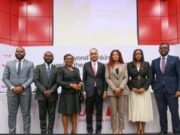
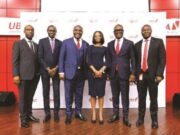
The announcement was made at an EU-Nigeria Ministerial news conference in Abuja, highlighting the EU’s new commitments under the EU-Nigeria Partnership.
The Director General, International Partnerships, European Commission, Mr Stefano Signore, described the funding as part of the EU’s Global Gateway Strategy, aimed at accelerating investment and strengthening key sectors.
“Though much has been done, more is expected to be delivered through the Global Gateway Strategies.
“Health and agriculture stand out in this respect as they join forces to improve standards, infrastructure, local manufacturing, and inclusion.
“We are also committing to stronger cooperation on sustainable migration by providing better life options to returnee migrants,” Signore said.
Earlier, the Minister of Budget and Economic Planning, Mr Abubakar Bagudu, said the event built on momentum from the 2023 EU-Nigeria Strategic Dialogue, which formally launched the EU’s Global Gateway Strategy in Nigeria.
“This moment signals a deepening of ties and a shared commitment to a modern partnership anchored on mutual respect, shared prosperity, and sustainable investment,” he said.
Bagudu, represented at the event by Dr Doris Anite-Uzoka, Minister of State, Budget and Economic Planning, added, “Our engagement has evolved toward a more investment-driven, result-oriented, and impact-focused framework that reflects both our ambitions and the realities of a rapidly changing global economy.
“Nigeria remains firmly committed to deepening this strategic relationship. Under President Bola Tinubu’s leadership, we are implementing bold macroeconomic reforms to stabilize the economy, strengthen fiscal sustainability, and create an enabling environment for private-sector-led growth.
“These include efforts to improve revenue mobilisation, enhance transparency in public financial management, rationalize expenditures, and strengthen the efficiency of our foreign exchange market.”
NAN reports that out of the 288 million euros, 23 million euros is for grant support for the Nigerian DPI.
“108 million euros is for the recent signatures of 22 million euros grant and 86 million euros loan to the Nigerian Government.
Furthermore, 50 million euros is for the recent signature of a lending Facility to the Bank of Industry to boost the development of a healthcare manufacturing project in Nigeria.
Also, five million euros is for a grant supporting training in health, pharma, and nutrition sectors.
Others are 85 million euros in a recent signature of a lending facility to the BoI to support on-lending operations in favour of agri-businesses in selected value chains, in particular dairy and cocoa.
One million euros is for an upcoming launch of a twinning project with the Ministry of Agriculture to bring in public sector climate/agriculture experts from Austria, Czech Republic, and Latvia.
“16 million euros will be for an additional contribution to support Nigeria’s efforts in improving and strengthening the sustainability of its migration governance framework.
This will focus on the reintegration of returning migrants and countering trafficking in human beings (THB) and smuggling of migrants (SoM).
Credit: NAN