































The Pentecostal Fellowship of Nigeria (PFN) has vowed to continue preaching in commercial vehicles across the country despite a controversial provision in the proposed Federal Road Safety Corps (FRSC) (Amendment) Bill, 2026, prescribing a ₦50,000 fine for anyone convicted of hawking, trading or preaching in commercial buses.
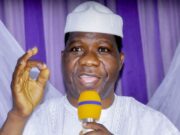
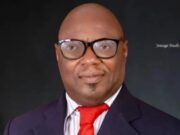
Declaring that the church would not be intimidated, PFN President Bishop Wale Oke said Christians were prepared to face arrest and imprisonment rather than abandon what he described as their divine mandate to preach the gospel.
The proposed amendment has triggered nationwide debate, with religious organisations, lawyers and other stakeholders divided over whether the provision is a legitimate road safety measure or an infringement on the constitutional right to freedom of religion.
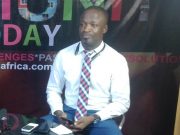
Speaking on Channels Television’s The Morning Brief on Wednesday, Oke insisted that no legislation could override the biblical command for Christians to evangelise.
“We will preach in buses. If they want to imprison us, let them come and arrest us. We are coming. We will preach in buses; they cannot stop us,” he said.
The cleric, who also leads Sword of the Spirit Ministries International, said preaching in public places, including commercial buses, remains one of the church’s most effective means of reaching people.
According to him, Christians would continue to proclaim the gospel irrespective of the consequences.
Defending comments he made in a viral video, Oke declared: “Make all the stadiums in Nigeria become a prison if you want to enforce that law. We are coming. We will preach in buses; we will preach everywhere.”
He described the proposed provision as an attack on the Christian faith rather than a genuine road safety initiative.
According to him, Nigeria’s Constitution guarantees freedom of religion and gives every citizen the right to profess, practise and propagate his or her faith.
The PFN president urged lawmakers to delete the controversial provision before the bill is passed.
However, the Senate has rejected claims that the amendment seeks to outlaw Christian preaching.
In a statement, the Upper Chamber explained that the provision is not new, noting that similar restrictions have existed since the enactment of the FRSC (Establishment) Act, 2007.
According to the Senate, the prohibition appeared as Item 36 of the Second Schedule to the 2007 Act and has merely been retained as Item 49 in the amendment bill currently before the National Assembly.
It also cited Regulation 220 of the National Road Traffic Regulations, 2012, which contains similar provisions regulating activities considered unsafe inside commercial vehicles.
The Senate maintained that the objective of the amendment is to improve road safety by discouraging activities capable of distracting drivers, obstructing passengers or creating avoidable risks during transit.
It stressed that the legislation is not intended to prohibit street preaching, open-air crusades, evangelism in markets or any other lawful religious activity outside commercial vehicles.
The Senate also clarified that the bill did not originate from Senate Leader Opeyemi Bamidele, explaining that it was passed by the House of Representatives and transmitted to the Senate for concurrence.
It urged religious bodies, civil society organisations and other stakeholders to take advantage of the legislative process by presenting their views before the bill is finally considered.
The controversy has continued to elicit mixed reactions across the country.
While some religious leaders insist that preaching should not be criminalised under any guise, supporters of the amendment argue that commercial vehicles are confined spaces where passengers should not be subjected to unsolicited religious messages or activities capable of distracting drivers.
Legal practitioners have also urged lawmakers to ensure that any restriction imposed in the interest of public safety is narrowly tailored and consistent with the constitutional guarantees of freedom of religion, freedom of expression and freedom of movement.
Observers say the debate underscores the delicate balance lawmakers must strike between protecting the rights of citizens to freely practise their religion and ensuring the safety and comfort of commuters on Nigerian roads. NigerianEntertainment Coverage
With the Senate still considering the bill, attention is expected to shift to public hearings where religious organisations, transport operators, legal experts and road safety stakeholders are likely to canvass divergent positions before the legislation is finalised.
Credit: thenationonlineng.net