



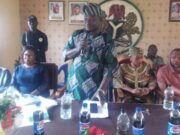

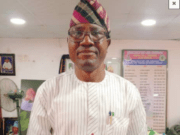












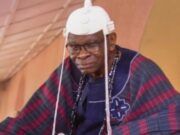










































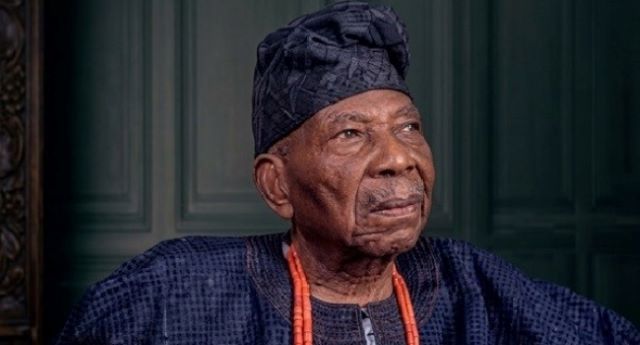
It is no longer news that Baba Reuben Fasoranti is no more. However, it is a matter of fact that occupied a distinctive place in Nigeria’s political history as an educator, nationalist, pro-democracy advocate and respected Yoruba elder statesman.
For decades, his name has been associated with Afenifere, the struggle for democratic governance, regional interests and the search for a more equitable Nigerian federation.
A proper appreciation of his life requires looking beyond his public stature to the principles, political struggles and historical experiences that shaped his influence.
Here are 12 important facts Nigerians should know about Pa Reuben Fasoranti, presented here:
- He lived through a century of Nigerian history
Born on May 11, 1926, Pa Reuben Famuyide Fasoranti died on October 20, 2026, at the age of 100. His lifetime spanned British colonial rule, Nigeria’s independence in 1960, the Civil War, successive military regimes and the restoration of civilian democracy in 1999.
His life therefore offers a remarkable window into the political and social transformation of modern Nigeria.
- He was an educationist before becoming a major political figure
Fasoranti’s first professional calling was teaching. He studied English and Geography at the University College, Ibadan, now the University of Ibadan. He subsequently obtained a postgraduate diploma in Education from the University of Hull in the United Kingdom and a master’s degree in Education Administration and School Management from Macquarie University in Australia.
His academic background equipped him with experience in teaching, administration and institution-building long before he became widely known as a political elder.
- He served as a teacher and school principal across southwestern Nigeria
Fasoranti taught at Ondo Boys’ High School, his alma mater, and worked in other educational institutions, including Oyemekun Grammar School, Iju-Itaogbolu Grammar School, Olivet Baptist School in Oyo and Christ’s School in Ado-Ekiti.
He spent years in school administration, including a lengthy period as the founding principal of Iju-Itaogbolu Grammar School. His career demonstrated a commitment to education that extended beyond the classroom into the management and development of schools.
- He established schools to expand access to education
Fasoranti did not abandon education after his retirement from formal teaching. He established Omolere Nursery and Primary School and Akure High School, among other educational initiatives associated with his family and legacy.
St. Frances’ Academy in Igoba, Akure, was also established in memory of his late wife. These ventures reflected his conviction that education was an important instrument for individual advancement and community development.
- He was a committed disciple of Chief Obafemi Awolowo
One of the defining influences on Fasoranti’s political outlook was Chief Obafemi Awolowo, the nationalist and former Western Region premier.
Fasoranti embraced the progressive political tradition associated with Awolowo, including its emphasis on education, social welfare, public accountability and political development. His association with Awolowo’s political family became a central feature of his public identity.
- He participated in politics during Nigeria’s First and Second Republics
Fasoranti was associated with the Action Group during the First Republic and subsequently with the Unity Party of Nigeria (UPN) during the Second Republic.
These affiliations placed him within the progressive political tradition that shaped much of southwestern Nigeria’s political development. His participation in these movements was not merely symbolic; he later occupied a significant position in the administration of the old Ondo State.
- He served as Ondo State Commissioner for Finance
Between 1979 and 1983, Fasoranti served as Commissioner for Finance in the administration of Governor Michael Adekunle Ajasin in the old Ondo State.
His tenure coincided with the UPN government’s pursuit of programmes associated with free education, healthcare, rural development and employment. President Bola Tinubu, in a tribute to Fasoranti’s centenary, praised his financial prudence and service in the Ajasin administration.
The appointment remains an important chapter in his public career because it connected his political convictions with the practical responsibilities of government.
- He became one of the most influential leaders of Afenifere
Fasoranti rose to become the leader of Afenifere, the Yoruba socio-political organisation rooted in the progressive tradition associated with Awolowo.
Following the death of Pa Abraham Adesanya, Fasoranti emerged as a leading figure in the organisation and became a prominent voice on Yoruba affairs and Nigeria’s political future. His leadership was particularly associated with calls for restructuring, true federalism, good governance and greater equity among the country’s constituent parts.
His years at the helm also coincided with disagreements and divisions within Afenifere, making his leadership part of a broader debate about representation and unity within the Yoruba political establishment.
- He stood against military dictatorship and supported the struggle for democracy
Fasoranti was among the prominent Yoruba leaders who opposed military rule and advocated a return to democratic governance.
During the military era, he was associated with the pro-democracy struggle and the wider movement for constitutional government. His political associates included activists who resisted authoritarian rule under General Sani Abacha. President Tinubu also recalled an assassination attempt linked to that period in a tribute to the late elder statesman.
His democratic credentials are an important part of his legacy, particularly given Nigeria’s history of military interventions in politics.
- He endured the painful killing of his daughter, Funke Olakunrin
One of the most painful episodes in Fasoranti’s later life was the killing of his daughter, Funke Olakunrin, in July 2019.
She was killed in an attack by gunmen along the Ondo–Ore road. Her death attracted national attention and intensified public concern over highway insecurity, violent crime and the protection of citizens travelling within the country. Till today, the killers have not been found.
The tragedy was a deeply personal loss for Fasoranti and his family. It also became part of the national conversation about the consequences of insecurity for ordinary Nigerians and prominent public figures alike.
- He documented his life and wanted history preserved for future generations
Fasoranti published his autobiography, which was presented publicly in September 2020 at an event attended by prominent Nigerian political figures, including former President Olusegun Obasanjo.
He also promoted plans for a digital library and a democratic institute intended to preserve historical records, encourage research and support democratic education.
These projects reflected an awareness that a nation’s history should not depend solely on oral recollections or the memories of surviving participants. Recording experiences and preserving documents can help future generations examine the successes, failures and lessons of Nigeria’s political journey.
- His legacy is a test of Nigeria’s commitment to principled leadership
Fasoranti’s death closes a remarkable chapter in the history of Yoruba political activism and Nigeria’s progressive movement. President Tinubu, in announcing his tribute on October 20, 2026, described him as a man of principle whose life was devoted to public service, true federalism and social justice.
Yet his legacy should be assessed not only through tributes or the length of his life. It should also be considered through the enduring questions he and his political generation raised: How should Nigeria distribute power? How can public institutions become more accountable? What role should education play in national development? And how can political leaders defend the public interest even when doing so carries personal risks?
These questions remain relevant long after his passing.
Packaged by Alice Egbedele