















































The Independent Corrupt Practices and Other Related Offences Commission (ICPC) and the Economic and Financial Crimes Commission (EFCC) on Tuesday told the Senate that the nation’s anti-corruption war is being severely constrained by chronic underfunding.
Both anti-graft agencies said prosecutors sometimes paid from their own pockets to attend court while investigations were stalled due to a lack of vehicles, forensic tools and manpower.
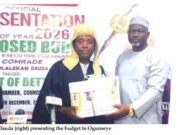
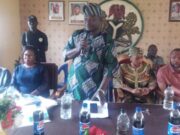
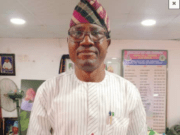
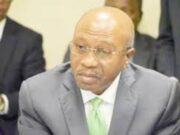
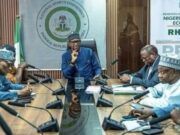
ICPC Chairman, Dr. Musa Adamu Aliyu (SAN), and the EFCC Executive Chairman, Ola Olukoyede, spoke during their 2026 budget defence session before the Senate Committee on Anti-Corruption and Financial Crimes.
They warned that the agencies’ ability to fight graft and improve Nigeria’s global corruption perception ranking was at risk.
“Our major challenge remains funding. Prosecutors sometimes use their personal money to go to court, and several investigations could not proceed as scheduled because we could not pay service providers,” Aliyu said.
The ICPC chairman said the commission’s personnel cost performance in 2025 was nearly perfect, with N10.13 billion released out of the ₦10.62 billion appropriated and N10.12 billion utilised, representing 99.96 per cent performance.
But he said overhead and capital releases were abysmally low.
“Only ₦2.2 billion out of the ₦7.82 billion overhead allocation was released, representing 28 per cent. For capital expenditure, only ₦449 million out of ₦7.3 billion approved was released, and that came late, on November 28, 2025,” Aliyu said.
Despite the constraints, the ICPC chairman said the commission recovered ₦33.1 billion in cash and $1.98 million, alongside assets, including land, vehicles, and businesses, filed 72 cases, secured 36 convictions and managed 453 ongoing cases.
He said the agency also received 1,107 petitions, assigned 700 for investigation and completed 250.
Aliyu attributed the gap between assigned and completed investigations to funding and manpower shortages.
“Some cases take two to five years to conclude. Funding constraints affect travel, document retrieval, forensic tools and manpower. We have to prioritise cases based on available resources.
“With adequate funding, infrastructure and manpower, the number of completed investigations will increase. Some lawyers even pay from their own pockets to prosecute cases.
“We prioritise prevention because investigations require significant funds and time. Human capital gaps in state offices also delay investigations,” he said.
The ICPC chairman also raised concerns about staff welfare and security, stating that one officer was recently kidnapped and remains in captivity.
“My staff morale is very low. Their welfare is poor. Yet, they investigate highly sensitive and risky cases.
“Two days ago, our staff member was kidnapped and is still in captivity,” he said.
Aliyu called for increased funding, improved infrastructure and better welfare for staff.
The chairman noted that some state offices were still operating from rented premises.
“Without adequate funding, there is no way this agency can effectively fight corruption. It will also affect Nigeria’s image globally,” he said, assuring lawmakers that all funds would be spent with strict fiscal discipline and tied to performance indicators.
Also, Olukoyede told the lawmakers that inadequate releases and unpaid obligations could hamper the commission’s operations this year.
He also told the committee that only 74 per cent of the commission’s total appropriation was released.
Olukoyede said capital releases were limited to 50 per cent last year, adding that many contractors and licence providers had not been paid.
“Most of our contractors have not been serviced, including licence providers. This will pose a major problem for us going forward because we need those licences to continue our work,” Olukoyede said.
The EFCC proposed a ₦88 billion budget for this year to comprise ₦22.8 billion for capital projects.
The EFCC chairman warned that outstanding payments for last year’s projects could stall implementation.
He announced outstanding severance liabilities for 32 retired officers amounting to about ₦3 billion.
Committee members expressed concern over the poor funding of anti-corruption agencies, promising to engage the Appropriations Committee to improve allocations.
“It is sad that funding for anti-corruption agencies is very poor compared to other countries. We will see what we can do to improve it,” Committee Chairman Emmanuel Udende said.
Credit: thenationonlineng.net