








































![L-R: Managing Director, BGL Securities Limited, Arnold A. Dublin-Green; Assistant Vice President, Financial Derivatives Limited, Dr. Ifeoma Nwokolo; CEO, Centre for the Promotion of Private Enterprise [CPPE], Muda Yusuf (speaker); Chairman of the Occasion, Chief Paul Usoro; Dean, Lagos Business School, Information Systems, Prof. Olayinka David-West; Managing Director/CEO, Financial Derivatives Company, Bismarck Rewane; Group Chief Branding & Communications Officer, Dangote Industries Limited, Anthony Chiejina at Dangote Petroleum Refinery & Petrochemicals IPO Roadshow tagged “Back to where it all began” in Port Harcourt. Rivers State on Monday, October 12, 2026…](https://pmparrotng.com/wp-content/uploads/2026/10/Dangote-imagee-180x135.jpg "As Dangote Refinery’s IPO Nears Close, Small Investors Take Center Stage")







Over the years, many reports have been published on the need to prepare Nigerian youths to become reasonably employable.
Towards this end, the Federal Government, on March 26, 1986 established the National Directorate of Employment (NDE).
However, its programmes commenced nationwide in January 1987.
NDE is supposed to be a Nigerian federal government agency established to tackle unemployment through skills development, entrepreneurship, vocational training, and job creation initiatives.
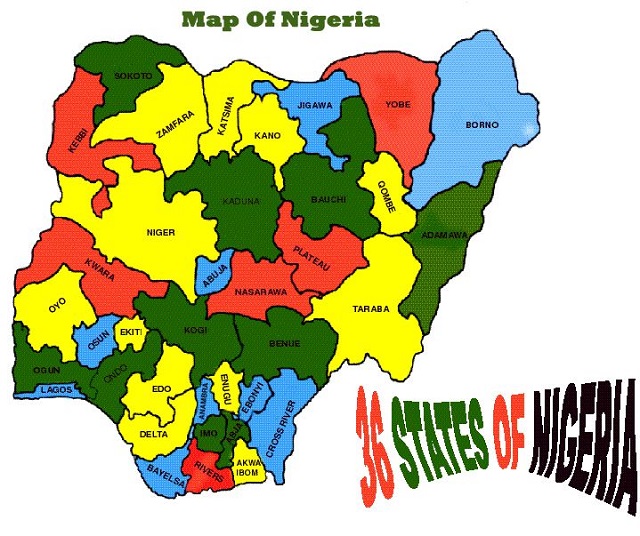
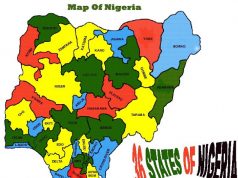
It operates under the supervision of the Federal Ministry of Labour and Employment and has offices in all 36 states and the Federal Capital Territory.
For now, the level of success achieved by NDE cannot be measured because it has failed to add value to Nigerian youths’ challenges of employability.
Recent moves by the President Bola Tinubu-led Federal Government to make technical education more attractive has not started to yield results.
In addition, FG also took a giant step to reform the National Youth Service Corps. Of course, several loopholes are still being looked into.
It is worrisome when governments at all levels in the country pay lip service to provision of employment for youths without backing it up with the political will.
Added to the problem on ground is the question of ‘how employable are Nigerian youths?’ The advent of ‘Boko Haram’ elements has not helped the situation.
By default, the problem of employability of Nigerian youths is being worsened because effective and efficient parenting is fast disappearing in the society. Rate of divorce, insecurity, increased poverty level and other factors are killing parenting.
Schools are not helping too because of the failure of governments – especially the Local Governments that are still struggling to acquire a level of autonomy. Primary schools that are supposed to provide necessary foundation for pupils are not exactly doing this.
Young ones are disregarding values and all they now want is to ‘get rich anyhow’.
Because of the failure of the Nigerian economy, the exchange status of the naira has not helped too.
In essence, out of 100 Nigerian youths putting up to be employed, only 10 per cent are actually employable – that is, these are the ones with the right academic and moral standings. Another 30 per cent are qualified equally but they are focused on traveling abroad for greener pastures. The other 60 per cent are un-trainable, untrustworthy, corrupted (from home and by politicians) and mentally unstable.
There is need for governments at all levels to begin to focus more on how to tackle these challenges for the sake of the future of Nigeria as represented by these youths. A stitch in time, they say, saves nine!
Long live the Federal Republic of Nigeria!

![L-R: Managing Director, BGL Securities Limited, Arnold A. Dublin-Green; Assistant Vice President, Financial Derivatives Limited, Dr. Ifeoma Nwokolo; CEO, Centre for the Promotion of Private Enterprise [CPPE], Muda Yusuf (speaker); Chairman of the Occasion, Chief Paul Usoro; Dean, Lagos Business School, Information Systems, Prof. Olayinka David-West; Managing Director/CEO, Financial Derivatives Company, Bismarck Rewane; Group Chief Branding & Communications Officer, Dangote Industries Limited, Anthony Chiejina at Dangote Petroleum Refinery & Petrochemicals IPO Roadshow tagged “Back to where it all began” in Port Harcourt. Rivers State on Monday, October 12, 2026…](https://pmparrotng.com/wp-content/uploads/2026/10/Dangote-imagee-100x75.jpg "As Dangote Refinery’s IPO Nears Close, Small Investors Take Center Stage")




[…] Nigerian Youths & The Challenge Of Employ-Ability Abductions At Oriire LGA In Oyo State: Why This Must Be Conclusively Dealt With Need For New Waste Management Regime In Nigeria The Dangote-NMDPRA Ruckus: Need For President Tinubu To Be Dispassionate Oba Rashidi Ladoja: Clear Sign Of Divine Love For Ibadanland […]