































































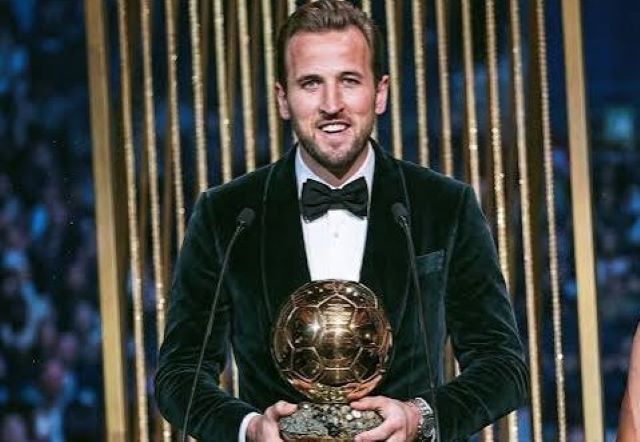
The 2026 Ballon d’Or ceremony will be remembered for historic victories, long-awaited recognition, the continued rise of football’s younger generation and the growing global influence of the women’s game.
Held on Monday, October 26, at the London Palladium in England, the 70th edition of football’s most prestigious individual awards celebrated outstanding performances during the 2025/26 season.
From Harry Kane’s breakthrough triumph to Alexia Putellas’ return to the summit of women’s football, here are 10 cogent takeaways from the 2026 Ballon d’Or ceremony.
- Harry Kane finally receives football’s ultimate individual recognition
The biggest headline of the night was the crowning of England captain and Bayern Munich striker Harry Kane as the 2026 men’s Ballon d’Or winner. At 33, Kane achieved a distinction that had eluded him throughout his illustrious career, becoming the first Englishman to win the award since Michael Owen in 2001.
His victory represents recognition for years of consistency, exceptional goalscoring and perseverance at the highest level. Having previously struggled to translate his remarkable individual statistics into major team honours, Kane’s success with Bayern Munich strengthened his case for the award.
- Goals, trophies and consistency remain a powerful combination
Kane’s triumph was supported by extraordinary numbers. He scored 61 goals in 51 appearances for Bayern Munich during the 2025/26 campaign, while his overall tally for club and country reached 73 goals.
Bayern’s domestic league and cup double also enhanced his credentials. His achievement reinforces an important lesson about individual awards: prolific scoring matters, but sustained excellence and meaningful contributions to team success can make a candidate even more compelling.
Kane’s season demonstrated that a player can combine individual brilliance with collective achievement and finally secure football’s highest individual honour.
- England celebrates a historic moment in football
Kane’s victory was also a landmark for English football. The country had waited 25 years for another men’s Ballon d’Or winner after Owen’s triumph in 2001.
The achievement gives English football a fresh source of pride and offers a reminder that the country’s leading players can earn recognition beyond domestic competitions. Kane’s success also highlights the importance of international performances, particularly after England’s run to the 2026 World Cup semi-finals.
For English football supporters, the award was more than a personal accomplishment; it was the end of a long national wait.
- Alexia Putellas reasserts her greatness in women’s football
Spain’s Alexia Putellas won the women’s Ballon d’Or for the third time, returning to the top after her previous victories in 2021 and 2022.
Her latest success reflects her quality, resilience and continued influence in the women’s game. Barcelona’s domestic achievements and European triumph contributed to a strong season, while Putellas’ attacking output further strengthened her candidacy.
The victory also places her alongside Aitana Bonmatí in the exclusive group of players to have won the women’s award three times. It is a significant achievement for a footballer whose career has included overcoming injury and maintaining elite standards in a highly competitive era.
- As expected, Lamine Yamal’s future looks increasingly promising
Barcelona’s Lamine Yamal won the men’s Young Talent of the Year award, reinforcing his reputation as one of football’s most exciting young players.
Yamal’s continued recognition demonstrates how quickly exceptional young footballers can establish themselves among the sport’s leading figures. His technical ability, creativity and confidence have made him an important player for both Barcelona and Spain.
However, the next challenge will be sustaining his development over several seasons. Young players often attract enormous attention after early success, but consistency, fitness, discipline and the ability to perform under pressure will determine whether Yamal eventually challenges for the main Ballon d’Or itself.
- Spain’s influence extended beyond the individual award
Spain enjoyed a particularly successful evening, with several of its football figures receiving major recognition.
Besides Putellas and Yamal, Spain coach Luis de la Fuente won the men’s Coach of the Year award, while goalkeeper Unai Simón received the Yashin Trophy. Barcelona’s Vicky López and Cata Coll also won the women’s young-player and goalkeeper awards respectively.
The results underline the strength of Spain’s football development system, from its youth structures to its senior national teams and leading clubs. They also show how national-team success and the production of technically gifted players can reinforce a country’s influence on the global game.
- Paris Saint-Germain and Barcelona underline the importance of collective excellence
The ceremony also recognised clubs whose achievements extended beyond individual brilliance.
Paris Saint-Germain won the men’s Club of the Year award, while Barcelona received the women’s equivalent. Their recognition reflects the importance of team organisation, player development, tactical execution and sustained performance in elite football.
The awards provide a useful reminder that individual stars do not operate in isolation. The quality of a club’s coaching, recruitment, medical support and playing structure can help its footballers deliver the performances that attract individual honours.
For clubs aspiring to compete at the highest level, success requires more than signing celebrated players; it requires building a system in which talent can flourish.
- The London venue gave the 70th edition historical significance
For the first time, the Ballon d’Or ceremony took place in London, marking a special moment in the award’s history.
The 2026 edition was the 70th anniversary of the prize, which was established by France Football in 1956. London’s selection also paid tribute to Stanley Matthews, the English football legend who became the award’s inaugural winner.
The setting connected the ceremony’s modern glamour with its historical roots. It was a reminder that football’s most celebrated individual prize has evolved considerably since its introduction, reflecting changes in the sport’s global reach, commercial influence and competitive landscape.
- Recognition extended beyond players to coaches and goalkeepers
The ceremony acknowledged that football excellence involves more than scoring goals or producing spectacular attacking displays.
Spain’s Luis de la Fuente won the men’s Coach of the Year award, while Unai Simón took the men’s Goalkeeper of the Year prize. Barcelona’s Pere Romeu and Cata Coll won the corresponding women’s coaching and goalkeeper awards.
These honours recognise the contributions of individuals whose influence can be decisive even when they receive less public attention than forwards and attacking midfielders.
A goalkeeper’s saves, a coach’s tactical decisions and the organisation of a defensive unit can determine whether a team wins or loses a major competition. Their recognition helps present a more complete picture of what success in modern football demands.
- Football’s social responsibility remains part of its wider legacy
Beyond trophies and statistics, the ceremony also acknowledged football’s potential to make a positive contribution to society.
England winger, Bukayo Saka received the Sócrates Award, which recognises humanitarian work and social initiatives. The award highlights the responsibilities that accompany fame, financial resources and influence in the modern game.
Footballers have the capacity to draw attention to social challenges, support vulnerable communities and inspire young people far beyond the pitch. Such contributions should not replace sporting excellence as a measure of a player’s career, but they can add another important dimension to a footballer’s legacy.
The recognition of humanitarian work is therefore a reminder that football’s influence extends beyond stadiums, television audiences and commercial sponsorships.
Conclusion: A ceremony of achievement, history and new possibilities
The 2026 Ballon d’Or ceremony delivered a compelling combination of individual milestones and collective recognition. Harry Kane’s triumph ended England’s 25-year wait for another male winner, while Alexia Putellas reaffirmed her standing among the greatest players in women’s football.
The honours awarded to Lamine Yamal, Spain’s coaching and goalkeeping figures, and leading clubs such as Paris Saint-Germain and Barcelona further illustrated the different ingredients required for success in modern football.
Ultimately, the ceremony celebrated more than a collection of trophies. It highlighted perseverance, consistency, youth development, teamwork and social responsibility. As football continues to evolve, the enduring question is whether this year’s winners can build on their achievements and inspire the next generation to reach even greater heights.
Packaged by Lanre Olabisi with agency reports