
































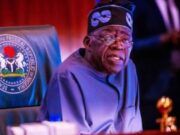








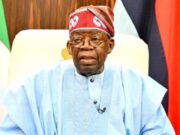











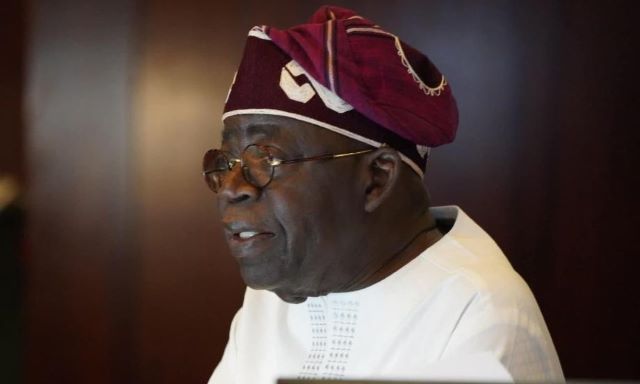
President Bola Tinubu on Wednesday reiterated his unwavering commitment to democracy and the rule of law for the purpose of a united Nigeria.
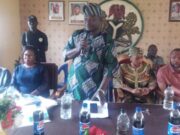
The President made the remarks while addressing leaders of the All Progressives Congress and the Inter-Party Advisory Council at the State House, Abuja.
A video of the meeting, shared by his Special Assistant on Social Media, Dada Olusegun, shows Tinubu describing himself as a “die-hard Democrat” dedicated to a united country.
“I’m a die-hard democrat, and I follow that belief wholeheartedly, committed to a united country, Nigeria. That principle and that philosophy will live and die with me.
“That I signed the Electoral Act, I have no choice,” he said, stressing that the law reflects the will of the National Assembly.
The President noted that he respects the legislative process and submitted himself to the principles of rule of law and democracy.
“I don’t want to throw the country into turmoil of argument… If I had serious questions or reservations in the body, I would have raised them. What I have known, I have submitted myself to the principle of rule of law, democracy,” he said.
Tinubu also encouraged cooperation and unity within the party, urging members to strengthen the APC platform.
“The game is sweet. Only when you are winning. It’s all right, we must accommodate one another, we must help one another, we must strengthen the platform.
“But democracy is it? Yes, there must be peace, stability, and commitment to rule of law,” he said.
PUNCH Online reports that the president’s address followed IPAC’s announcement last week that political parties may boycott the 2027 elections if controversial provisions in the Electoral Act 2026 are not amended.
IPAC National Chairman, Yusuf Dantalle warned that certain aspects of the law undermine party autonomy and multi-party democracy, potentially leading parties to reject election outcomes as illegitimate.
The amended Electoral Act, signed last month at the State House, Abuja, introduces several key reforms aimed at streamlining Nigeria’s electoral processes.
Among the major changes, it provides for mandatory direct primaries, requiring political parties to use direct primaries or consensus methods to nominate candidates, eliminating indirect delegate systems to promote broader participation.
It also includes a contentious provision permitting manual collation as backup for electronic transmission of election results to prevent “glitches” and “unnecessary hacking.”
The reforms follow months of heated debate in the National Assembly amid public outcry and opposition from various stakeholders.
While proponents argue that the changes strengthen democracy, Tinubu said during the signing that he closely followed the legislative process and saw no reason for delay.
Critics, however, contend that the act undermines electronic transmission despite public demand.
Credit: punchng.com