




















![L-R: Managing Director, BGL Securities Limited, Arnold A. Dublin-Green; Assistant Vice President, Financial Derivatives Limited, Dr. Ifeoma Nwokolo; CEO, Centre for the Promotion of Private Enterprise [CPPE], Muda Yusuf (speaker); Chairman of the Occasion, Chief Paul Usoro; Dean, Lagos Business School, Information Systems, Prof. Olayinka David-West; Managing Director/CEO, Financial Derivatives Company, Bismarck Rewane; Group Chief Branding & Communications Officer, Dangote Industries Limited, Anthony Chiejina at Dangote Petroleum Refinery & Petrochemicals IPO Roadshow tagged “Back to where it all began” in Port Harcourt. Rivers State on Monday, October 12, 2026…](https://pmparrotng.com/wp-content/uploads/2026/10/Dangote-imagee-180x135.jpg "As Dangote Refinery’s IPO Nears Close, Small Investors Take Center Stage")





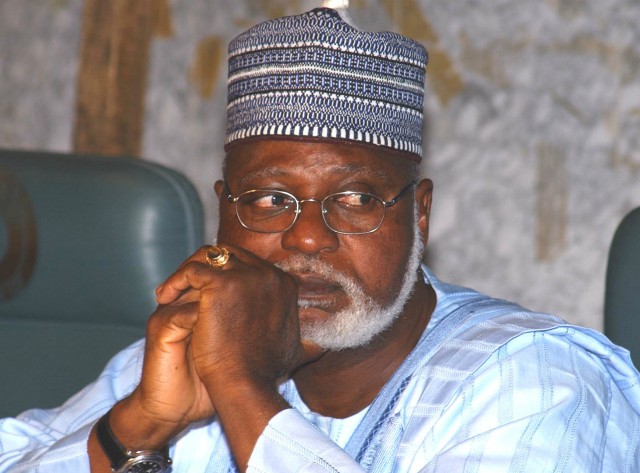
Former Head of State, General Abdulsalami Abubakar (retd.), has expressed the view that Nigeria might have achieved greater economic growth, development, and a stronger social order if the military government of Major-General Muhammadu Buhari and Brigadier Tunde Idiagbon had remained in power beyond its 20-month tenure.
Abdulsalami stated this in Chapter 10 of his autobiography, “Call of Duty: My Autobiography”, titled “One Coup after the Other,” where he reflected on the series of military interventions that shaped Nigeria’s political history and the growing politicisation of the armed forces during the era.
According to him, despite the excesses associated with the Buhari administration, the regime succeeded in restoring discipline, patriotism and public order at a time many Nigerians had become disillusioned with the civilian government it overthrew.
“We all have our opinions, but I believe the Buhari/Idiagbon government brought a lot of sanity to the country”, Abdulsalami wrote.
He said the regime introduced measures to promote law and order, including environmental sanitation exercises, orderly queues at public institutions, and stricter enforcement of public conduct regulations.
“Buhari was Head of State for 20 months. We all have our opinions, but I believe the Buhari/Idiagbon government brought a lot of sanity to the country. They were both disciplined men who tried to bring about law and order and promote patriotism among Nigerians”, he stated.
While acknowledging that the government was widely criticised for detentions without trial, media censorship, and harsh prison sentences imposed on politicians, Abdulsalami argued that the administration was attempting to address widespread national decay.
“Truly, the Buhari regime had its excesses. Nevertheless, Nigerians were impatient with the government. They felt it was too harsh. They didn’t like the way politicians were jailed, some given up to 500 years imprisonment. Human rights activists were detained without trial. The media were under censorship”, he noted.
Despite those shortcomings, the former Head of State maintained that the government was heading in the right direction before it was overthrown on August 27, 1985.
“If the Buhari regime had stayed longer, I have a feeling Nigeria may not be where it is today. Perhaps, there would have been at least some law and order in the country”, he wrote.
The retired general also disclosed that, contrary to widespread assumptions, he was completely unaware of the August 1985 coup that removed Buhari from office and brought his longtime friend and military colleague, General Ibrahim Babangida, to power.
He revealed that many expected him to be among the plotters because of his close relationship with Babangida, with whom he attended the same primary and secondary schools and later served in the military.
“For the record, I did not know anything about the coup”, Abdulsalami stated.
He added that he never asked Babangida why he was excluded from the planning, but believed the omission may have been deliberate to ensure someone remained outside the conspiracy who could “watch his back” if events went wrong.
“My gut feeling is that he might not have involved me in all he was doing as a way of allowing me to watch his own back. In the Military, we are taught to always have a backup position”, he explained.
Abdulsalami described the 1985 takeover as essentially a palace coup that removed only Buhari and Idiagbon, and noted that it was bloodless, unlike several earlier military interventions in the country.
Reflecting on the December 31, 1983 coup that brought Buhari to power, he recalled that he was on his way to Kaduna Airport to take his sick mother abroad for treatment when Brigadier Sani Abacha announced the overthrow of President Shehu Shagari’s administration.
According to him, Abacha’s broadcast cited corruption, economic mismanagement, unemployment, food shortages, decaying infrastructure and unpaid salaries as justification for the military intervention.
Although he maintained that he had never supported coups, Abdulsalami acknowledged that many Nigerians welcomed the change because they believed the civilian government had lost touch with the people’s welfare.
He said the repeated military interventions gradually drew the armed forces deeper into politics and exposed officers to enormous personal and professional risks.
The former Head of State revealed that he was interrogated during investigations into the alleged 1986 coup plot involving Major-General Mamman Vatsa because he happened to attend a social gathering in Port Harcourt where some of the conspirators were present.
He explained that he appeared before a Special Investigation Panel chaired by Brigadier Sani Sami and comprising, among others, then Inspector-General of Police, Gambo Jimeta, but was later discharged after providing satisfactory explanations.
Abdulsalami also recounted how he narrowly escaped becoming entangled in Major Gideon Orkar’s failed April 1990 coup attempt because he was in Saudi Arabia performing the lesser hajj when the mutiny occurred.
He disclosed that one of the plotters, Captain Steve Ihile, whom he knew personally, had encouraged him to pray for Nigeria during the pilgrimage. It was only after the coup failed that he discovered Ihile had been among those killed.
The retired general said the incident strengthened his conviction that coups were dangerous ventures that often left officers trapped regardless of their choices.
According to him, officers who declined to participate in a coup risked becoming targets if it succeeded, while those who failed to report a conspiracy could equally face punishment if it failed.
Abdulsalami further reflected on his service on the military tribunal that tried suspects linked to the Orkar coup, revealing that more than 800 military and civilian suspects appeared before the panel.
He said many of those brought before the tribunal appeared to be victims of circumstance, including soldiers and drivers who merely obeyed orders without any knowledge that a coup was underway.
The former military ruler noted that grievances cited by some of the plotters included allegations of marginalisation, lack of justice and equity, and perceptions that certain sections of the country dominated others politically and economically.
Credit: thenationonlineng.net