










































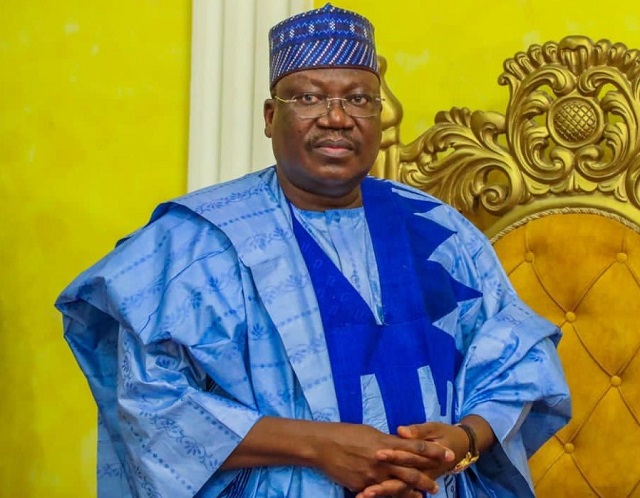
The plot to impose former Senate President Ahmad Lawan as the 2023 All Progressives Congress (APC) consensus presidential candidate collapsed because it was a ruse, the biography of former President Muhammadu Buhari has revealed.
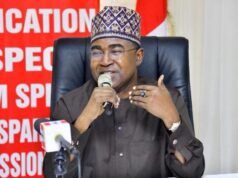
Book author Dr. Charles Omole who gave insights into the succession politics said the plot by some influential people close to the former leader was quietly but firmly stopped at the highest level.
The 600-paged book, which was launched in Abuja on Monday, also revealed how the Naira redesign was sold to Buhari ahead of electioneering.
A detailed account by former Inspectors-General of Police, Mohammed Adamu and Usman Alkali Baba, as well as Buhari’s former Chief Security Officer (CSO), Abubakar Idris, captured in the book titled: “From Soldier to Statesman: The Legacy of Muhammadu Suhari,” revealed the manipulating tendencies of some individuals who attempted to misuse the authority of the Presidency and security services to influence the outcome of the primary in Abuja.
On the eve of the shadow poll scheduled for Eagle Square, tension engulfed the APC National Secretariat and campaign offices of major aspirants as news filtered that Buhari had endorsed the former Senate President as successor.
Although there was jubilation in the Abuja residence of the former number three citizen, members of the National Working Committee (NWC) of the party challenged the former chairman, Senator Abdullahi Adamu, who informed them about the endorsement, for proofs.
Amid the anxiety, former Abia State Governor Orji Kalu and some party chieftains came on air to defend the consensus candidacy.
Miffed by the inexplicable news of endorsement, protesting APC governors stormed Aso Villa to demand confirmation from Buhari, who denied anointing any preferred candidate.
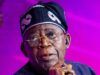
After the close of shadow poll, President Bola Ahmed Tinubu, who was elected candidate, reflected on the puroorted endorsement of Adamu, saying that he was nursing the wound of defeat during the primary.
IG Alkali Baba, who was interviewed by Omole in the course of gathering information for the biography, narrated how security agencies were mobilised for the ‘Lawan project.’
He recalled that on the morning before primary, the influential people approached the heads of the major security agencies – the IGP, the Director-General of the Department of State Services (DSS), and the Director-General of the National Intelligence Agency (NIA), claiming to be conveying a presidential order.
The former IG said the alleged instruction was for the deployment of security forces to “install Senator Lawan as the APC Presidential candidate, as the consensus candidate,” adding that a meeting was even scheduled to give effect to what was presented as a directive from the former president.
But, Alkali Baba, who refused buy into the project, told his colleagues that he would not participate in the plot, prompting the trio of security chiefs to seek an urgent audience with Buhari to verify the claim directly.
Omole stated in the book that “when they were escorted in, the IG led the way.”
After briefing the President on security arrangements for the convention, the former IGP said they asked the President pointedly: “Is there any other instruction, sir?”
The late Buhari’s response was unambiguous; he had given no such order.
According to the author, the moment of truth came when Alkali Baba informed the former leader the reason for their emergency visit.
The former police boss told Buhari that from his residence, which was located next to Lawan’s official guest house, he could hear jubilation in the neighbourhood over reports that Buhari had endorsed the former Senate President as the candidate.
“The President laughed,” Alkali Baba recalled, before making his position unmistakably clear. He said the president who insisted that he had not anointed anyone, repeated what he had consistently said in public and private that Nigerians should choose, and the wishes of party members must not be interfered with.
Alkali Baba also recalled that outside the President’s inner office, those who had attempted to choreograph the narrative were waiting.
But the former IG said he informed them plainly that Buhari had no preferred candidate, adding that there would be no manipulation from the Villa through the security services.
Omole said: “The attempted misrepresentation died where it should – at the threshold of a President’s conscience.”
The book also noted that former DSS Director-General, Yusuf Magaji Bichi, later confirmed the same sequence of events during interviews for the book.
The episode, according to the biography, illustrates how the late Buhari’s trust was sometimes exploited by those around him, who misrepresented his intentions without his knowledge.
The biography also revisits the naira redesign, which was one of the most controversial policies of the Buhari administration.
According to the former CSO, Abubakar Idris, the naira redesign did not begin as a political strategy.
He said long before the policy was unveiled, monetary authorities had approached Buhari with a proposal to domesticate currency production, end reliance on foreign printing and build national capacity for minting and printing Nigeria’s currency.
According to the author, Buhari found the proposals very compelling.
Idris revealed that Buhari, who supported the idea and approved funding for the upgrade, insisted that local capacity be developed.
“Somewhere along that path,” Idris recounted, “the redesign proposal emerged,” pitched as a means to sanitise cash flows and undercut vote-buying.
He said the rationale resonated with Buhari’s long-held desire to clean up systemic monetary dysfunction, adding that by the time concerns arose in a section of the security apparatus that the policy’s political and operational costs were spiralling, and that some promoters had “their own game”, the process had advanced too far.
Idris added: “Samples had been printed. Timelines had been set. Not every policy can be retracted elegantly once the machinery engages.”
The CSO said the former President realised “later than anyone would have liked” that the reform was being weaponised beyond its declared scope, although its original foundations lay in institutional reform rather than electoral calculation.
Beyond the primary and the monetary policy, the book paints a broader portrait of Buhari’s leadership style through the testimonies of the police chiefs.
Former IG Mohammed Adamu described his first meeting with Buhari as one defined by clarity and restraint.
“Bring crime down decisively,” he said the late Buhari told him, stressing that the job was for the country, not personalities.
In a lighter moment, the President joked that Adamu “had no stomach yet,” an advice that he should not let office to inflate his character.
Adamu recalled the late leader’s insistence on process, noting that memos were read “top to bottom,” often in the President’s presence, with corrections made where necessary.
He added: “Most of my memos, he would take action immediately.”
Adamu recalled that that insistence on verification proved crucial, adding that he was able to handle the case of a former governor who arrived with a list of officers to be posted, claiming it was Buhari’s directive.
Adamu said he took the list directly to the President.
He recalled that “Buhari’s answer was unsparing,” stressing that the former President, who denied sending anyone, warned that the IG would be personally held responsible if anything went wrong.
Adamu said the list was immediately discarded.
On #EndSARS, Adamu said Buhari’s standing order was clear: protect life, treat citizens with civility, and rely on non-lethal means.
He clarified that firearms were to be a last resort. Adamu attributed the few cases of police shootings recorded during the protests to the Presidential directive.
The author said: “Adamu’s core memory is of Buhari’s standing instruction for policing the protests: treat citizens with civility; avoid loss of life; rely on non-lethal means to disperse where necessary.
“The President’s emphasis aligned with a policing mandate distinct from the military’s: in civil contexts, the police are trained to preserve life, engage, and de-escalate.”
Credit: thenationonlineng.net