




























































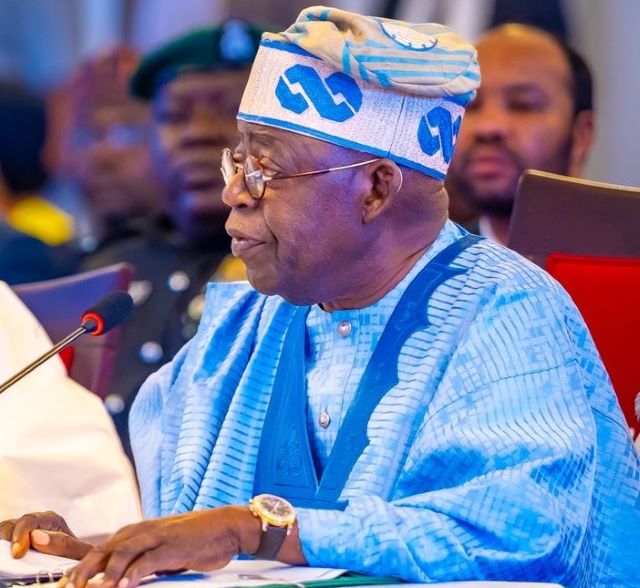
The President Bola Tinubu-led Federal Government has said it will ensure that the planned ₦300,000 interest-free loans for smallholder farmers and targeted credit support for traders are released quickly and in a transparent manner.
The Minister of State for Finance, Dr. Doris Uzoka-Anite, made this known on Saturday through her official X handle. She said the Ministry of Finance is determined to make sure that the loans reach those who truly need them without delay.
“Our priority at the Ministry of Finance is ensuring that these ₦300,000 interest-free loans for smallholder farmers and targeted credit for our traders are disbursed with absolute transparency and speed,” she wrote.
According to her, the aim of the programme is to support people at the bottom of the economic ladder who form a large part of Nigeria’s working population. She said helping small farmers and petty traders would strengthen the country’s economy from the grassroots.
“By empowering the base of our economic pyramid, we are fueling the engine of Nigeria’s growth and moving the #RenewedHope agenda from policy to pocket,” she added.
As part of steps to ensure proper implementation, the minister met with Hon. Hamza Ibrahim Baba, the National Programme Manager for the Government Enterprise and Empowerment Programme, popularly known as GEEP. Their meeting focused on how to effectively carry out the newly launched GEEP3.0 and the FarmerMoni Dry and Wet Season schemes.
GEEP operates under the National Social Investment Programme Agency and is designed to provide financial support to people at the grassroots level. The new phase, known as GEEP3.0, offers six-month interest-free loans starting from ₦10,000 to petty traders and artisans.
The scheme is specially designed for everyday market men and women who rely on daily sales to survive. Many of them operate with small amounts of capital, sometimes as low as ₦2,000 to ₦5,000 worth of goods. For such traders, access to even ₦10,000 can make a big difference in expanding their stock and increasing their daily income.
Under GEEP3.0, the loans are interest-free and do not require collateral. This means beneficiaries do not need to provide property or other valuable assets before they can access the funds. The goal is to remove the common barriers that prevent low-income Nigerians from accessing bank credit.
On the agricultural side, the FarmerMoni Dry and Wet Season Programme is aimed at supporting farmers during both major planting periods in the year. This is expected to help increase food production and improve food security across the country.
The government said it is extending FarmerMoni to more than 20,000 farmers nationwide in the current phase. Officials believe that supporting farmers will not only increase food supply but also create jobs and reduce poverty in rural areas.
Hamza Ibrahim Baba explained that the FarmerMoni scheme will soon open its online portal to allow eligible farmers to register for the interest-free and collateral-free loans. He said the programme is strictly targeted at vulnerable and poor farmers at the grassroots, not large commercial farmers.
According to him, the size of the loan each farmer receives will depend on the type of farming activity and the financial needs of that activity. For example, crop farmers may require funds for seeds and fertilisers, while livestock farmers may need support for feed and animal care.
Baba stated that to qualify, applicants must be Nigerians aged 18 years and above who are already engaged in farming. They must either own or rent farmland and must have a bank account and a valid means of identification. In addition, applicants are required to belong to a recognised farming cooperative or association within their local government area.
He explained that working through cooperatives and farmer associations would make it easier to identify genuine farmers and monitor the use of the funds.
The programme will cover all 774 local government areas in the country. Implementation will involve state programme managers, enumerators who will collect and verify data, partner banks, fintech recovery agents and farmer associations across the 36 states and the Federal Capital Territory.
Baba disclosed that the government is targeting more than 22,000 farmers in this current phase, with about 28 farmers expected to benefit in each local government area. He added that this is only the beginning, as more phases will follow.
Future phases are expected to include TraderMoni and MarketMoni, which are also designed to support artisans and petty traders across the country.
He said the funds for the farmers are expected to be disbursed before the end of March so that beneficiaries can take advantage of the wet season planting period. Timely release of funds is considered important because delays could affect planting schedules and reduce expected harvests.
Addressing concerns that such programmes are sometimes influenced by politics, Baba said measures have been put in place to prevent interference. He explained that the registration and verification processes are digitised, which reduces human manipulation.
He also said that by working closely with recognised farmer associations and using proper data verification methods, only genuine farmers would be selected.
Credit: thenationonlineng.net