






















The United States Congress has called for a comprehensive bilateral agreement between Washington and Abuja, aimed at protecting vulnerable Christian communities, dismantling jihadist terror networks, and countering Chinese and Russian influence in Nigeria.
The recommendations were contained in a joint position by the House Appropriations Committee and the House Foreign Affairs Committee, shared on X by Congressman Riley Moore on Tuesday.
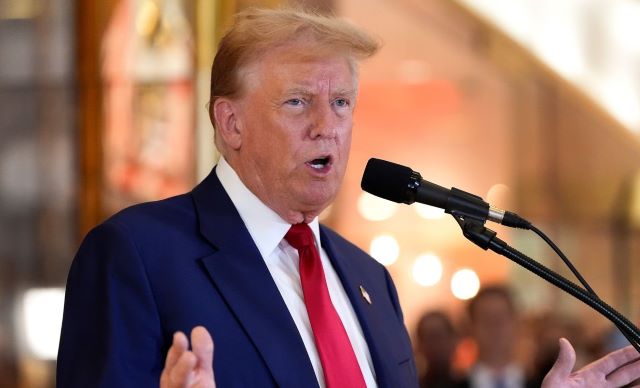
In a statement titled “Ending the Persecution of Christians in Nigeria,” Congress commended President Donald Trump for redesignating Nigeria as a Country of Particular Concern, describing the move as decisive in holding perpetrators of violence accountable.
In October 2025, the United States announced that Nigeria would again be added to the US Department of State’s list of Countries of Particular Concern.
Nigeria was first designated in 2020 under President Trump, but was removed from the list shortly after former President Joe Biden assumed office.
In a post on X, President Trump stated that Nigeria would be placed on a religious freedom watchlist, alleging that Christians were facing persecution and violence.
Earlier, in February, the US Congress recommended visa bans and asset freezes on individuals and groups accused of violations of religious freedom in Nigeria.
Among those listed were former Kano State Governor, Dr Rabiu Kwankwaso, the Miyetti Allah Cattle Breeders Association of Nigeria, and Miyetti Allah Kautal Hore.
Commending President Trump’s action, the committees stated: “The United States Congress commends President Trump for his decisive action to redesignate Nigeria as a Country of Particular Concern to hold perpetrators of violence to account and compel the Government of Nigeria to protect vulnerable communities and end religious persecution.”
According to the statement, President Trump tasked Rep. Moore, House Appropriations Chairman Tom Cole, and the committee with investigating what was described as the “persecution and slaughter of Nigerian Christians.”
Appropriations Vice Chair Mario Díaz-Balart hosted an investigative roundtable and led a congressional delegation to Nigeria.
Meanwhile, House Foreign Affairs Committee Chairman Brian Mast and Africa Subcommittee Chairman Chris Smith convened hearings to gather testimony from officials and representatives from civil society.
In its findings, Congress declared: “After decades of persecution, Nigeria is the deadliest place in the world to be a Christian.”
The committees alleged that Christians in Nigeria “are subject to ongoing violent attacks from well-armed Fulani militias and terrorist groups, resulting in the killing of tens of thousands of Christians, including pastors and priests, the destruction of churches and schools, as well as kidnappings.”
They also criticised the application of blasphemy laws in some northern states, stating that such laws “are used to silence speech and dissent, target Christians and minorities, and justify so-called ‘convictions’ without due process.”
While acknowledging Nigeria as a key US partner, Congress emphasised the need for stronger political will.
“Although the Government of Nigeria is a key partner for the United States, such a government must demonstrate the political will, including by allocating its own financial resources, to immediately reduce and then eliminate the violence.”
It added: “The United States and Nigeria should take this moment to redefine a new strategic partnership to make America and Nigeria safer, stronger, and more prosperous.”
Central to the recommendations is a proposed security and economic agreement between the two nations.
Congress urged President Trump to “strike a bilateral agreement between the United States and the Government of Nigeria to protect vulnerable Christian communities from violent persecution, eliminate jihadist terror activity in the region, further economic cooperation, and counter adversaries in the region, including the Chinese Communist Party and the Russian Federation.”
Under the proposed agreement, Nigeria would commit to co-funding humanitarian assistance, including support for internally displaced persons in the Middle Belt; strengthening early-warning mechanisms; deploying adequate security forces for rapid response; and restoring agricultural lands affected by armed groups.
The committees also called for expanded security cooperation, including divestment from Russian military equipment in favour of American defence systems, enhanced counter-terrorism collaboration, and the provision of excess US defence equipment where necessary.
Additional measures include sanctions against perpetrators of religious violence, continued visa restrictions, increased accountability in US aid disbursement, a Government Accountability Office audit of US assistance to Nigeria, and a National Intelligence Estimate on sectarian and communal violence.
The lawmakers also urged engagement with international partners such as France, Hungary, and the United Kingdom, alongside improvements to the Foreign Military Sales process and strengthened US diplomatic staffing in Nigeria.
The committees described the recommendations as a “once-in-a-generation opportunity for real change” following Nigeria’s redesignation as a Country of Particular Concern.
Credit: punchng.com