

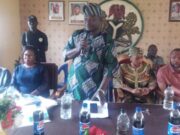

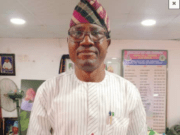
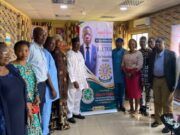



















































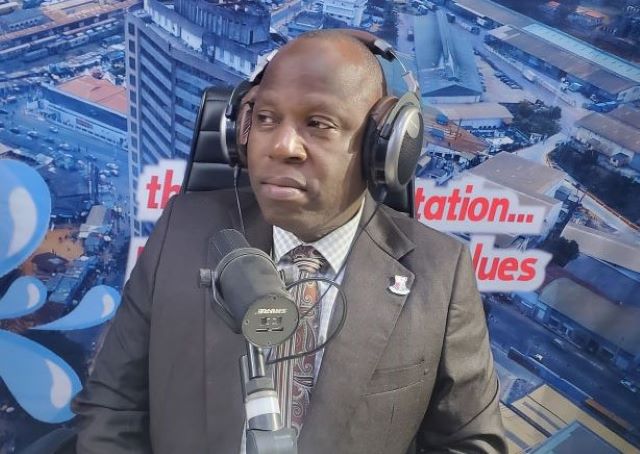
Dr Sulaimon Olanrewaju, Special Adviser on Media to the Oyo State Governor, ‘Seyi Makinde, has dismissed allegations by the Sharafadeen Alli Campaign Organisation blaming the governor for the economic hardship being experienced by Nigerians.
Olanrewaju, in a statement issued on Thursday, described the position of the Oyo State APC governorship candidate’s campaign organisation as evidence of what he called “incompetence” and political blame-shifting.
Argument
He argued that Nigeria’s economic difficulties were largely driven by national macroeconomic policies, including the unification of the foreign exchange market, the removal of petrol subsidy and rising inflation.
According to him, the naira, which traded around ₦450–₦470 to the dollar at the official window in 2023, now fluctuates between ₦1,400 and ₦1,600, resulting in increased costs of food, medicine, transportation and production inputs across the country.
“The hardship citizens face today is rooted in national macroeconomic decisions that have reshaped the fiscal landscape for every state,” Olanrewaju said.
He added that the removal of petrol subsidy in 2023 further increased transportation and food costs, while inflation rose to levels that significantly affected household purchasing power.
Statistics
Olanrewaju also cited poverty statistics, arguing that the proportion of Nigerians living in poverty had increased from about 40 per cent in 2023 to estimates exceeding 46 per cent to 50 per cent.
He maintained that such economic outcomes could not be attributed solely to the administration of an individual state governor.
The governor’s media aide also addressed the issue of increased allocations from the Federation Account Allocation Committee (FAAC), saying higher nominal allocations did not necessarily translate into increased purchasing power for states.
According to him, increased oil revenues, reduced subsidy deductions and the naira’s depreciation could raise the naira value of FAAC distributions while inflation simultaneously reduces their real value.
“A ₦10 billion allocation today cannot deliver the same value as ₦10 billion in 2022. Higher nominal revenue in an inflationary environment is not prosperity; it is erosion,” he said.
On the controversy over local government autonomy, Olanrewaju rejected the allegation that Governor Makinde was “criminally” opposed to local government autonomy.
He argued that the issue remained connected to constitutional provisions, judicial pronouncements and legislative processes, adding that the Federal Government had obtained a Supreme Court judgment on local government financial autonomy but had yet to fully implement it.
He questioned why Makinde should be held responsible for the implementation of a judgment obtained by the Federal Government.
Olanrewaju further argued that the continued existence of the State Joint Local Government Account Allocation Committee in the Constitution complicated claims of absolute local government financial autonomy.
He concluded that Nigeria’s economic challenges required an understanding of nationwide fiscal and monetary developments rather than attributing the effects of national economic policies to individual state governments.
Credit: newsense.ng