












![L-R: Managing Director, BGL Securities Limited, Arnold A. Dublin-Green; Assistant Vice President, Financial Derivatives Limited, Dr. Ifeoma Nwokolo; CEO, Centre for the Promotion of Private Enterprise [CPPE], Muda Yusuf (speaker); Chairman of the Occasion, Chief Paul Usoro; Dean, Lagos Business School, Information Systems, Prof. Olayinka David-West; Managing Director/CEO, Financial Derivatives Company, Bismarck Rewane; Group Chief Branding & Communications Officer, Dangote Industries Limited, Anthony Chiejina at Dangote Petroleum Refinery & Petrochemicals IPO Roadshow tagged “Back to where it all began” in Port Harcourt. Rivers State on Monday, October 12, 2026…](https://pmparrotng.com/wp-content/uploads/2026/10/Dangote-imagee-180x135.jpg "As Dangote Refinery’s IPO Nears Close, Small Investors Take Center Stage")




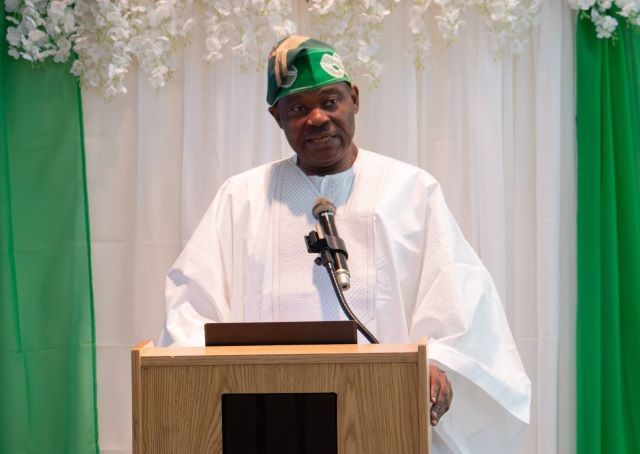
Nigeria’s Permanent Representative to the United Nations, Ambassador Jimoh Ibrahim, says the nation is seeking to strengthen its influence within the United Nations following its emergence as Chair of the UN Fifth Committee on Administrative and Budgetary Affairs.
Ibrahim said the position presents an opportunity for Nigeria to deepen its engagement with the global body, advance its interests, and secure greater benefits from its participation in United Nations programmes.
Speaking with journalists at the State House ahead of a meeting with President Bola Ahmed Tinubu, the Nigerian envoy described the country’s election to lead the Fifth Committee as a significant milestone that would enhance Nigeria’s role in shaping UN administrative and financial decisions.
He said the position would enable Nigeria to gain deeper insight into the organisation’s budgetary processes while exploring opportunities that support national development.
“I want to see how much Nigeria is getting from the UN budget on peacekeeping. That is very important because many countries depend on it. We need to know what Nigeria is earning from peacekeeping,” Ibrahim stated.
The ambassador said the federal government is working with the inspector-general of police, Tunji Disu, to advance President Bola Ahmed Tinubu’s peacekeeping agenda.
He noted that countries with well-trained security personnel and modern operational assets have the potential to derive significant benefits from participating in UN peacekeeping missions.
According to Ibrahim, peacekeeping operations represent a strategic area through which Nigeria can increase its international contributions while also generating economic value.
He disclosed that the United Nations spends about 6.5 billion dollars annually on peacekeeping operations, while approximately 3.4 billion dollars is allocated to the organisation’s general administration.
Speaking on the responsibilities of the Fifth Committee, Ibrahim explained that the body oversees the UN budget and administrative affairs, adding that the organisation’s current budget stands at 18.5 billion dollars.
He also disclosed that the UN is facing a projected deficit of 1.5 billion dollars this year, with efforts ongoing to mobilise adequate funding to sustain its operations.
On institutional reforms within the United Nations, the Nigerian envoy said the organisation is implementing administrative restructuring aimed at improving efficiency and effectiveness.
Nigeria’s Permanent Representative to the UN further explained that the reforms include merging overlapping agencies and departments to reduce duplication and strengthen operational delivery.
According to Ibrahim, the changes reflect a renewed focus on institutional effectiveness and ensuring that the UN is better positioned to fulfill its mandate in addressing global challenges.
Packaged by Lanre Olabisi