









































![L-R: Managing Director, BGL Securities Limited, Arnold A. Dublin-Green; Assistant Vice President, Financial Derivatives Limited, Dr. Ifeoma Nwokolo; CEO, Centre for the Promotion of Private Enterprise [CPPE], Muda Yusuf (speaker); Chairman of the Occasion, Chief Paul Usoro; Dean, Lagos Business School, Information Systems, Prof. Olayinka David-West; Managing Director/CEO, Financial Derivatives Company, Bismarck Rewane; Group Chief Branding & Communications Officer, Dangote Industries Limited, Anthony Chiejina at Dangote Petroleum Refinery & Petrochemicals IPO Roadshow tagged “Back to where it all began” in Port Harcourt. Rivers State on Monday, October 12, 2026…](https://pmparrotng.com/wp-content/uploads/2026/10/Dangote-imagee-180x135.jpg "As Dangote Refinery’s IPO Nears Close, Small Investors Take Center Stage")





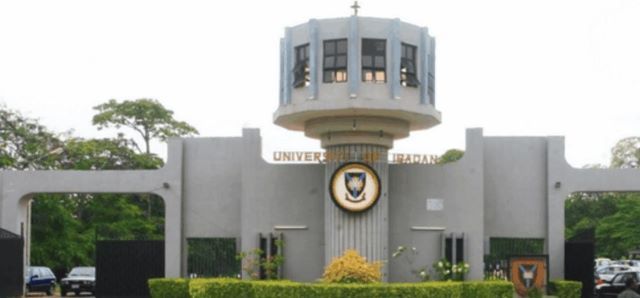
The University of Ibadan has retained its position as Nigeria’s leading research university, while federal universities dominate the country’s top positions in the latest AD Scientific Index, according to a statement signed by the Chairman of the Nigerian Tertiary Education Ranking Advisory Committee, Emeritus Prof. Peter Okebukola, on Friday.
The latest AD Scientific Index, refreshed on October 1, 2026, ranked Nigeria 48th among 221 countries and third in Africa, with 384 institutions and 53,580 scientists indexed.
It found that at least eight of Nigeria’s top 10 universities are federal institutions, with the University of Ibadan maintaining first position nationally.
According to the report, “UI ranked 889th among nearly 19,800 universities globally, placing it among the top 4.5 per cent of universities worldwide and making it the only Nigerian university in the global top 1,000.”
The university also retained 14th position in Africa, while improving from 904th globally in mid-August to 889th as of October 1.
“The University of Ibadan remains the flagship,” the report stated, noting that the institution had retained first position nationally across recent editions of the AD Scientific Index.
It said UI had 1,586 indexed scholars, five of whom featured among Nigeria’s 25 most-cited researchers.
The University of Nigeria, Nsukka, retained second position nationally, while the University of Lagos, Obafemi Awolowo University, University of Ilorin, Ahmadu Bello University, Nnamdi Azikiwe University and Bayero University also featured among Nigeria’s leading institutions.
The report stated, “Of the ten national top places in the 2027 edition, at least eight are held by federal institutions.”
It said the universities represented different regions of the country, suggesting that research strength within the federal university system was becoming more widely distributed rather than being concentrated in a few older institutions.
The report also highlighted the research impact of individual Nigerian academics, noting that 16 of the 22 Nigeria-based scholars in the national top 25 by citations work in federal universities.
Five of the scholars are from the University of Ibadan, while Ahmadu Bello University, the University of Nigeria and Obafemi Awolowo University each have two researchers among the group.
Mayowa Owolabi of the University of Ibadan was ranked Nigeria’s most-cited researcher, with 257,748 citations, placing him 676th globally among more than 2.6 million indexed researchers.
Shafiu Mohammed of Ahmadu Bello University followed with 242,300 citations and a global position of 776th.
Olayinka Ilesanmi of the University of Ibadan ranked third nationally, with 185,602 citations.
The report noted that Owolabi and Mohammed were among the 800 most-cited researchers in the world.
Nigeria’s research profile expands
The report said Nigeria’s research presence had expanded considerably over recent editions of the AD Scientific Index.
It noted that the number of Nigerian universities ranked increased from 257 in the 2024 edition to more than 300 in 2026, while the number of indexed Nigerian scientists rose from 53,214 in November 2025 to 53,580 by October 2026.
Nigeria now has more indexed scientists than South Africa and Egypt, although the researchers are spread across a larger number of institutions.
The report put Nigeria’s average at about 140 indexed scientists per institution, compared with 267 in South Africa and 387 in Egypt.
It consequently called for greater concentration on research quality and impact at leading Nigerian universities.
“The task ahead is therefore less about breadth, where Nigeria already leads Africa, and more about deepening research concentration at its strongest universities,” the report stated.
The report attributed the institutional rankings to researchers’ publicly available scholarly records, particularly Google Scholar profiles, and said the AD Scientific Index measures researchers using the H-index, i10-index and total citations.
It cautioned that rankings should be interpreted carefully because the index is continuously refreshed and its global field has expanded significantly.
THE ranking corroborates gains
The AD findings came shortly after the release of the 2027 Times Higher Education World University Rankings, which also showed an increase in Nigeria’s representation.
THE ranked 29 Nigerian universities in its 2027 edition, up from 24 in 2026.
Nineteen of the 29 Nigerian institutions were federal universities, while seven were state-owned and three were private institutions.
The University of Ibadan and University of Lagos retained places in the 801–1000 global band, while Ahmadu Bello University and the University of Ilorin moved into the 1001–1200 band.
Nnamdi Azikiwe University, Obafemi Awolowo University and the University of Benin also moved into the 1401–1600 band.
The latest findings are coming at a time when the Federal Government is developing a national framework for assessing Nigerian tertiary institutions.
NiTERAC, chaired by Okebukola, is involved in the development of Nigeria’s national tertiary institution ranking exercise, which is expected to assess universities, polytechnics and colleges of education using multiple performance indicators.
The AD report recommended that Nigerian universities regularly verify their researchers’ Google Scholar profiles, strengthen doctoral training, support highly cited research groups and expand international research collaboration.
It also recommended that NiTERAC preserve annual ranking data to allow more reliable comparisons of institutional performance over time.
The report further urged Nigerian universities to learn from institutions that have improved their research visibility and to combine different ranking systems when assessing performance.
It stated, “The message from the AD Scientific Index is therefore not one of arrival, but unmistakably one of forward movement.”
The report added that Nigeria still needed to improve citation impact, research output per academic staff, international collaboration and the number of researchers represented among the world’s highly cited scholars.
It concluded that the gains recorded by federal universities provided a foundation for further improvement but stressed that progress needed to spread across the wider Nigerian university system.
“For NiTERAC, the appropriate response is therefore twofold: celebrate the progress and accelerate it,” the report stated.
Credit: punchng.com