



















![L-R: Managing Director, BGL Securities Limited, Arnold A. Dublin-Green; Assistant Vice President, Financial Derivatives Limited, Dr. Ifeoma Nwokolo; CEO, Centre for the Promotion of Private Enterprise [CPPE], Muda Yusuf (speaker); Chairman of the Occasion, Chief Paul Usoro; Dean, Lagos Business School, Information Systems, Prof. Olayinka David-West; Managing Director/CEO, Financial Derivatives Company, Bismarck Rewane; Group Chief Branding & Communications Officer, Dangote Industries Limited, Anthony Chiejina at Dangote Petroleum Refinery & Petrochemicals IPO Roadshow tagged “Back to where it all began” in Port Harcourt. Rivers State on Monday, October 12, 2026…](https://pmparrotng.com/wp-content/uploads/2026/10/Dangote-imagee-180x135.jpg "As Dangote Refinery’s IPO Nears Close, Small Investors Take Center Stage")





Can you believe it that Ibadan raised a king for Oke-Ila Orangun? Kabiyesi Oba Adedokun Abolarin, Aroyinkeye 1, the Orangun of Oke-Ila, last week, recounted this story to me, “Ibadan raised me”.
But wait a bit. Let me preface the story this way: how lbadan raised a king for Oke-Ila Orangun. On April 3, this year, I published a piece titled “Chief Zaccheus Adewumi Adeyemi, JP: Africa’s First Television Set Owner and the Ibadan Contractor Who Built E9/70 Itutaba-Gbenla, Ibadan”. The response was global. Calls poured in from around the world confirming the facts. His children reached out.
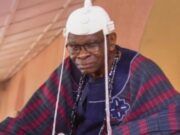
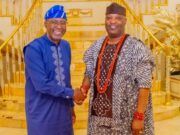
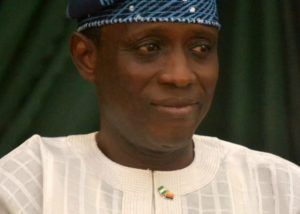
But what intrigued me most was another historical dimension the piece took from the palace of the Orangun of Oke-Ila, Osun State. Nigeria. On social media, many formed an emotional attachment to the story because they had once watched television in that house. One of them is His Royal Majesty, Oba Adedokun Abolarin, Aroyinkeye 1, the Orangun of Oke Ila, Osun State, Nigeria.
Kabiyesi said I captured the house and its environment very well. Then, he suggested it is time to document his own strong, chronological connection to Ibadanland and to that same hub. I think it’s important to do this”, He made available a video recording to capture our discussion on how Ibadan influenced him.
Who am I to say no to my teacher; the man who taught me “Elements of Government” at the then Oyo State College of Arts and Science (OSCAS) in Ile-Ife, now in Osun State, in 1985? Many people are unaware of our close relationship. He could call me at any time for humanitarian purposes, and whenever he was in Ibadan, he would visit me at the University of Ibadan. Kabiyesi Abolarin, I deeply appreciate your love, thoughtfulness and kindness.
According to Oba Abolarin, I was born on a date and at an address: 24 September, 1958, E9/70 Ebenezer Chamber, Okebukola’s Gbenla Residence. Listen and read him further in this synopsis and condensation.
“My parents chose Ibadan that same year. In 1958, the city was the capital of the Western Region and it was the loudest proof that federalism could work. Cocoa money built schools. Awolowo’s government offered free education and politics filled the air like harmattan dust.
“My father answered a different call. He became the Headmaster of the Seventh Day Adventist Primary School, Agodi, Ibadan. He taught with chalk and conscience. The region taught with budgets and laws. From both, I learnt early: to raise a child and to raise a country take the same virtue—discipline.”
“Ebenezer Chamber was like a stone. It was located in the ancient heart of Ibadan and it was our home. Beere was on one side, Oje was on the other and Mapo Hill kept watch like an old sentinel. We had rented rooms and our street served as a syllabus for learning.
“The landlord was a policeman, always on transfer from one station to another. His children became our first, unseen role models. Olu and Peter Okebukola were the serious-minded school children of the house. Books before play, questions before answers. Years later, Olu Okebukola would retire as the Head of Service for the Oyo State Civil Service in Ibadan. Peter Okebukola would become the Vice-Chancellor of Lagos State University and Executive Secretary of the National Universities Commission (NUC), Abuja. The Okebukolas are from Elegbaada, Lagelu Local Government, Oyo State”.
“Faith was our anchor. Every Sabbath, we made the trek to the Seventh Day Adventist Church in Irefin, a church established in the 1930s when the Advent message first reached Ibadan. I learnt four-part harmony and one-part truth: that “service is worship and temperance is strength”. The Adventist ethic became my first code of conduct”
“My mother’s shop (Iya Dapo) was at Itutaba. If Okebukola’s residence was my bedroom, Itutaba was my newsroom. Her stall sat near the compounds of Baba Allen and Chief Augustus Meredith Adisa Akinloye.
“Between 1960 and 1966, that axis of Bere–Oje–Oja’ba Road was a parliament without a mace. Action Group megaphones clashed with NCNC drums, and later, it was NNDC versus UPGA, with the chant “Bo ro wo mi, o rinu mi o Demo mo wa!!” By 1965, “Operation Wetie” ignited the night with its fervour. I was seven, packaging books and other items after school while democracy argued in the open. Long before I read Plato, Patrice Lumumba, Kwame Nkrumah, Obafemi Awolowo or Azikiwe, Itutaba taught me Political Science: all politics is local and the local is loud.
“Agugu later became a new classroom. In 1965, we moved to Agugu, Renascent High School Road, E7/470 and later E7/747c. The streets were wider, the silences deeper. Here the city gave me a new class of neighbours. We grew up with the Adisas, Olubodes, Akinyemis, Adedejis, Sunmonus, Aderintos, Oparindes, Tayos, and Ilesanmis from Ifon Osun and the Aseres from Modakeke—families whose names were spoken with respect across the land”.
“And among us was a boy who would rewrite African history itself: Prof. Toyin Falola, now the world-renowned historian. In Agugu, we shared streets, festivals and ambitions”.
“One man in Agugu became my true north: Chief Samuel Adebimpe Adisa. He was a Government College Ibadan (GCI) old boy and a senior civil servant who worked under Awolowo and S.L. Akintola. He wore restraint like a chieftaincy cap. He never preached to me. He simply lived and I remained observant.”.
Through him, I met Permanent Secretaries who wrote the Region into being, Judges who made law breathe, and Obas who governed with proverbs. From him, I took a simple creed: competence is a form of patriotism”.
Yet Ibadan was more than government and grammar. It was also spirit. Every year the “Oke Ibadan Festival” drew the city to Mapo’s foot to salute Lagelu, the war camp founder who turned a thicket into a home. We were not just Yoruba. We were Ibadan, people who forged a city from war and dared to love it.
“Then there were the egungun, my professors in raffia. Ololu, father of them all. Alapansanpa, whose entrance cleared the street. Duronkika, Ooyi, Kodurogbejo, Abidielege—names that made boys run and elders straighten their backs. In our quarters, Adandohun and Sokoro ruled the afternoons. They were not spectacles. They were law and memory and satire stitched into one costume. From them, I learnt that a people who can mock the living and mourn the dead in the same hour will not be easily ruled.
“Ibadan indeed shaped a life. Agodi gave me letters. Irefin gave me faith. Itutaba gave me politics. Ebenezer Chamber gave me role models. Agugu gave me a generation. Egungun gave me a face”.
“Whoever knows honour, knows gratitude. I have been a teacher of Political Science, a lawyer and now a Yoruba traditional ruler, the Orangun of Oke-Ila. Titles change. Origins do not”.
When I close my eyes, I still hear four sounds: the drum from Mapo, the hymn from Irefin, my mother’s voice from Itutaba (a proud Ipoti Ekiti woman) and the laughter of boys in Agugu who would one day remake Nigeria.
“I am the boy from Ebenezer Chamber, E9/70, Gbenla. And Ibadan is the city that raised me”, Oba Abolarin concluded.
This piece preserves Kabiyesi’s chronology, place names and personalities exactly as they were recounted. It serves as both a testimony and a tribute to the formative power of Ibadan, originating from Ebenezer Chamber to the throne of Oke-Ila.
By the grace of God and the will of our ancestors, Kabiyesi, Oba Adedokun Omoniyi Abolarin, Aroyinkeye I, the Orangun of Oke Ila, will this December attain 20 glorious years on the throne of his forebears. Congratulations in advance, Kabiyesi. May your reign remain peaceful, progressive, and blessed with long life and good health. Oke Ila o ni bàjé o. Ibadan o gbe wa o!
- Tunji Oladejo, mnipr, JP, MANUPA, mspsp, writes from the University of Ibadan. He is the Chairman of The Progressive Forum, Ibadan (TPFI); and is a member of the Board of Trustees of the Bayo and Bimpe Oyero Foundation (BBOF) and the 2026 Central Council of Ibadan Indigenes (CCII) Icon of Ibadan Heritage Awardee via oladejo65@gmail.com. 08077284442
-
…Tunji Oladejo…