












































![L-R: Managing Director, BGL Securities Limited, Arnold A. Dublin-Green; Assistant Vice President, Financial Derivatives Limited, Dr. Ifeoma Nwokolo; CEO, Centre for the Promotion of Private Enterprise [CPPE], Muda Yusuf (speaker); Chairman of the Occasion, Chief Paul Usoro; Dean, Lagos Business School, Information Systems, Prof. Olayinka David-West; Managing Director/CEO, Financial Derivatives Company, Bismarck Rewane; Group Chief Branding & Communications Officer, Dangote Industries Limited, Anthony Chiejina at Dangote Petroleum Refinery & Petrochemicals IPO Roadshow tagged “Back to where it all began” in Port Harcourt. Rivers State on Monday, October 12, 2026…](https://pmparrotng.com/wp-content/uploads/2026/10/Dangote-imagee-180x135.jpg "As Dangote Refinery’s IPO Nears Close, Small Investors Take Center Stage")







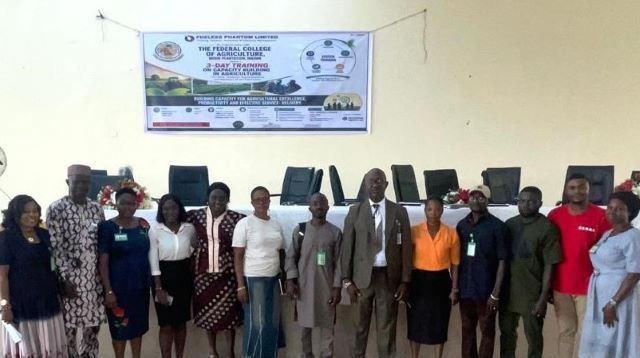
The Federal College of Agriculture, Moor Plantation, Ibadan (FCAIB), has successfully concluded a three-day Human Capital Development in Agriculture Training Workshop, reaffirming its commitment to building a highly skilled, innovative, and accountable workforce capable of driving sustainable agricultural development and national food security.
The workshop, held from Wednesday, June 24, to Friday, June 26, 2026, was organised under the federal government’s Human Capital Development Initiative and facilitated by Phelex Phantom Limited, whose chief executive officer was represented at the programme by Dr. Kumolu Olumide and Engr. Tosin Akinyemi.
The training brought together management, academic and non-academic staff, students, and other stakeholders for intensive sessions on leadership, service delivery, financial accountability, institutional governance, innovation, and agricultural transformation.
Declaring the workshop open, the Provost of the College, Professor Jonathan J. Atungwu, described human capital development as the cornerstone of institutional growth and sustainable agricultural transformation.
He commended the federal government for its continued investment in capacity development across agricultural institutions and encouraged participants to make the most of the opportunity to strengthen their knowledge, skills, and professional competence.
Professor Atungwu explained that the workshop was carefully designed to address the diverse training needs of participants through specialised technical sessions facilitated by experienced professionals and subject-matter experts.
The opening ceremony featured the keynote address delivered by the special guest of honour, Professor Kolawole Adebayo, a distinguished alumnus of the college and an internationally acclaimed agricultural development expert.
A citation presented in his honour highlighted his remarkable contributions to agricultural research, education, and international development. Since joining academia in 1995, Professor Adebayo has attracted more than 42 million US dollars in research and development grants through individual and collaborative efforts.
He has also led several high-impact agricultural development projects across Africa and published more than ninety scholarly articles, books, and book chapters during a distinguished career spanning over three decades.
In his keynote address, Professor Adebayo described human capital as the greatest resource of any nation, stressing that no country can develop beyond the quality of its people. He noted that infrastructure, technology, and financial resources can only achieve meaningful results when managed by competent, ethical, and innovative individuals.
He encouraged participants to embrace continuous learning, professionalism, and integrity while remaining open to opportunities that would enhance their careers and contribute to national development.
One of the highlights of the ceremony was his announcement that the college had secured one nomination slot for the 2026/2027 Marshall Papworth Scholarship Programme for Sustainable Agriculture at Harper Adams University, United Kingdom, to be coordinated through the Office of the Provost.
He also reaffirmed his commitment to sustaining the annual SEED in Africa Cash Award for the college’s best graduating students at both the National Diploma (ND) and Higher National Diploma (HND) levels.
The first day also featured a presentation by the provost titled “Systems Thinking 2.0: Character, Competence, and Capacity for Agricultural Transformation.” He emphasised that sustainable agricultural development rests on three interconnected values: character, competence, and capacity.
He challenged participants to cultivate integrity, pursue continuous learning, and strengthen their ability to address contemporary agricultural challenges through innovation and collaboration.
Another technical session was delivered by the Registrar of the Institute of Agricultural Research and Training (IAR&T), Mr. Adeboye Popoola, on “Dynamics of Service Delivery: Creating Capacity for Excellence, Productivity, and Effective Service Delivery.”
He stressed that excellent service delivery depends on professionalism, accountability, integrity, and commitment. He encouraged participants to embrace innovation; make prudent use of institutional resources; and leverage emerging technologies, including artificial intelligence, while maintaining originality and ethical standards.
Activities on the second day focused on strengthening financial accountability and institutional governance. The Bursar of the Federal College of Animal Health and Production Technology, Ibadan, Mr. Ayodele Olayinka, delivered a lecture on “Internal Control Mechanisms in Agricultural Fund Management.”
He underscored the importance of accountability, transparency, stewardship, and sound financial governance in managing public resources. He also highlighted the need for effective internal control systems, proper documentation, segregation of duties, competitive procurement, regular auditing, and digital financial management as essential tools for promoting institutional integrity.
Following the plenary sessions, participants were divided into syndicate groups, where experienced facilitators led practical discussions and interactive exercises tailored to their respective responsibilities. This enabled participants to apply the knowledge gained during the lectures to real workplace scenarios.
The workshop concluded with a presentation by Engr. Dr Bukola Afolabi on “Building Agricultural Innovation Hubs.” He highlighted the critical role of innovation hubs in transforming agriculture by promoting collaboration among researchers, educators, entrepreneurs, farmers, and industry stakeholders.
Dr. Afolabi identified excellence, productivity, and service as the three pillars of agricultural innovation hubs. He also discussed innovation capacity development, research, entrepreneurship and commercialisation, technology adoption, productivity enhancement, and strategic action planning as essential components of a vibrant innovation ecosystem capable of improving service delivery and accelerating agricultural development.
Speaking at the closing ceremony, the deputy provost (academic) and chairperson of the training committee, Dr. Victoria E. Okpeze, expressed profound appreciation to the provost for his visionary leadership and unwavering support for staff development.
She appreciated the chief executive officer of Phelex Phantom Limited, represented by Dr Kumolu Olumide and Engr. Tosin Akinyemi, for the successful facilitation of the three-day training programme.
She further commended the resource persons, members of the organising committee and participants for their commitment, active participation, and dedication throughout the workshop.
In his closing remarks, Professor Atungwu urged participants to translate the knowledge and skills acquired into improved service delivery, stronger accountability, innovative thinking, and greater commitment to the college’s mandate. He expressed confidence that the training would positively impact both individual performance and institutional growth.
The provost thereafter officially declared the 2026 Human Capital Development in Agriculture Training Workshop closed.
The ceremony concluded with the presentation of certificates to all participants in recognition of their successful participation in the three-day capacity-building programme.
The workshop reaffirmed the Federal College of Agriculture, Ibadan’s commitment to continuous human capital development, institutional excellence, innovation, and the production of highly skilled professionals capable of advancing sustainable agriculture and national development.
Packaged by Dare Raji