















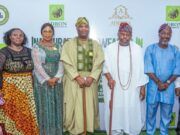












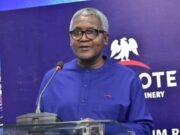


![L-R: Managing Director, BGL Securities Limited, Arnold A. Dublin-Green; Assistant Vice President, Financial Derivatives Limited, Dr. Ifeoma Nwokolo; CEO, Centre for the Promotion of Private Enterprise [CPPE], Muda Yusuf (speaker); Chairman of the Occasion, Chief Paul Usoro; Dean, Lagos Business School, Information Systems, Prof. Olayinka David-West; Managing Director/CEO, Financial Derivatives Company, Bismarck Rewane; Group Chief Branding & Communications Officer, Dangote Industries Limited, Anthony Chiejina at Dangote Petroleum Refinery & Petrochemicals IPO Roadshow tagged “Back to where it all began” in Port Harcourt. Rivers State on Monday, October 12, 2026…](https://pmparrotng.com/wp-content/uploads/2026/10/Dangote-imagee-180x135.jpg "As Dangote Refinery’s IPO Nears Close, Small Investors Take Center Stage")






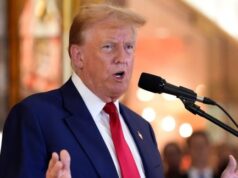
The United States Supreme Court on Tuesday invalidated former President Donald Trump’s executive order seeking to end birthright citizenship, reaffirming the long-standing interpretation that nearly all individuals born on U.S. soil are citizens.
In a 6-3 ruling in *Trump v. Barbara*, the court held that the policy violated the Constitution. Chief Justice John Roberts, alongside Justices Sonia Sotomayor, Elena Kagan, Amy Coney Barrett and Ketanji Brown Jackson, formed the majority, agreeing that the executive order contravened the 14th Amendment. Justice Brett Kavanaugh, in a separate opinion, said the directive violated federal law.
Justices Clarence Thomas, Samuel Alito and Neil Gorsuch dissented.
The ruling marks the second major policy from Trump’s second term to be struck down by the court, following its February decision overturning key aspects of his tariff measures.
Trump had signed the order on his first day back in office as part of a broader immigration crackdown. The directive aimed to deny automatic U.S. citizenship to children born to parents residing in the country illegally or temporarily.
Writing for the majority, Roberts emphasised the historical significance of citizenship rights. “Citizenship, then and now, was the right to have rights — to freely participate in our political community. The Framers of the Fourteenth Amendment extended that promise to ‘every free-born person in this land,’” he stated. “We keep that promise today.”
In dissent, Thomas, joined by Gorsuch, challenged the court’s interpretation. “The Court today takes the extraordinary step of holding facially unconstitutional the President’s Order excluding from citizenship the children of foreign temporary visitors and illegal aliens,” he wrote. “In doing so, the Court adds to the sad history of the Fourteenth Amendment…”
Trump’s order sought to overturn the long-established reading of the Constitution’s Citizenship Clause, which guarantees citizenship to “all persons born or naturalised in the United States and subject to the jurisdiction thereof.” This principle has been upheld in federal law since the Nationality Act of 1940 and reaffirmed in the Immigration and Nationality Act of 1952.
The Supreme Court previously affirmed birthright citizenship in an 1898 landmark ruling, with limited exceptions for children of foreign diplomats, occupying forces, and certain Native American groups. Congress later extended citizenship to all Native Americans born in the U.S. in 1924.
Although the Trump administration argued that unrestricted birthright citizenship encouraged illegal immigration and “birth tourism,” the policy never took effect, as it was blocked by multiple federal courts.
Estimates from the Migration Policy Institute and Penn State’s Population Research Institute suggested that about 250,000 babies annually could have been denied citizenship if the order had been implemented.
The legal battle drew national attention, with Trump attending oral arguments in April — the first sitting president in modern history to do so. However, the case ultimately centred on whether the policy itself violated constitutional and federal law.
Lower courts across New Hampshire, Washington, Massachusetts and Maryland had earlier issued nationwide injunctions halting the order, setting the stage for the Supreme Court’s final decision.
Credit: thenationonlineng.net