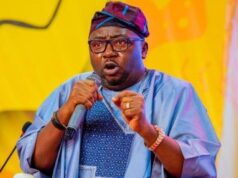









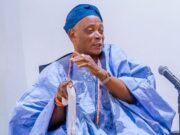

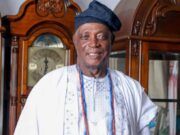
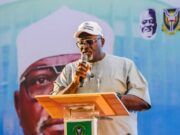
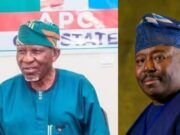








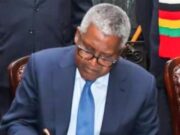



















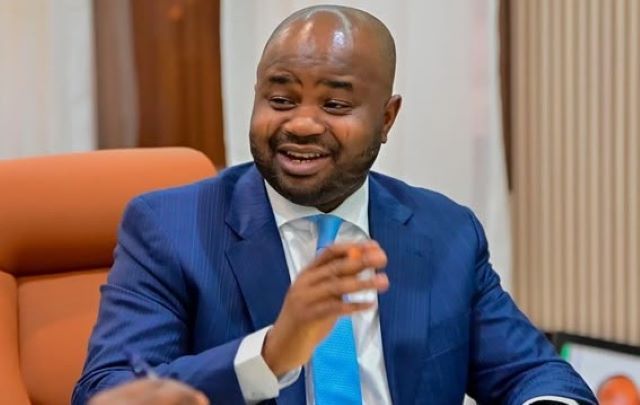
In a country where public life is often overwhelmed by spectacle, noise and performative politics, Zacch Adelabu Adedeji has emerged as an arresting exception. He is not loud. He is not flamboyant. He does not cultivate power through drama.
Yet, in the difficult and delicate business of rebuilding Nigeria’s fiscal foundations, few public officials in recent time have carried such weight with such quiet authority.
That is why, in discerning circles, Adedeji is increasingly spoken of in unusual terms: as the silent prime minister of Nigeria’s reforming fiscal state. The phrase may be unofficial, even metaphorical, but it captures a growing reality. At a moment when President Bola Ahmed Tinubu’s Renewed Hope Agenda rises or falls on the strength of economic reform, institutional discipline and domestic revenue mobilisation, Adedeji has become one of the most strategic figures in the country’s governance architecture.
His office is not ornamental. It is central.
As Executive Chairman of the nation’s foremost revenue institution, he sits at the very crossroads where policy ambition meets financial reality. In simpler terms, he is one of those tasked with answering the oldest and hardest question in governance: how does the state pay for its promises?
That question has become especially urgent in today’s Nigeria. Oil revenue, once the lazy comfort of public finance, can no longer sustain the ambitions of a modern state. Debt obligations are rising. Development demands are multiplying. Citizens are impatient for results. Government, meanwhile, must build infrastructure, support social commitments, restore investor confidence and finance reform in an economy under pressure. None of this can be achieved by slogans. It requires revenue — lawful, efficient, sustainable revenue.
This is the burden of Adedeji’s moment.
And he appears to understand it with uncommon clarity.
Before Abuja fully came to know his worth, Oyo State had already offered a glimpse of his method. As Commissioner for Finance under the late Governor Abiola Ajimobi, Adedeji was part of the fiscal engine room of a government that sought to balance developmental aspiration with resource constraint. That experience was no minor apprenticeship. In a state environment where every policy is tested against the stubborn arithmetic of limited revenue, he learned the discipline of numbers, the grammar of public finance and the hard truth that governance without fiscal order is merely ambition waiting to collapse.
Those who perform effectively in such roles acquire something deeper than administrative routine. They develop an instinct for institutional restraint, strategic planning and the management of scarce resources under public pressure. It is an experience that appears to have shaped Adedeji’s later national role.
Today, at the centre of Nigeria’s revenue administration, that grounding matters.
Nigeria’s tax system has long suffered from structural weakness. The country’s tax-to-GDP ratio remains among the lowest in the world, an embarrassing reality for a nation of such size and promise. The problem is not simply that government collects too little; it is that the system has historically been too narrow, too uneven and too vulnerable to inefficiency and leakages. Too many evade. Too few comply. Too much depends on a limited pool of taxpayers carrying an unfair burden.
To change that trajectory requires more than annual targets. It requires reform. Serious reform.
Under Adedeji’s leadership, the Federal Inland Revenue Service recorded a 2023 collection of about N12.37 trillion, exceeding its public target of roughly N11.56 trillion. In a struggling economy, that was no ordinary outcome. It suggested sharper institutional coordination, stronger compliance efforts and a revenue authority increasingly aware of its strategic role in the national equation.
But perhaps the more important story lies beyond the numbers.
Adedeji’s stewardship has signalled a push toward digitalisation, tax intelligence, improved compliance systems, reduced leakages and a broader, more coherent revenue culture. These are not cosmetic themes. They go to the heart of what a modern revenue institution should be. No country can tax its way into prosperity through crude force. Effective tax administration is built on data, efficiency, trust, transparency and a system that makes compliance easier while making evasion harder.
That appears to be the direction in which Adedeji is steering the institution.
There is also a larger political significance to his role. President Tinubu’s Renewed Hope Agenda cannot survive on aspiration alone. Reform must be financed. Government must generate more from within if it is to reduce unhealthy dependence on unstable oil income and unsustainable borrowing. In that sense, Adedeji is not merely leading an agency; he is helping to construct the financial backbone of the administration’s reform promise.
This is why his relevance continues to rise.
In a more flamboyant political culture, influence is often measured by visibility. But Adedeji’s authority derives from something more durable: usefulness. He represents a type Nigeria desperately needs — the serious technocrat who understands not only policy, but the machinery of implementation. He has become one of those rare public officials whose work, though less theatrical, may prove more enduring than the noise that usually dominates the national space.
Still, a balanced view demands caution. Public office in Nigeria does not permit easy canonisation. Revenue growth must be sustained. Reform must become structural, not episodic. Tax administration must be efficient without becoming oppressive. Government must also demonstrate that what it collects is used with greater responsibility and visible public value. These are the standards by which Adedeji, like any serious public servant, must ultimately be judged.
Yet even under the discipline of such scrutiny, his place in the current moment is difficult to dismiss.
Beyond the walls of government, his rise carries meaning for Oyo State as well. It reinforces the state’s long tradition of producing minds capable of national consequence. More importantly, it offers younger generations a different model of aspiration: one rooted not in noise, but in knowledge; not in spectacle, but in substance. In a time when public life too often rewards performance over preparation, that example has its own developmental value.
There is something fitting, almost poetic, about the kind of power Adedeji represents. It is not the power of the podium. It is the power of structure. The power of systems. The power of quiet competence at the centre of consequential things.
History, of course, is never written in haste. It waits. It measures. It compares promise with performance. But if the story of Nigeria’s fiscal reawakening is to be honestly told, Zacch Adelabu Adedeji will already have secured a place in its early chapters.
Not because he shouted the loudest.
But because, in a country badly in need of order, he understood that the deepest reforms are often carried not by noise, but by men who know how to make institutions work.
- Wale Ajani sent this in from Ibadan, the capital city of Oyo State