



























![L-R: Managing Director, BGL Securities Limited, Arnold A. Dublin-Green; Assistant Vice President, Financial Derivatives Limited, Dr. Ifeoma Nwokolo; CEO, Centre for the Promotion of Private Enterprise [CPPE], Muda Yusuf (speaker); Chairman of the Occasion, Chief Paul Usoro; Dean, Lagos Business School, Information Systems, Prof. Olayinka David-West; Managing Director/CEO, Financial Derivatives Company, Bismarck Rewane; Group Chief Branding & Communications Officer, Dangote Industries Limited, Anthony Chiejina at Dangote Petroleum Refinery & Petrochemicals IPO Roadshow tagged “Back to where it all began” in Port Harcourt. Rivers State on Monday, October 12, 2026…](https://pmparrotng.com/wp-content/uploads/2026/10/Dangote-imagee-180x135.jpg "As Dangote Refinery’s IPO Nears Close, Small Investors Take Center Stage")







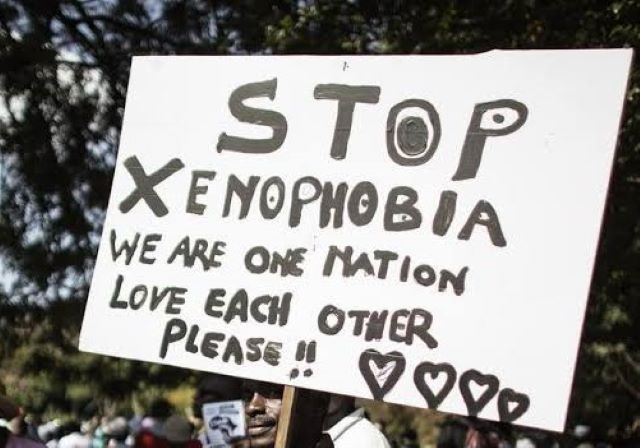
When a Nigerian trader’s shop is looted in Johannesburg, when a student is attacked in Durban, or when a professional is profiled at the airport in Pretoria, the pain does not end at the border.
It travels home to Lagos, Ibadan, Enugu, Awka, Port Harcourt, Calabar, Kano, Kaduna… all the states, their capitals, major towns and even villages in Nigeria.
Xenophobia is not a South African problem alone. It is an African problem. And Nigeria, as the continent’s largest economy with the largest Black population, carries both the responsibility and the leverage to respond.
To understand today, we must return to May 2008. That period Xenophobia first erupted in South Africa. Protests over jobs, housing, and basic services in Alexandra Township, Johannesburg, spiraled into nationwide attacks on foreign nationals. In weeks, more than 60 people were killed and over 100,000 were displaced. Shops were looted and burned.
The victims were not only Nigerians. They were Zimbabweans, Mozambicans, Malawians, Congolese, and Somalis. But the false narrative that took root was this: foreigners are taking our jobs. The world watched in disbelief because this was happening in post-apartheid South Africa — the country that had received so much solidarity from Africa during the struggle against apartheid.
That is where the hurt cuts deepest. Nigeria did not watch apartheid from a distance. We paid for it. We fought it. In the darkest years, Nigeria stood at the frontline. We gave diplomatic support at the UN and OAU, imposed sanctions, and granted scholarships to thousands of South African students and exiles. Nigerians contributed to the Mandela Tax Fund. Our government committed billions to the liberation movement. Many South Africans who are leaders today passed through Nigerian schools, hospitals, and homes. That history lives in the memory of a generation. So when an African is attacked in South Africa today, it feels like an erasure of that shared sacrifice.
The 2008 crisis forced both governments to act, but the response was reactive. Nigeria’s Ministry of Foreign Affairs condemned the attacks. President Yar’Adua spoke with President Mbeki. The High Commission set up emergency centers. The Nigeria-South Africa Bi-National Commission put anti-xenophobia on its agenda. Inside South Africa, the army was deployed, refugee camps opened, and the “Roll Back Xenophobia” campaign launched. The Human Rights Commission investigated, and community dialogues began. Religious leaders and Nigerian associations staged peace marches and watch groups.
Those steps brought calm, but not a cure. They did not address unemployment, poverty, poor services, and the scapegoating of migrants. That is why we saw flare-ups in 2015, 2019, and since.
We cannot keep recycling the 2008 playbook in 2026. Nigeria must lead with a stronger approach rooted in history and reality. First, diplomacy must be firm and truthful. In engaging South Africa, we must remind them of the blood and treasure Nigeria invested in their freedom — not to gloat, but to appeal to conscience. The Bi-National Commission needs a permanent sub-committee on citizen safety, with every attack documented, prosecuted, and reported. This must also be taken to the AU and SADC, because xenophobia threatens the African Continental Free Trade Area.
Second, we must protect Nigerians proactively. Maintain an updated database of Nigerians in South Africa by city. Create a legal aid fund to fight impunity. Run a 24-hour consular hotline, clear evacuation protocols, and honest, regular travel advisories.
Third, use economic leverage responsibly. MTN, Shoprite, and Multichoice operate here; Nigerian banks operate there. Our trade agreements must include clauses on citizen safety. Nigerian regulators must enforce compliance on SA businesses here. This is not punishment. It is reciprocity. Blanket boycotts only hurt workers on both sides.
Fourth, we must win the narrative war. 2008 was fueled by misinformation and amnesia. We must counter it with facts — amplify Nigerian doctors, lecturers, and entrepreneurs in SA. More importantly, teach our youth and remind South Africans about Nigeria’s role in ending apartheid. You cannot burn your brother’s shop and still preach One Africa.
Finally, we must lead by example. Nigeria hosts millions of West Africans. How we treat them in our markets, by our police, and in our communities determines our credibility abroad. Leadership starts at home.
We must also avoid certain traps. Violent reprisals against SA businesses in Nigeria will repeat the 2008 cycle and cost Nigerian jobs. Silence is not an option — doing nothing after 2008 is why we are still talking in 2026. And empty statements without action will destroy our credibility.
The lesson of 2008 is clear: if we only react after blood is spilled, we will keep burying victims. What Nigeria should do to South Africa is lead — with law, diplomacy, economic sense, and moral clarity. Hold government accountable. Protect our people. Remind the continent that no African should be a foreigner in Africa.
An injury to one Nigerian in Johannesburg is an injury to all of us. Eighteen years after 2008, and decades after Nigeria stood with South Africa against apartheid, our response must finally match the weight of that truth and that history.
We must lead other African nations to fight xenophobia the same way we fought apartheid way back.
- Segun Dipe is a Public Opinion Analyst