







































![L-R: Managing Director, BGL Securities Limited, Arnold A. Dublin-Green; Assistant Vice President, Financial Derivatives Limited, Dr. Ifeoma Nwokolo; CEO, Centre for the Promotion of Private Enterprise [CPPE], Muda Yusuf (speaker); Chairman of the Occasion, Chief Paul Usoro; Dean, Lagos Business School, Information Systems, Prof. Olayinka David-West; Managing Director/CEO, Financial Derivatives Company, Bismarck Rewane; Group Chief Branding & Communications Officer, Dangote Industries Limited, Anthony Chiejina at Dangote Petroleum Refinery & Petrochemicals IPO Roadshow tagged “Back to where it all began” in Port Harcourt. Rivers State on Monday, October 12, 2026…](https://pmparrotng.com/wp-content/uploads/2026/10/Dangote-imagee-180x135.jpg "As Dangote Refinery’s IPO Nears Close, Small Investors Take Center Stage")






The National Human Rights Commission (NHRC) has warned over the growing use of hate speech, inflammatory remarks, and political intimidation ahead of the 2027 general elections, warning that unchecked rhetoric could trigger violence and undermine Nigerians’ right to participate freely in the democratic process.
The Commission called on security agencies, political parties, religious and traditional institutions, the media, and social media users to take preventive action against statements capable of provoking hostility, discrimination, or violence, stressing that authorities must not wait until inflammatory rhetoric translates into bloodshed before intervening.
The executive secretary of the NHRC, Chief Tony Ojukwu, gave the warning in Abuja while addressing journalists at the Commission’s headquarters, where he expressed concern over recent statements attributed to some public figures.
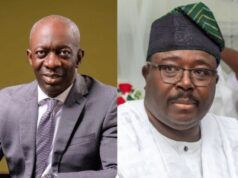
He specifically cited remarks linked to Sheikh Sani Yahaya Jingir and Senator Francis Fadahunsi, saying the Commission considered some of the statements capable of aggravating existing social divisions, threatening individual and group dignity, and creating an atmosphere conducive to violence.
He clarified that the Commission’s intervention was not directed at any political party, religious organisation, ethnic group, or individual but was part of its constitutional mandate to safeguard the rights, dignity, and equal worth of all Nigerians.
According to him, freedom of expression is fundamental to democracy but must be exercised responsibly.
He warned that the right to free expression should not be interpreted as a licence to incite violence, promote hatred, dehumanise citizens or deliberately provoke hostility against particular individuals or communities.
“Hate speech should not be dismissed as mere political rhetoric or provocative language,” Ojukwu said, noting that rhetoric portraying individuals or communities as enemies, inferior, dangerous, or undeserving of rights could ultimately encourage discrimination, exclusion, and violence.
He said the consequences of such rhetoric could extend beyond individual victims to include voter intimidation, political violence, restrictions on civic participation, discrimination, and the further entrenchment of ethnic, religious, and regional divisions.
The NHRC boss warned that sustained inflammatory discourse could also weaken public confidence in democratic institutions and discourage citizens from exercising their constitutional rights.
He therefore urged political actors to make the 2027 election campaigns a contest of ideas, policies, competence, and records of service rather than one driven by ethnic, religious, or sectional hostility.
Ojukwu said election-related violence could take different forms, including attacks or threats against political opponents and voters, communal conflicts, displacement, suppression of political participation, and the erosion of public trust in democratic institutions.
Drawing lessons from history, he referred to the 1994 genocide against the Tutsi in Rwanda as a stark reminder of how sustained propaganda, dehumanisation and incitement could contribute to catastrophic violence.
He was quick to stress that Nigeria was not Rwanda but said the lesson remained relevant because societies that allow dangerous rhetoric to go unchecked could create conditions for violence to escalate.
“Societies must not wait until inflammatory rhetoric translates into violence before taking preventive action,” he said, stressing that prevention was a fundamental human rights obligation.
Ojukwu maintained that the government has the primary responsibility, under national and international law, to prevent violence and protect citizens, assuring that the NHRC would continue monitoring developments throughout the electoral cycle.
He said the Commission would document human rights concerns, engage political and community stakeholders, and deploy its statutory powers to promote and protect citizens’ rights.
The executive secretary called on political parties to strengthen their internal mechanisms for identifying, preventing, and sanctioning inflammatory and intimidating conduct among their members and candidates.
He equally appealed to religious, traditional, and community leaders to use their considerable influence to promote tolerance, peaceful coexistence, and mutual respect.
Law enforcement agencies, he said, should respond appropriately to credible cases of incitement, threats, intimidation, and other unlawful conduct, while ensuring that constitutional safeguards and fundamental rights are respected.
The NHRC chief also urged media organisations and social media users to exercise caution when reporting inflammatory statements, warning against amplifying provocative remarks without sufficient context, verification, and consideration of the wider public interest.
Packaged by Lanre Olabisi