








































A Professor of History in the Department of History and Strategic Studies at the University of Lagos, Professor Ayodeji Olukoju, has called on Nigerian leaders to think beyond themselves and ensure they leave positive legacies.
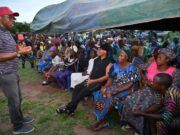
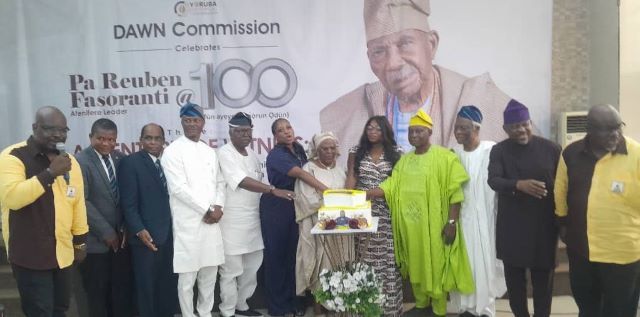
Olukoju made the call while delivering a lecture titled “Leadership with Service: A Keyhole View of Political Leadership in Western Nigeria from the 1950s to 1983” at a special Yoruba historical conversation held in honour of Pa Reuben Fasoranti’s centenary in Ibadan.
At the event organised by the Development Agenda for Western Nigeria (DAWN) Commission, the professor said leadership in the Yoruba nation is a privilege to serve the people and does not confer a master status.
“In the long and short of it, we call something histologia — that is, looking back. Some people say looking back is not progressive and that one should forget the past and just move forward.
“But you cannot move forward if you do not understand where you were, where you are now, and why you are where you are.
“So we began to go back into history to learn how things were done, and done properly, in the First Republic. Even going back to the 1950s, in the late colonial period, through the First Republic, then the military interregnum, and the Second Republic. I use the Second Republic as a benchmark; that is, you have a ‘before’ and ‘after.’
“Before 1983, there was a semblance of good governance. People understood what it meant. You did not have to be educated or attend university to know what governance was. But from 1983 onwards, it seems the culture has shifted from òṣèlú to òjèlú, which is why a government in Ekiti coined the term ‘stomach infrastructure.’
“Someone like Awolowo would have wondered what is happening. I think we should go back and analyse what those leaders did well, and that begins with the individual — whether as a party member or leader, and whether in or out of government.
“There is a popular saying that a friend in government is a friend lost, because when they get there, they change. Why was it that our former leaders went into government and came back the same?” he said.
Olukoju stressed the need for engagement beyond the ritual of voting, urging Nigerians to learn from history and comparative perspectives about what good governance means and how it can be achieved.
“They should de-emphasise the pursuit of vanity and the loss of cultural values, which has resulted in people no longer demanding to know the source of sudden wealth. The prevailing culture of vote-buying through the distribution of cash and other forms of inducement should be resisted. Accepting such inducements to vote for bad candidates is to mortgage the future.
“Communities should demand projects that make life better and easier for everyone, rather than enriching the private pockets of a few. It is tragic that the amount of money invested in grand chieftaincy installations, marriages or funeral ceremonies across the region could have been better spent on drainage, local health facilities and potable water supply.
“Our people should stop honouring those who acquire wealth through dubious means. They should not push for the appointment of individuals with questionable character on the grounds that every group needs its ‘bad boys’ to confront others,” he added.
The professor emphasised that former leaders who left good legacies were not angels but mortals.
“If they could do it, why can’t we? If things have changed, why did they change? And if we need to reverse the current situation, what must we do?
“It comes down to the individual — home upbringing, schooling and, most importantly, character. It is not about academic content but about values.
“If you look at a place like Singapore, what changed it? Singapore had nothing. In fact, it was expelled from the Malay Federation and abandoned. But someone stood up and said: we are human beings.
“Those developed nations in the West are not different from us — they do not have two heads. Why can’t we be disciplined? Corruption was strictly stamped out, and that remains the case today.
“If leaders lead by example — do not steal, do not inflate contracts, do not site projects improperly and do not build ‘bridges to nowhere’ — then governance will improve,” he said.
The don described Pa Fasoranti as a visionary, confident and pragmatic leader whose impact cannot be overemphasised in the history of the Yoruba people and Nigeria as a whole.
In his welcome address, the Director-General of the DAWN Commission, Dr Seye Oyeleye, described Pa Fasoranti as a man who fought tirelessly against successive military regimes, particularly the Abacha dictatorship, surviving assassination attempts and enduring persecution in pursuit of democracy.
“To celebrate Baba at this moment is to celebrate our legacy and history. He did not merely witness the golden era of Western Region development; he actively participated in it and became a custodian of its finest values.
“We can draw comparisons between the leadership and citizenship of that era and what we have today. Our political behaviour, development culture, patterns of life and belief in the Nigerian project have all been shaped by our history. In reflecting, we must ask ourselves: what part have we played, or are we playing?
“This is the right time to celebrate Baba and use his life as a mirror for our present society, especially as we navigate an active electioneering period.
“This event also calls attention to the care of our elders. We appreciate the Fasoranti family for their devotion, and we hope South West states will give serious attention to geriatric healthcare policies to cater to the elderly, especially as traditional support systems have weakened,” he said.