













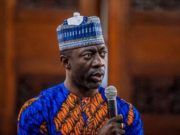
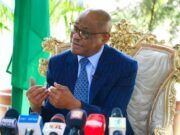










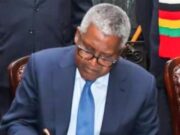











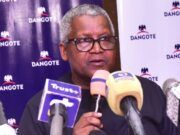









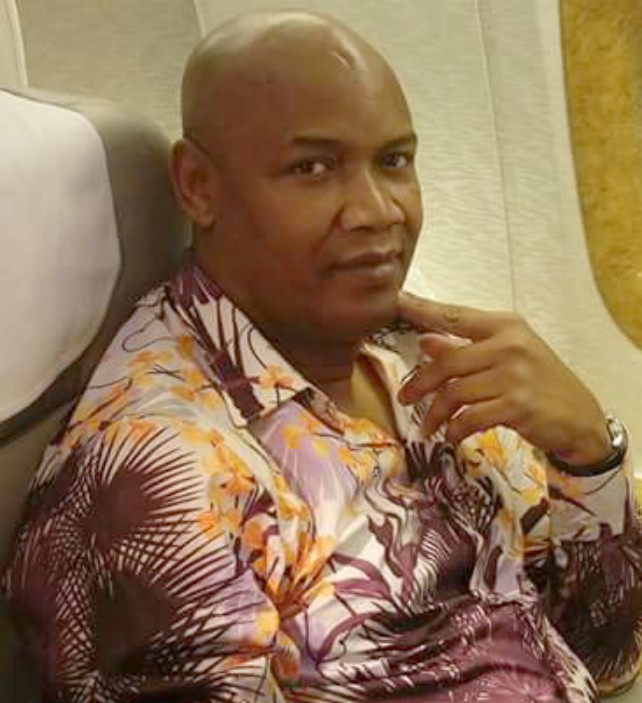
A businessman, philanthropist, and community leader, Mogaji Wole Arisekola, has urged President Bola Ahmed Tinubu to privatise the Transmission Company of Nigeria (TCN) and fully digitalise the country’s electricity transmission network as part of efforts to address persistent power supply challenges.
Arisekola, who is the publisher of The Wall Street Journal, made the call in an open letter to the President, while commending the recent improvement in electricity supply recorded in some parts of the country.
He said the improvement was “commendable” and that Nigerians should acknowledge progress whenever it occurs but argued that the country’s electricity crisis goes beyond generation and distribution.
According to him, transmission remains a major challenge because it is still controlled and operated by the government through the TCN.
“Mr President, there can never be lasting success in the power sector as long as the government continues to leave electricity transmission entirely in the hands of civil servants,” he said.
Arisekola alleged that electricity supply in some areas was influenced by personal relationships and influence rather than the needs of consumers or the capacity of the system.
“Let me give you a simple example. If you want uninterrupted electricity in your home or neighbourhood, you may only need to have a friend in the transmission office,” he said.
“Privatising electricity generation and distribution while leaving transmission in the hands of civil servants will never produce the desired result.
“You cannot privatise the beginning and the end of the electricity value chain while leaving its most important bridge under the same public bureaucracy that contributed to the collapse of the system,” he said.
Arisekola recalled that he had previously written to former President Goodluck Jonathan during the privatisation of the electricity sector, warning against leaving transmission under government control.
He also cited the deregulation of the telecommunications industry under former President Olusegun Obasanjo as an example of how increased private-sector participation, in his view, transformed access to telecommunications services.
According to him, before the telecommunications sector was deregulated, obtaining a telephone line could take years and was sometimes influenced by personal connections or payments.
“Today, because private investors were allowed to participate fully, nearly every Nigerian can own a telephone line,” he said.
“That is what genuine deregulation can achieve.”
Arisekola commended the removal of the petrol subsidy, arguing that retaining the system could have exposed the country to greater financial losses.
“Nigerians should be thanking their stars for the removal of the petrol subsidy,” he said.
He maintained that the experience of institutions such as the Nigerian Railway Corporation, Nigeria Airways, and NITEL showed the challenges associated with government management of major commercial enterprises.
“Nigeria Airways once carried our national flag across the world. It disappeared under the weight of corruption and mismanagement,” he said.
“NITEL, which once controlled telecommunications in Nigeria, collapsed despite the country’s enormous population and demand for telephone services.”
Arisekola acknowledged that some civil servants were working to improve the country but argued that weaknesses within the system could undermine government policies.
“Some honest civil servants are working hard for Nigeria, and they must be acknowledged. But the system itself encourages delay, secrecy, monopoly, and corruption,” he said.
He therefore called on the Tinubu administration to urgently privatise the TCN and require investors in the sector to digitalise the transmission network. HireGrant Writers
“Mr President, as a matter of urgency, your administration should privatise the Transmission Company of Nigeria and make it mandatory for any serious investor coming into the sector to digitalise the entire transmission network,” he said.
Arisekola said Nigeria needed a “modern, transparent, and technology-driven transmission system” in which electricity movement could be digitally monitored from generation through transmission and distribution to homes and businesses.
“The time for total reform is now.”
Credit: thenationonlineng.net