

















Happy Independence Day, Nigeria. Today, October 1, 2026, Nigeria marks 66 years of independence.
I have spent considerable time studying the pattern surrounding Nigeria from this Independence Day to the next. I have also compared what I found with what is already happening in the country—the economy, government finances, politics, security, young people, technology and the approaching 2027 general election.
I won’t tell Nigerians that everything will suddenly become fine because today is Independence Day.
I also won’t tell you that Nigeria is about to collapse simply because frightening predictions travel faster on social media.
What I see is more complicated than either story.
Nigeria has entered a year of reckoning, correction and consequence.
Government will be judged increasingly by what it completes, not what it announces. Money will become an even bigger national argument. Young Nigerians will move closer to the centre of economic and political power. Political alliances will change. Courts and other institutions will face difficult tests. Hidden weaknesses will become harder to keep hidden.
But perhaps the biggest question of the next twelve months is remarkably simple:
Can the improvement government says is happening in the economy finally become something ordinary Nigerians can actually feel?
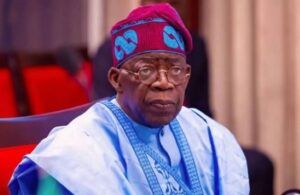
President Bola Tinubu addressed the country this morning under the theme “From Reform to Prosperity.” He argued that Nigeria has passed through the harshest stage of economic reform and must now convert stability into prosperity people can experience. His own definition was practical: affordable food and transportation, reliable electricity, productive work for young Nigerians, access to credit, safer farming and better opportunities for families. (State House Abuja)
That brings us directly to the central issue I see.
Nigeria’s next twelve months are not merely asking whether the economy can improve.
They are asking:
WHEN WILL NIGERIANS FEEL THE IMPROVEMENT?
Because an economy recovering in Abuja and a family recovering in Agege, Aba, Kano, Ibadan or Port Harcourt are not necessarily the same thing.
⸻
FIRST, WHERE DOES NIGERIA REALLY STAND?
There is genuine evidence of economic improvement.
The National Bureau of Statistics reports that real GDP grew 3.89% year-on-year in the first quarter of 2026, against 3.13% in the same quarter of 2025. Manufacturing grew 3.29%, trade grew 2.08%, and the non-oil economy accounted for 96.08% of real GDP. (Nigerian States)
The President said this morning that growth has since moved above 4% this year. That is the government’s current assessment; the NBS website currently still prominently displays its Q1 figures, so I make that distinction deliberately rather than mixing the two numbers together. (State House Abuja)
Inflation has fallen substantially. NBS currently reports headline inflation at 15.39% and food inflation at 19.57%. (Nigerian States)
The Central Bank has also reset its Monetary Policy Rate to 23% following its September 21–22 meeting. (Central Bank of Nigeria)
And yet none of these figures settles the argument around the Nigerian dining table.
A government official can correctly say inflation has fallen.
A woman pricing food in the market can correctly say food is still too expensive.
Both can be telling the truth.
Because falling inflation does not mean prices have returned to where they were. It means the general rate at which prices are increasing has slowed.
That difference will become politically important.
Nigerians don’t eat GDP. No.
They experience an economy through food, rent, transportation, electricity, medication, school fees, interest on loans, the availability of work and whatever remains after the month’s bills have been paid.
That is where the real economic verdict will be delivered.
⸻
THIS IS AN ACCOUNTABILITY YEAR
The first major message I see concerns government itself.
Nigeria is entering a period when implementation becomes more important than announcement.
There will still be launches, speeches, budgets, memoranda, committees and promises.
But the public mood will increasingly ask a less glamorous question:
What was actually completed?
That question will follow roads.
Power.
Agriculture.
Housing.
Security.
Healthcare.
Education.
Employment programmes.
Government revenue.
Public infrastructure.
And something happened yesterday that makes this theme almost impossible to ignore.
On September 30, President Tinubu signed another amendment extending implementation of the 2025 budget until December 31, 2026, specifically giving ministries, departments and agencies additional time to complete ongoing capital projects. (State House Abuja)
Meanwhile, the 2026 Appropriation Act itself provides for ₦68.32 trillion in expenditure, including ₦15.8 trillion for debt service and ₦32.2 trillion for the Development Fund for Capital Expenditure. (State House Abuja)
So there is something Nigerians should understand.
Some of the biggest stories of the coming year will not actually begin in the coming year.
They will be old matters returning because they were never properly settled.
Old projects.
Old obligations.
Old contracts.
Old political grievances.
Old court cases.
Old security problems.
Old debts.
Old promises.
Nigeria will spend part of this cycle meeting yesterday at the door.
And yesterday will be asking for payment.
⸻
MONEY WILL BE ONE OF THE GREAT BATTLEGROUNDS
I cannot overstate how strongly money runs through this period.
Revenue.
Taxes.
Debt.
Banking.
Investment.
Foreign exchange.
Public expenditure.
Contracts.
Borrowing.
Household purchasing power.
Nigeria is moving through a deep financial restructuring.
Some of it is necessary.
More economic activity will become visible to government.
Tax administration will become increasingly digital.
Revenue collection will become more sophisticated.
Leakages will attract attention.
Financial institutions will continue adapting to tighter regulation and recapitalisation.
But the uncomfortable side of the story is financial opacity.
Large numbers will be announced.
Revenue improvements will be announced.
Investments will be announced.
Loans will be announced.
Projects will be announced.
The public question will increasingly be:
Where is the money?
That question does not mean every government figure is false.
It means Nigerians will increasingly demand a connection between the figure announced and the result delivered.
If revenue improves, what changed?
If borrowing increases, what was built?
If investment arrives, where are the jobs?
If GDP expands, whose income expanded with it?
If billions are allocated, where is the completed project?
This year puts unusual pressure on the distance between financial presentation and financial reality.
I expect serious arguments around taxation, revenue, public expenditure and borrowing.
I expect scrutiny around major contracts and financing arrangements.
And I would not be surprised if a significant financial institution, revenue mechanism, major contract, public-finance arrangement or economic deal is forced through uncomfortable investigation, restructuring or public scrutiny.
Somebody may eventually have to open books that were not meant for everybody to read.
⸻
FOLLOW THE MONEY BEHIND THE MONEY
There is an even deeper layer.
Nigeria should pay attention not merely to money that is visible, but to ownership and financial relationships that are difficult to see.
Who ultimately owns what?
Who benefits from a contract?
Who stands behind a company?
Where does extracted wealth end up?
Who finances a network?
Who receives payment after the public-facing company receives payment?
This is where procurement chains, beneficial ownership, tax avoidance, revenue leakages, illegal extraction, oil theft and unexplained financial relationships become important.
I am not accusing a particular person or institution of wrongdoing.
I am saying the coming period is unusually unfriendly to arrangements that depend upon remaining hidden.
Some secrets survive because nobody looks.
Others survive because the people looking are afraid.
This is a year in which both conditions can change.
⸻
DEBT WILL NOT QUIETLY DISAPPEAR
Nigeria’s public debt remains a serious national consideration. The Debt Management Office’s latest published position covers June 30, 2026. (Debt Management Office )
But simply shouting “debt” does not tell us enough.
A country can borrow and become more productive.
A country can also borrow and leave future generations with obligations without creating enough productive assets to service them.
The proper questions are:
What was borrowed?
At what cost?
In what currency?
For how long?
What was the money used for?
And what will exist when repayment becomes due?
That is why I expect increasing scrutiny of loans, concessions, public-private partnerships and foreign financing arrangements.
Some will be useful.
Some may look much better at the signing ceremony than they look after Nigerians read the obligations.
The message here is simple:
Read the fine print.
Nigeria must learn to negotiate as a country that knows its value.
⸻
THE COST OF LIVING REMAINS THE REAL REFERENDUM
Inflation at 15.39% is substantially better than the levels Nigerians endured before.
Food inflation at 19.57% also tells us why relief can still feel distant. (Nigerian States)
The trader doesn’t restock at yesterday’s price because somebody announced a better inflation figure.
The salary earner doesn’t recover purchasing power automatically.
The small business still calculates power, transport, rent, wages and replacement costs.
The family still knows what school fees cost.
So I expect an increasingly sharp argument between macro-economic success and lived economic experience.
Government will point to improving indicators.
Critics will point to continuing hardship.
Neither side should be allowed to win the argument simply by shouting louder.
Look at the evidence.
And then look at people’s lives.
⸻
YOUNG NIGERIANS ARE MOVING TOWARDS THE CENTRE OF THE STORY
One of the clearest messages I find concerns young Nigerians.
Not just as voters.
As economic power.
Cultural power.
Technological power.
Political power.
And, if badly handled, disruptive power.
Technology, fintech, artificial intelligence, music, film, remote work, social media, digital businesses and political organising are giving younger Nigerians forms of influence previous generations did not possess at the same age.
A young Nigerian no longer necessarily needs a Nigerian institution to provide the opportunity.
Someone in Ibadan can work for a company in Toronto.
A designer in Lagos can sell to somebody in Berlin.
A filmmaker in Enugu can reach audiences on another continent.
A software developer can earn internationally without leaving his bedroom.
A Nigerian musician can become globally relevant before traditional gatekeepers even understand what happened.
That is extraordinary.
But there is another side.
Nigeria is also accumulating young frustration.
Unemployment.
Underemployment.
Economic exclusion.
Migration pressure.
Distrust of institutions.
The feeling that connections matter more than competence.
The belief among some young people that legitimate work takes too long to produce a decent life.
That frustration is politically valuable.
And whoever learns how to organise it will possess considerable power.
That can become constructive—voting, entrepreneurship, civic organisation, technology, community building.
But frustrated young people are also attractive to people with darker intentions.
Political mobilisation.
Criminal networks.
Extremist narratives.
Online radicalisation.
Cult-like communities.
Violence merchants.
People selling revolutionary shortcuts.
So one of my strongest warnings is this:
ANYBODY WHO LEARNS HOW TO ORGANISE FRUSTRATED NIGERIAN YOUTH WILL POSSESS UNUSUAL POWER.
And not everybody trying to organise them will have good intentions.
⸻
FAST MONEY WILL CONTINUE TO CREATE VICTIMS
The same digital economy producing legitimate wealth is also producing sophisticated exploitation.
Betting.
Ponzi schemes.
Fake investment platforms.
Fraudulent trading programmes.
Forex promises.
Crypto speculation.
Romance scams.
Fake gurus.
“Guaranteed returns.”
“Double your money.”
And increasingly convincing digital deception.
Economic desperation lowers people’s resistance to impossible promises.
Some young Nigerians will build extraordinary wealth through legitimate technology, creativity and enterprise.
Others will lose everything trying to become rich before Friday.
Financial literacy is no longer merely useful.
For many people it has become a form of self-defence.
⸻
THE 2027 ELECTION CHANGES THE TEMPERATURE OF EVERYTHING
The coming election sits directly inside this twelve-month period.
INEC’s current calendar schedules the nationwide Presidential / House of Assembly election for January 16, 2027, followed by Governorship / State House of Assembly elections on February 6, 2027 in participating states and constituencies. Its detailed timetable covers the wider general-election process. (INEC Nigeria)
The political atmosphere will intensify.
Alliances will change.
Defections will happen.
Old enemies can negotiate.
Current allies can separate.
Coalitions will form.
Some will be ideological.
Many will be transactional.
Business interests, governors, legislators, financiers, political operators, diaspora networks and other power centres will become increasingly important.
The interesting thing is that networks work both ways this year.
Some of Nigeria’s biggest problems will travel through networks.
And some of Nigeria’s biggest opportunities will also arrive through networks.
The question is not merely who joins whom.
Ask:
Why?
An alliance held together solely by opposition to another person may become fragile once that common enemy disappears.
An alliance held together by shared interests can survive much longer.
I will not tell Nigerians from this reading who will win the presidential election.
That decision belongs to voters, the electoral process and the institutions responsible for administering it.
What I can say is that the contest places enormous pressure on the credibility of those institutions.
⸻
THE INFORMATION WAR MAY BECOME AS IMPORTANT AS THE POLITICAL WAR
The next election will not be fought only at rallies and polling units.
A substantial part of it will happen inside people’s phones.
Old videos presented as new.
Edited footage.
Fake documents.
False endorsements.
Manipulated audio.
AI-generated material.
Invented statistics.
Coordinated narratives.
Ethnic provocation.
Religious provocation.
Political propaganda dressed like independent journalism.
This is not an imaginary concern.
The Presidency warned in May that fake and divisive reports were likely to proliferate as campaigns approached, and at the August 2026 Peace Accord event the President’s representative specifically referred to misinformation created with artificial intelligence and spread through social media. Those are government statements, but they show that information integrity is already a live issue in the election environment. (State House Abuja)
But my concern goes beyond elections.
One of Nigeria’s greatest dangers this year may not simply be what happens.
It may be disagreement over what actually happened.
A security incident happens and five casualty figures circulate.
An audio recording appears and nobody initially knows whether it is genuine.
A government statement contradicts eyewitness accounts.
An old video suddenly becomes “breaking news.”
A rumour moves through WhatsApp before a newsroom has even verified the event.
A false story acquires ethnic or religious meaning before the facts arrive.
By the time the truth puts on its shoes, the lie may already have crossed Nigeria.
So verify before believing.
And verify again before forwarding.
⸻
SECURITY ENTERS A MORE CONFUSING PHASE
I won’t remove this part because it is uncomfortable.
I see heightened vulnerability around infiltration, intelligence failures, misinformation, asymmetric threats and adversaries whose relationships are difficult to identify cleanly.
Nigeria’s security challenges increasingly overlap.
Terrorism.
Banditry.
Kidnapping.
Oil theft.
Illegal mining.
Cross-border crime.
Cybercrime.
Criminal financing.
Local protection networks.
Political interests.
The difficult question becomes:
Who is financing whom?
Who is protecting whom?
Where does ordinary criminality intersect with powerful interests?
Which intelligence is accurate?
Which account is propaganda?
Which “community problem” is actually connected to a wider network?
This creates a fog around security itself.
And fog is dangerous because government can make the wrong decision even when it genuinely intends to make the right one.
Nigeria therefore needs better intelligence, better coordination and much better communication during crises.
A country fighting enemies it cannot clearly identify has two battles:
the enemy itself, and confusion about the enemy.
⸻
HIDDEN NETWORKS ARE VULNERABLE
I expect exposure.
Not necessarily one enormous scandal that explains everything.
It may come in pieces.
Procurement.
Revenue leakage.
Oil theft.
Illegal financial networks.
Cyber intrusion.
Hidden political relationships.
Contracts.
Whistleblower disclosures.
Institutional corruption.
Beneficial ownership.
People who appear unconnected suddenly discovered to be connected.
Some revelations will represent genuine accountability.
Others may emerge because one faction wants to weaken another.
Nigerians must understand something important: political motivation does not automatically make disclosed evidence false.
Ask whether the evidence is real.
Not merely why somebody released it.
⸻
THE COURTS WILL CARRY ENORMOUS WEIGHT
The legal system becomes one of the great institutional theatres of the year.
Election disputes are the obvious part.
But it goes beyond elections.
Constitutional interpretation.
Commercial disputes.
Government authority.
Institutional powers.
Political rights.
Regulatory battles.
I expect consequential litigation and judgments that provoke strong public argument.
Some decisions may force institutions to reconsider practices they have taken for granted.
But I won’t tell Nigerians beforehand that a particular court will overturn a particular election.
That would be pretending to know more than the evidence allows.
The stronger message is this:
The judiciary will repeatedly be asked where political power ends and the law begins.
And Nigerians will be watching.
⸻
CRITICAL SYSTEMS NEED PROTECTION
When people hear “infrastructure,” they often imagine roads and bridges.
My concern is broader.
Electricity.
Pipelines.
Oil facilities.
Telecommunications.
Banking systems.
Payment networks.
Government databases.
Election technology.
Transportation.
Cyber infrastructure.
These systems are increasingly interconnected.
That makes modern Nigeria more efficient.
It also creates new vulnerabilities.
A problem in one system can spread rapidly into another.
I see elevated risk of sudden disruption arising from equipment failure, cyberattack, sabotage, human error, inadequate maintenance or systems simply carrying more pressure than they were designed to handle.
I am not predicting that a particular aircraft will crash, a particular pipeline will explode or the national grid must collapse on a certain date.
That would be irresponsible.
The warning is broader and more useful:
Nigeria should take resilience seriously before failure forces it to.
Maintenance is cheaper than disaster.
Cybersecurity is cheaper than recovery.
Redundancy looks wasteful until the primary system stops working.
⸻
LABOUR AND PUBLIC SERVICES REMAIN RESTLESS
Workers are still carrying the consequences of the economic adjustment.
Wages.
Pensions.
Healthcare.
Education.
Civil-service restructuring.
Employment conditions.
A lower inflation rate does not automatically restore purchasing power already lost.
So I expect difficult labour negotiations.
Some threatened actions will be resolved.
Others may interrupt services.
Healthcare remains especially important because Nigeria continues competing with richer countries for trained professionals.
The japa conversation is not only about the Nigerian who leaves.
It is also about the nurse who is no longer in the ward.
The doctor who is no longer in the hospital.
The lecturer who is no longer in the university.
The engineer who is building another country’s infrastructure.
Migration can transform an individual’s life while simultaneously weakening the institution that person left behind.
Both things can be true.
⸻
FOOD, LAND AND HOUSING BECOME EVEN MORE POLITICAL
Food is no longer merely an agricultural conversation.
It is a security conversation.
A transportation conversation.
A household conversation.
And inevitably, a political conversation.
The President today placed significant emphasis on mechanised irrigation, dry-season farming, seeds, fertiliser, storage, transportation, roads, railways and ports as ways of reducing living costs. (State House Abuja)
The logic is straightforward.
But execution decides whether it works.
A farmer who has fertiliser but cannot safely reach the farm has a problem.
A farmer who produces food that becomes too expensive to transport has another problem.
A family whose salary increases while rent and food increase faster has not become richer.
Nigeria will increasingly discover that national economic success must eventually be solved house by house.
⸻
FOREIGN PARTNERSHIPS WILL REQUIRE HARDER NEGOTIATION
Nigeria needs the world.
The world also needs things from Nigeria.
Energy.
Markets.
Minerals.
Consumers.
Technology opportunities.
Regional influence.
Investment returns.
Security cooperation.
That means international partnership should not be approached as charity.
I expect harder bargaining around investment, infrastructure finance, trade, energy and strategic relationships.
Nigeria should repeatedly ask:
What exactly are we receiving?
What are we surrendering?
Who owns the asset?
Who carries the risk?
Who receives the revenue?
What happens ten years from now?
Some international arrangements will be highly beneficial.
Others may appear generous until the obligations become visible.
Again:
Read the fine print.
⸻
THE DIASPORA BECOMES EVEN MORE IMPORTANT
Nigeria’s diaspora is no longer simply a population living elsewhere.
It is part of the country’s economic and intellectual architecture.
Family support.
Investment.
Skills.
Technology.
Professional networks.
Business connections.
Ideas.
Political conversation.
The relationship will deepen.
But the contradiction deepens too.
Nigeria celebrates Nigerians succeeding abroad while simultaneously asking why so many talented Nigerians want to leave.
Eventually the more useful question is not:
“Why are they going?”
It is:
What would make them stay?
And perhaps more importantly:
What would make some of those who left confident enough to return and build?
⸻
RELIGION WILL REMAIN BOTH REFUGE AND INSTRUMENT
When institutions become uncertain, people search for certainty elsewhere.
Churches.
Mosques.
Traditional spirituality.
Prayer communities.
Prophetic movements.
Nigeria will lean heavily into faith during this period.
That can stabilise communities.
It can also be manipulated.
As political competition intensifies, religious identity can become a shortcut for people who want emotional loyalty without having to make a serious argument about policy.
Religious leaders therefore carry enormous responsibility.
Faith should not become ammunition.
⸻
I ALSO SEE THE POSSIBILITY OF NATIONAL MOURNING
This is another uncomfortable part I refuse to remove simply because it is uncomfortable.
The pattern around established authority and older national figures is heavy enough for me to regard national mourning involving one or more prominent elder statesmen, senior public personalities or respected national figures as a heightened possibility during this period.
I will not name anyone.
I will not speculate about anyone’s health.
And I will not pretend that the death of a specific person has been predetermined.
But transition among established figures and moments of national mourning belong in this reading.
Removing it simply because death is uncomfortable would make the reading less truthful, not more responsible.
⸻
BUT THIS IS NOT A STORY OF NOTHING BUT TROUBLE
That would also be a distortion.
There are real openings here.
Technology.
Agriculture.
Manufacturing.
Fintech.
Creative industries.
Artificial intelligence.
Energy.
Digital services.
Infrastructure.
Regional trade.
Diaspora investment.
International partnerships.
The same period producing disruption can produce extraordinary opportunity.
Some old systems will struggle precisely because new systems are becoming possible.
Nigeria’s private sector has repeatedly demonstrated an ability to build around institutional failure.
Power problems create energy businesses.
Payment problems helped create fintech.
Weak formal employment accelerated entrepreneurship and remote work.
Distribution problems create logistics businesses.
Housing shortages create construction opportunities.
The challenge is moving beyond endlessly improvising around broken systems.
Nigeria must begin building systems that work without requiring every citizen to become a survival expert.
⸻
THE BIGGEST DANGER IS NOT SIMPLY COLLAPSE
After putting everything together, I don’t believe the central danger of this period is the dramatic idea that Nigeria suddenly disappears into economic collapse.
The more persistent danger is less theatrical.
IMPLEMENTATION FAILURE.
Nigeria has plans.
Nigeria has budgets.
Nigeria has resources.
Nigeria has entrepreneurs.
Nigeria has intelligent people.
Nigeria has international partners.
Nigeria has an enormous domestic market.
What Nigeria repeatedly struggles with is the distance between decision and delivery.
Yesterday’s extension of the 2025 budget until December 31 so that ongoing capital projects can be completed is a real-world reminder of that problem. (State House Abuja)
Nigeria must learn to finish.
⸻
AND THE BIGGEST OPPORTUNITY IS MODERNISATION
There is another force running through the year.
Old structures are being challenged by new methods.
Digital government.
Electronic payments.
Artificial intelligence.
Data.
Automation.
Fintech.
Modern agriculture.
Remote work.
Creative exports.
New energy systems.
Young entrepreneurs.
Diaspora networks.
Nigeria can modernise faster than many Nigerians imagine.
But modernization has enemies.
Not necessarily because people hate progress.
Sometimes inefficiency is somebody’s business model.
A transparent system threatens the person making money from opacity.
A digital process threatens the gatekeeper.
A working institution threatens the middleman whose relevance depends upon the institution not working.
That is why genuine reform often creates resistance.
But we must also remember the opposite:
Calling something “reform” doesn’t automatically make it good.
Judge what it produces.
⸻
MY MESSAGE TO GOVERNMENT
This is the year to show your workings.
If revenue rises, show Nigerians what the money produced.
If government borrows, show what the borrowing built.
If inflation falls, work until the improvement reaches food, transportation and household expenses.
If money is released for infrastructure, complete the infrastructure.
If corruption is uncovered, pursue accountability consistently rather than selectively.
If GDP grows, ask whether productivity, employment and household welfare are growing with it.
President Bola Tinubu told Nigerians this morning that the age of reform has done its work and that the age of prosperity now begins. (State House Abuja)
That is a substantial promise.
The next twelve months will test it.
⸻
AND MY MESSAGE TO NIGERIANS
Don’t surrender your thinking to politicians.
Don’t surrender it to influencers.
Don’t surrender it to pastors.
Don’t surrender it to imams.
Don’t surrender it to tribal sentiment.
And don’t surrender it to astrologers either.
Listen.
Examine.
Verify.
Then decide.
Because the Nigerian who cannot distinguish information from manipulation is entering a dangerous year.
The Nigerian who cannot distinguish investment from gambling is entering an expensive year.
The Nigerian who cannot distinguish religious conviction from political manipulation is entering a confusing year.
And the Nigerian who cannot distinguish economic improvement from political advertising will be useful to whichever side tells the better story.
Think for yourself.
⸻
SO WHAT DO I ACTUALLY SEE BETWEEN OCTOBER 2026 AND OCTOBER 2027?
I see an economy capable of showing further improvement while many households continue asking when that improvement will reach them.
I see government pushing harder on revenue, taxation and financial administration.
I see debt remaining a major constraint.
I see public demand for financial transparency growing.
I see hidden ownership and financial relationships becoming harder to conceal.
I see old unfinished matters returning for settlement.
I see young Nigerians becoming more powerful economically, culturally and politically.
I see youth frustration becoming a force that responsible and irresponsible actors will both attempt to organise.
I see continued migration, but also greater diaspora influence.
I see intense political realignment.
I see defections, negotiations and alliances that surprise people.
I see networks becoming instruments of both conflict and opportunity.
I see an aggressive information war around the election.
I see false information becoming sophisticated enough that Nigerians will sometimes struggle to distinguish a genuine event from a manufactured one.
I see courts becoming consequential.
I see difficult legal battles.
I see security challenges becoming more complicated by hidden relationships, conflicting narratives and intelligence problems.
I see concealed political, criminal and financial networks becoming vulnerable to exposure.
I see labour tension.
I see food, land and housing remaining politically sensitive.
I see vulnerabilities around electricity, telecommunications, payments, transportation, energy facilities, databases and cyber infrastructure.
I see religion exercising enormous influence over public emotion.
I see the possibility of national mourning involving established figures.
I see government facing an unforgiving test of delivery.
But I also see opportunities emerging through technology, agriculture, manufacturing, creativity, international trade, new energy, diaspora networks and young Nigerian enterprise.
This is not a quiet year.
It is a year in which pressure forces things to reveal what they really are.
⸻
NIGERIA AT 66: FROM REFORM TO PROOF
The government’s Independence Day message is:
FROM REFORM TO PROSPERITY.
I would place another sentence beside it:
FROM REFORM TO PROOF.
Because reform is what government changes.
Proof is what citizens can see.
Proof is the price of food becoming manageable.
Proof is electricity becoming more stable and reliable.
Proof is a road actually being completed.
Proof is a graduate finding productive work without knowing somebody who knows somebody.
Proof is a farmer reaching his land safely.
Proof is a small business obtaining credit it can actually afford.
Proof is a hospital retaining the professionals it trained.
Proof is borrowed money leaving behind an asset Nigerians can point to.
Proof is public money producing public infrastructure.
Proof is a financial system people can trust.
Proof is an election whose institutions command confidence.
Proof is economic growth finding its way from the spreadsheet to the kitchen table.
At 66, Nigeria’s potential is no longer the question.
We have spent decades talking about potential.
Potential does not feed anybody.
Potential does not power a factory.
Potential does not secure a farm.
Potential does not employ a graduate.
Potential does not build a nation until somebody converts it into something real.
So the question I leave Nigeria with on this 66th Independence Day is:
CAN NIGERIA TURN POTENTIAL INTO PROOF?
That is the national assignment I see between October 1, 2026 and October 1, 2027.
Government will be tested.
Money will be questioned.
Old problems will return demanding settlement.
The political class will rearrange itself.
Young Nigerians will demand greater space.
Hidden weaknesses will surface.
Some institutions will resist change.
Some systems will fail before they improve.
Some people will exploit the confusion.
Others will build extraordinary things from the opportunities it creates.
And Nigerians will become increasingly impatient with promises they cannot touch.
Maybe that is not a bad thing.
Maybe after 66 years, one of the most useful changes Nigeria can make is to stop being impressed by what is announced and start measuring what is delivered.
Not promises.
Not propaganda.
Not beautiful statistics standing alone.
Proof.
Happy 66th Independence Anniversary, Nigeria.
May the improvements we celebrate in numbers become improvements Nigerians can recognise in their own lives.
- Ayodele Olaniyi (also known as Dr. Iyanda Ibadan)
AstroDu
www.astrodu.com