










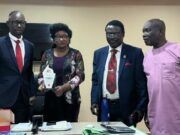




















































In a renewed effort to promote modern agriculture, boost food production, and encourage the participation of youths, women, and individuals with disabilities in agribusiness, the Ademola Ojo Farming and Feeding Initiative has empowered over 5,000 farmers with agricultural inputs and protective equipment at the second edition of the Ekiti Farmers Summit.
The summit, convened by South Africa-based philanthropist and founder of the initiative, Dr Ademola Tosin Ojo (DATO), was held on Thursday, October 22, 2026, at the Ekiti State Pavilion, Fajuyi Park, Ado-Ekiti, with farmers drawn from all 16 local government areas of the state in attendance.
The event also attracted government officials, traditional rulers, agricultural experts, academics, and other prominent stakeholders, who gathered to discuss strategies for improving agricultural productivity, embracing modern farming techniques, and strengthening food security.
Speaking at the summit, Dr. Ojo stressed the need for farmers in Ekiti State to embrace technological innovations and modern agricultural practices to remain competitive in an increasingly technology-driven world.
According to him, agriculture must evolve beyond traditional methods if farmers are to increase productivity, improve their earnings, and contribute meaningfully to the nation’s economic development.
He explained that his decision to establish the Farming and Feeding Initiative was informed by his understanding of the critical role farmers play in sustaining the population and ensuring food security.
“As a proud son of Ekiti State, I desire to see our state gain greater recognition globally for its agricultural potential and achievements. We must invest in our farmers, equip them with the right knowledge, and provide them with the necessary tools to succeed,” he said.
Dr. Ojo urged participants to put the knowledge acquired at the summit into practice, noting that the adoption of modern farming methods would help them improve yields, increase income, and build sustainable agricultural businesses.
As part of the empowerment programme, more than 5,000 farmers received farm inputs, including seeds, cutlasses, safety boots, and protective overalls, to support their farming activities and improve their working conditions.
In his remarks, the Country Director of the DATO Foundation, Dr. Kolawole Jayeoba, challenged farmers to harness Ekiti State’s agricultural potential and transform it into sustainable prosperity for Nigeria and Africa.
He urged farmers to look beyond subsistence farming and recognise agriculture as a viable industry capable of creating employment, generating wealth, and contributing significantly to national economic growth.
Dr. Jayeoba also commended Dr. Ojo for initiating the programme, describing him as a philanthropist committed to the development of his home state. He called on other Ekiti indigenes, both at home and abroad, to invest in the state and support initiatives that empower local communities.
Speaking on behalf of the traditional rulers at the event, the Owa Ajero of Ijero-Ekiti, His Royal Majesty, Oba Joshua Adebayo Adewole, praised the organisers for bringing agricultural experts and resource persons together to educate farmers on contemporary farming practices.
The monarch expressed confidence that participants had gained valuable knowledge from the summit and urged them to translate the lessons into practical results on their farms.
He also encouraged beneficiaries to make effective use of the distributed equipment and agricultural inputs, stressing that their proper utilisation would benefit both individual farmers and the state at large.
Earlier, the Publicity Secretary of the DATO Foundation, Mr. Dare Olusan, said the summit was designed to encourage Nigerians to improve local food production and reduce the country’s dependence on imported food.
He described the programme as a wake-up call for stakeholders to prioritise local agriculture, adding that Nigeria should strive to produce at least 80 percent of the food it consumes.
Olusan noted that empowering farmers with the right tools, improved techniques and relevant knowledge was essential to achieving food sufficiency and building a more resilient agricultural sector.
The summit featured presentations and contributions from distinguished agricultural experts and academics, including Professor Ayodele Ojo, Provost of the College of Postgraduate Studies at Afe Babalola University, Ado-Ekiti; Professor Olawumi Fapohunda, Dean of the Faculty of Agriculture at Ekiti State University, Ado-Ekiti; Dr. Falade Moses; and Barrister Elizabeth Omoseebi, among other speakers.

The second edition of the Ekiti Farmers Summit forms part of efforts by the Ademola Ojo Farming and Feeding Initiative and Afe Babalola University, Ado-Ekiti (ABUAD), to promote agricultural empowerment, encourage the adoption of modern farming practices, and strengthen food production in Ekiti State.
Through the initiative, the organisers hope to inspire greater participation in agribusiness, particularly among young people, women, and persons with disabilities, while positioning agriculture as a pathway to economic opportunity and sustainable development.
Packaged by Oludotun Ajibola