























































As concerns over another Ebola outbreak continue to grow among Nigerians following fresh cases recorded in the Democratic Republic of Congo and Uganda, public health physicians and epidemiologists have urged the Federal and state governments to intensify community sensitisation and strengthen surveillance systems to prevent the virus from spreading into Nigeria.
The epidemiologists warned that Ebola is highly contagious and fatal and could spread rapidly from person to person once it enters a community, stressing that early public awareness and reporting of suspected cases were important to contain an outbreak and prevent mass casualties if the disease entered the country.
The leading physicians stated that the country’s large borders, high volume of international travel, and persistent environmental sanitation gaps made it vulnerable to importation of the disease, noting that waiting for a confirmed outbreak before educating the public would be too late.
In interviews with PUNCH Healthwise, the experts further noted that poor hygiene, bush meat handling and consumption, and weak environmental sanitation were actions that could serve as entry points for the virus, warning that misinformation could trigger dangerous unproven remedies, as was seen during the 2014 outbreak.
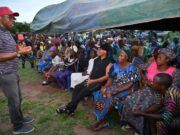
They also called on traditional rulers, religious leaders, the media and community heads to support awareness campaigns by educating residents on preventive measures and the importance of promptly reporting suspected symptoms to health authorities.
The World Health Organisation recently confirmed an active Ebola outbreak involving the Bundibugyo strain in the Democratic Republic of the Congo and Uganda, with more than 900 suspected cases and over 220 suspected deaths recorded.
The WHO warned that the outbreak was spreading in densely populated and conflict-affected areas, making surveillance, contact tracing and treatment more difficult.
Although Nigeria has not recorded any confirmed Ebola case, the Nigeria Centre for Disease Control and Prevention on Thursday placed Lagos, the Federal Capital Territory, and other states on high alert.
The NCDC, Federal Airports Authority of Nigeria and other agencies have intensified surveillance and monitoring of passengers at airports, particularly those from high-risk regions, to prevent the influx of the disease into the country.
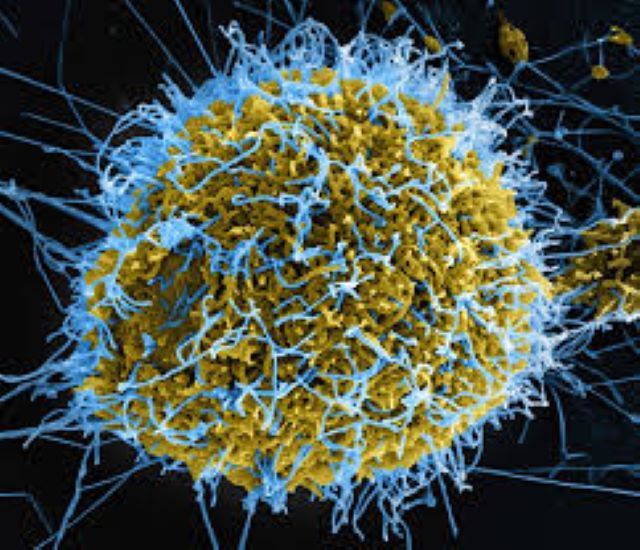
Ebola is a highly contagious viral disease transmitted through direct contact with the body fluids of infected persons or contaminated materials.
Early symptoms include high fever, vomiting, diarrhoea, muscle pain and weakness, while severe cases may result in unexplained bleeding.
An earlier PUNCH Healthwise report detailed advisories from seasoned physicians that Nigerians should avoid bush meat handling and consumption and contact with infected wild animals to reduce the risk of transmission.
Commenting on the matter, a Professor of Public Health at the University of Ilorin, Kwara State, Tanimola Akande, said Ebola remained a serious public health threat because of its high fatality rate and ability to spread quickly from person to person.
The Consultant Public Health Physician at the University of Ilorin Teaching Hospital stated that since the disease is first transmitted from infected animals to humans before spreading among humans, the Federal Government and states must begin to sensitise citizens on the preventive measures.
“Ebola is a zoonotic disease transmitted from animals (bush meat) like monkeys and chimpanzees. Subsequently, it is transmitted from person to person by infected persons. It is important to sensitise people on this to ensure preventive measures are put in place. It takes just one person to import the disease into the country. It can spread very fast. It is highly contagious and fatal. There is no vaccine for its prevention,” he said.
Akande noted that public awareness remained one of the most effective tools in controlling outbreaks because it improves knowledge of transmission and preventive measures.
“Public awareness is very effective as it increases knowledge of the modes of transmission and preventive measures that can be taken. Knowledge of its symptoms will also help to detect and report cases early to health facilities,” he stated.
Speaking on symptoms communities should watch out for, the don listed “high fever, muscle pain, vomiting, diarrhoea, cough, chest pain and difficulty in swallowing,” noting that the symptoms could later progress to “unexplained bleeding from gums, nose.”
The epidemiologist stressed that early reporting is important in the control of the infection, stating that it will allow early isolation of cases, thereby significantly reducing the spread and fatality.
Akande further warned that community practices and risky behaviours that could fuel transmission should be urgently addressed through sensitisation.
“Risky behaviours that can increase the spread of Ebola include hunting and consumption of bush meat, poor handling of bush meat during hunting, display for sale, and processing for consumption,” he explained.
The public health expert added that misinformation and panic could worsen outbreaks by promoting false remedies and fear-driven behaviours.
“Misinformation spreads incorrect information to people, and this may cause unnecessary panic among people. It may also lead to some unproven treatment practices like consumption of salt, as experienced during the last Ebola outbreak in Nigeria,” he said.
Reflecting on Nigeria’s 2014 Ebola outbreak, Akande said the country learned improved surveillance, which helped in the control of the disease and early reporting of the index case.
On Nigeria’s preparedness for another outbreak, he said, although surveillance systems had improved over the years, there was room for improvement.
Akande added, “The Nigeria Centre for Disease Control has commenced intensive sensitisation of the public and health workers. Surveillance at International airports has also been activated for early detection of imported cases through the screening of incoming passengers, particularly from countries currently having outbreaks of Ebola.”
The professor further stressed the need to actively involve traditional and religious leaders in sensitisation campaigns, noting that their influence as highly respected opinion leaders in Nigeria would play a significant role in raising awareness about Ebola virus transmission and encouraging the public to adopt preventive measures against the spread of the disease.
He advised members of the public to immediately report suspected cases to the nearest health facility while limiting physical contact with infected persons.
“Members of the public should report such cases to the nearest health facility immediately and reduce contact with such cases as much as possible. They are also to use personal protective materials where available,” he said.
Also speaking, a Professor of Public Health and Epidemiologist at the Lagos University Teaching Hospital, Idi-Araba, Adebayo Onajole, said that although Nigeria had built a stronger surveillance system since 2014, several structural vulnerabilities remained unaddressed, particularly at the country’s many points of entry.
He warned against a knee-jerk approach to disease preparedness, arguing that the current Ebola scare should accelerate long-delayed structural improvements.
Onajole emphasised the need for the Federal Government and states to begin community sensitisation, stating that every state is supposed to monitor all points of entry and increase surveillance to pick up cases early enough.
The epidemiologist explained that quarantine remained an important preventive strategy for suspected cases, stating that travellers from affected areas should be quarantined for at least 21 days.
“Susceptible people or individuals suspected of infection should be quarantined. That implies that we need to have active quarantine stations to carry out that,” he said.
On early symptoms, Onajole said communities needed to understand the critical role that travel history played in clinical suspicion.
“The early symptoms of Ebola are almost similar to all other symptoms for viral infection and the common flu. But the most important thing that one must consider first is the history of travel to an area where there have been cases of Ebola.
“Ebola is not a disease that can be diagnosed physically in the community. It has to be diagnosed in a facility by conducting appropriate tests. You can only have a high index of suspicion that if, after treating for the common cold symptoms like fever, the person is not recovering, they should be transported to a centre where they can do appropriate tests,” he said.
The public health physician also raised concern about Nigeria’s environmental sanitation crisis, warning that poor waste disposal and environmental sanitation could worsen outbreaks of infectious diseases.
“The environment is becoming so filthy. And now that the rains are coming, most of this waste will get into the drains and may also block the drains, which may also lead to flooding. And when you have flooding, it’s a recipient for waterborne diseases. We should not be worried only about Ebola. We should be worried about a lot of other diseases and try to prevent the occurrence of disease and protect the communities,” he warned.
He advised Nigerians to maintain personal hygiene and promptly alert health authorities when suspicious symptoms were noticed.
“We should try to ensure basic personal hygiene and basic sanitation. And that, in effect, will go a long way to prevent it,” he added.
He urged the media to intensify awareness campaigns on hygiene and sanitation.
“For the general population, the media needs to play a big role by increasing awareness of basic hygiene to reduce the spread,” he said.
Credit: healthwise.punchng.com