









































![L-R: Managing Director, BGL Securities Limited, Arnold A. Dublin-Green; Assistant Vice President, Financial Derivatives Limited, Dr. Ifeoma Nwokolo; CEO, Centre for the Promotion of Private Enterprise [CPPE], Muda Yusuf (speaker); Chairman of the Occasion, Chief Paul Usoro; Dean, Lagos Business School, Information Systems, Prof. Olayinka David-West; Managing Director/CEO, Financial Derivatives Company, Bismarck Rewane; Group Chief Branding & Communications Officer, Dangote Industries Limited, Anthony Chiejina at Dangote Petroleum Refinery & Petrochemicals IPO Roadshow tagged “Back to where it all began” in Port Harcourt. Rivers State on Monday, October 12, 2026…](https://pmparrotng.com/wp-content/uploads/2026/10/Dangote-imagee-180x135.jpg "As Dangote Refinery’s IPO Nears Close, Small Investors Take Center Stage")






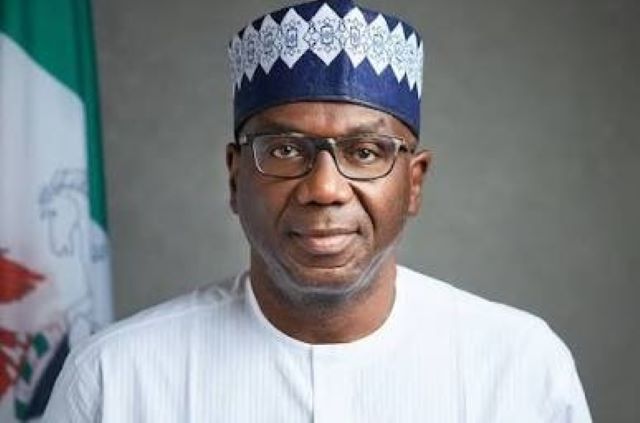
In the 3 May 2026 edition, this column carried an article titled “Gov AbdulRahman AbdulRazaq: A 2027 misadventure?” It was largely an admonition on the need to avoid vengeance as state policy and an argument that office-holders would do better to build concrete democratic scorecards and project them to their people rather than seeking to scapegoat predecessors.
My admonition followed the move by the Governor of Kwara State, AbdulRahman AbdulRazaq, to drag the former President of the Senate, Dr Bukola Saraki—who governed Kwara between 2003 and 2011—and his successor, Governor Abdulfatah Ahmed, into the criminal prosecutions arising from the infamous Offa robbery of 2018. Thirty-three people died in that incident, including several policemen and a pregnant woman; many others sustained life-threatening injuries. Six suspects were eventually brought forward for trial; one of them died before it could progress far. The remaining accused persons have since been sentenced to death by the High Court and then the Court of Appeal. Both courts affirmed the death penalty on the accused, based on the evidence proffered by the prosecution and on the advice of the Director of Public Prosecutions (DPP). The case is awaiting the last known leg of the judicial process, the apex court of the land.
As the drumbeats of the 2027 election began to sound across Kwara and states of the federation, the incumbent administration in that state suddenly remembered to reopen the Offa robbery case, announcing that it had uncovered “fresh evidence” with which to prosecute Saraki and Ahmed—men who had already been cleared of wrongdoing by the Director of Public Prosecutions, whose reports underpinned judgments from two tiers of the Nigerian courts. What called attention to the government’s intention was not just the personalities involved. It was the media blitz around the release of the information. Covers of some newspapers were splashed with reports detailing why the former Senate President and his successor must not be spared prosecution in the already prolonged case. My thinking was that half of the energy and the funds devoted to announcing the intent to embark on the prosecution could do something in the lives of the victims of the dastardly incident and even the traumatised victims of banditry in Kaiama and other places. The state was decidedly loud on the intent to prosecute Saraki and co, while it has been largely silent about ravaging bandits who had almost completely seized two of the three senatorial districts in the state.
I expressed concern at the time that the attempt to haul Saraki and Ahmed into the fray looked more like an effort to politicise a criminal matter in the light of unfolding political developments in the state. Discontent was already growing among the band of “O To Ge” (enough is enough) politicians who had combined to oust Saraki’s dynasty in 2019. From “O To Ge” the street talk had shifted to “Osu Wa” (we are tired) and then “O Tun Ya” (let us go again). The optics were not favourable for the incumbent, and the chosen response appeared to be a clampdown on dissenting voices, particularly Saraki and those associated with him.
One of the instruments was the much-publicised plan to prosecute the former Senate President over the Offa robbery. Another was the criminal defamation suit filed by the Governor against Saraki over remarks the latter was said to have made questioning the Governor’s educational qualifications—remarks made in April in response to the earlier attempt to draw Saraki into criminal proceedings.
As I predicted in May, the chickens appear to be coming home to roost in Kwara. First, the turbulence surrounding the APC primaries has placed the Governor and his camp under greater pressure than they anticipated. Information available to me suggests that the Governor’s side has been compelled to mobilise some state elders in an effort to reconcile key leaders of the G15 and other aggrieved figures who had sworn never to meet the Governor again, even as the Saraki-led Rainbow Coalition gathers momentum. If reports that certain APC governors are uneasy about Nyesom Wike’s Rainbow Coalition are accurate, one of those governors is AbdulRahman AbdulRazaq of Kwara. Ironically, his decision to target Saraki for political annihilation appears to have backfired: the former Senate President has regained traction among many Kwarans, who increasingly view the moves against him as persecution. Thus far, the Governor’s actions and the resulting political dynamics seem to confirm the misadventure anticipated in the May article.
Any residual doubt on that score is being dispelled by the judiciary. Last week the Court of Appeal removed the first of them when it dismissed the Governor’s criminal defamation claim against Saraki. In a judgment delivered by Justice Ridwan Abdullahi on behalf of a panel that included Justices Gabriel Omoniyi Kolawole and Abdu Dogo, the court rejected the contention that Saraki’s comments on the Governor’s academic qualifications were capable of inciting violence or causing a breakdown of law and order. The justices held that the prosecution’s witnesses had failed to establish any breach of the peace; what they demonstrated was merely their own dissatisfaction with the remarks.
The court stated: “There was nothing in the statement by Dr Saraki being complained of by Mr AbdulRahman AbdulRazaq, Governor of Kwara State, that was capable of inciting violence in any part of Kwara State or moving anybody to resort to the breakdown of law and order.”
It went on to observe that the Administration of Criminal Justice Act, the Kwara State Penal Code Law and the Cybercrimes (Prohibition, Prevention, Etc.) Act were not enacted to shield individuals from uncomfortable statements: “The Administration of Criminal Justice Act, the Penal Code Law of Kwara State, and the Cybercrime and Cyberbullying Law were not enacted for the purpose of protecting individuals against statements that they were uncomfortable with.” The court affirmed that “Nobody, no matter how powerful, can successfully muffle the voice of dissent, particularly when those in government fail in their responsibility to the people.”
Credit is due to the Governor for at least seeking redress through the courts rather than resorting to underhanded tactics like the deployment of political thugs—methods still employed by some of his colleagues. At the same time, the need for tolerance of opposing views must be emphasised. A defining feature of military culture is the command structure: obey first, complain later. In a civilian democracy, decisions are properly reached through debate and discussion. Yet the culture of “immediate effect” has sunk deep into the fabric of our polity, and many Government Houses since 1999 have been more militarised than they were under the khaki men. There are accounts of governors who open an Executive Council meeting and close it themselves, speaking from start to finish while Exco memos are simply “carried, carried”. In some cases, the Secretary to the Government has had to plead repeatedly with His Excellency not to stake out a position at the outset, lest every subsequent contribution be contorted to fit the Governor’s line. The result is poorly debated policy, which commissioners and other council members then struggle to defend in public, even though it had originated from their ministries.
Our counsel to Governor AbdulRazaq therefore remains the same. Despite the reverse suffered at the Court of Appeal, reports from Kwara portray a governor growing less tolerant of opposition. The record is lengthening. President Goodluck Jonathan once described himself as the most abused Nigerian president; more recently, President Bola Tinubu has said he no longer follows social media because of the volume of abuse. Citizens may, in frustration, call leaders names. Dragging them through the courts or seeking to silence them by prosecution should not become the norm.
If an opponent accuses one of never having attended secondary school or university, the cleanest rebuttal is to name one’s classmates and produce the certificate. It is not to deploy the power of incumbency to invoke criminal defamation, cyber-bullying or insinuations that someone’s safety cannot be guaranteed in the state.
Between Saraki and AbdulRazaq, the Court of Appeal’s judgment is only the opening round of several confrontations the political heavyweights of Kwara are likely to fight on the road to 2027. Already Saraki’s camp has attracted men of substance from the Governor’s side. At least two of the three Senate seats, a number of House of Representatives tickets, the governorship seat itself and various State Assembly constituencies are among the prizes still to be contested.
As I insisted in May, an incumbent governor’s strongest marketing tool remains his scorecard—his verifiable record of performance that resonates with the needs of the people. It should not consist of projects that merely catch the eye yet deliver little economic value. Some governors and their handlers proclaim themselves the best thing that ever happened to their states. The proper questions are more searching: which of their legacies will still stand after eight years? We are not speaking of the half-century and more that Chief Obafemi Awolowo’s achievements continue to count. What economic blueprint have they implemented that secures the state’s future? And many others like them.
For Governor AbdulRazaq, as for his colleagues in the present democratic dispensation, tolerance of opposing opinions remains an integral part of democracy. It is a culture that must be learned.
Popular Columnist, Dr Taiwo Adisa first published this in the Sunday Tribune, of October 18th, 2026