
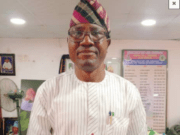







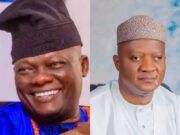
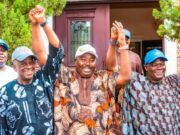
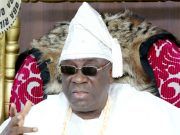
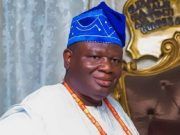
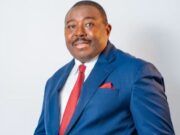

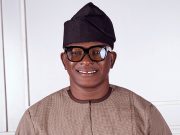


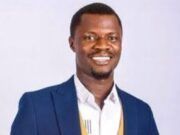
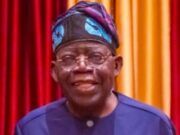




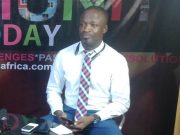


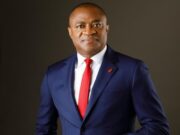







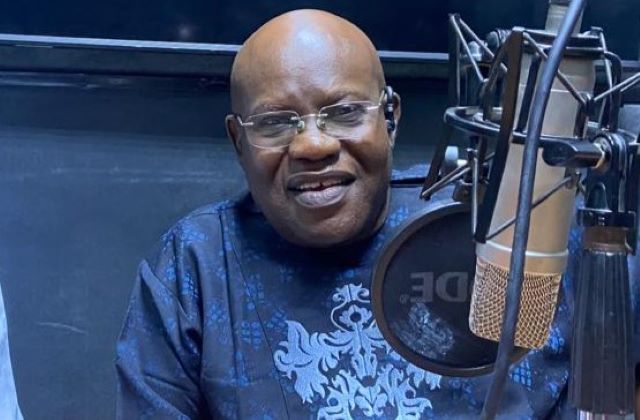
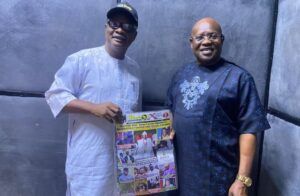
Prince Diran Odeyemi, the National Treasurer of the Peoples Democratic Party, PDP, recently featured on Parrot Xtra/Ayekooto, a radio programme anchored by Olayinka Agboola on Splash 105.5FM. In this interview, the journalist turned politician discussed the party’s position ahead of the 2027 general election, explained why Governor Seyi Makinde should not be readmitted into the PDP… He also addressed other key political issues. Excerpts:
You have worked as a journalist and columnist. What inspired your choice of journalism?
No. I deliberately chose journalism as a profession. When I was doing my A levels at the School of Basic Studies at Augustine College of Education in Ijebu, I was considering either law or mass communication. I thought that once I completed a law degree, I would be finished with studying. Later, I learnt that a lawyer must continue researching and reading, especially when preparing for a case, in order to present arguments confidently before a judge.
At that time, I did not want a profession that would require me to keep reading in that way after my formal education. I wanted to practise my profession and earn a living. I felt journalism would give me that opportunity. I am also a sociable person, and journalism allows me to interact with people and remain connected to society.
You were reportedly declared persona non grata in Osun State in 1994 after publishing reports about alleged corruption. What happened?
At the time, I was the chairman of the Correspondents’ Chapel in Osun State. After the military took over from the administration of the late Isiaka Adeleke, allegations of corruption against Adeleke were being investigated. However, I believed that the new administration also needed to be scrutinised. I saw what I considered clear evidence of irregularities in an approved government bill.
The bill included money for renovating the press centre at the governor’s office, yet the air conditioner in the centre was not working. That made me investigate other items in the bill. I came to believe that some of the allocations were being used to divert public funds. I began preparing a report. Unfortunately, a reporter informed the administrator that I was working on a story that could damage his administration’s reputation. The administrator sent his aide de camp to summon me to his office.
He accused me of writing a story against him and demanded to see it. I brought him the draft. After reading the opening lines, he told me to ensure that the story was not published and threw it back to me. I told him respectfully but firmly that he was not my employer and that, if the report was accurate, it would be published. Two commissioners present tried to apologise on my behalf, but I asked why they were apologising when the story had not even been published. I maintained that the report would come out.
The administrator eventually allowed me to leave, and I sent the story to my head office in Lagos, together with an explanation of the circumstances surrounding it. The story was published. Afterwards, the administrator contacted my editor, Alhaji Animashaun, and said he could not guarantee my safety in the state because some of his associates were angry. My editor therefore arranged for me to be transferred to Ibadan. That was how I became persona non grata in the state.
What was your most memorable experience as a reporter?
One memorable experience was seeing a senior police officer, an area commander, leading a protest against the annulment of the June 12 election. At first, I was surprised. Later, I understood that he might have been trying to manage the crowd and prevent people from destroying government property.
At some point, however, he appeared to lose control of the crowd, and some people went to a prison in an attempt to release inmates. The officer then used his authority to return the inmates to their cells. I wanted to report what I had witnessed, but, as a journalist, I knew I had to balance the story.
I contacted the commissioner of police to obtain the police’s side before publishing. I took care with the wording so that the report would be fair and would not unfairly damage the officer’s reputation. That experience eventually helped us build a friendship.
What major problem have you observed among Nigerian politicians?
Some politicians do not keep their promises. They may make promises when they need the support of the people, but fail to fulfil them afterwards. I do not consider myself a career politician in the strictest sense, I am a professional who became involved in politics. Some people treat politics as a business and expect to recover, or multiply, what they spent during an election. However, it would be unfair to say that every politician behaves this way. There are still good people in politics.
What are your responsibilities as the PDP’s national treasurer?
My experience in journalism has prepared me to work in different fields. I currently serve as chairman of the Governing Council of Osun State College of Technology. Journalism exposes practitioners to areas such as education, sports, business and agriculture.
As the national treasurer, my responsibility is to disburse funds received by the party in accordance with the instructions and procedures established by the party’s leadership. The financial secretary has responsibilities relating to raising funds, while the treasurer handles the funds entrusted to the office.
How do you view the dispute over the PDP’s recognised leadership and presidential candidate?
My position is that there is only one recognised PDP leadership, which I identify as the group led by Abdulrahman Mohammed and supported by Nyesom Wike. I believe the legal position should be read carefully. Those who disagree with that leadership should resolve the dispute through the appropriate party and legal processes.
Why is your party’s leadership supporting President Bola Ahmed Tinubu’s second term ambition?
Political alliances are not unusual. A political party or its leaders may decide to collaborate with another candidate or party if they believe it serves their interests. In politics, the situation can be complicated, what appears straightforward in ordinary arithmetic may work differently in political negotiations. The leadership has its reasons for its position. I cannot speak for every individual, but I can explain the considerations behind the position taken by the group I belong to.
Did your group support Governor Ademola Adeleke’s candidacy under the Accord Party?
The PDP did not have a governorship candidate in Osun State, so we collaborated with the Accord Party. My view is that many of the people who went with Adeleke to Accord were originally PDP members and that his move to Accord was a platform arrangement for the election.
Do you expect Governor Ademola Adeleke to return to the PDP?
I believe he will return. In my view, it is only a matter of time.
How do you assess the election result and allegations of vote buying?
I believe the will of the people prevailed. We expected the people to support Adeleke because of what we considered his performance, family background and personal relationship with the electorate. I also challenge journalists to verify claims about election spending independently. Our position was that no money was released by Adeleke, his family or anyone acting on their behalf on election day to buy votes. We were conscious of the scrutiny surrounding the party and wanted to avoid circumstances that could be interpreted as vote buying.
Should Governor Seyi Makinde be readmitted into the PDP if he wishes?
My position is different in his case. I was the chairman of the committee that supervised the party congresses in Oyo State. In my view, the party’s relationship with him is not the same as its relationship with Adeleke, and I do not believe he should simply be readmitted.
What is holding Nigeria back, and how can citizens help change the situation?
One major problem is that citizens do not always exercise or understand their rights. Politicians may offer money to influence votes. When citizens sell their votes, it becomes harder for them to hold elected officials accountable afterwards. Citizens should vote according to their conscience and choose people with a record of service and leadership they can assess. They should support candidates they believe will represent their interests. Voting is a right, and people should use it collectively to remove leaders who perform poorly. That is one way to promote peace and progress in Nigeria.
Can you affirm that President Tinubu’s administration represents good leadership, given your party’s support for his second term?
I am not an APC member, so I will not attempt to list the president’s achievements as an APC spokesperson. I can explain the political considerations behind our position. We know Atiku Abubakar from his years in the PDP, and we have our assessment of his candidacy.
We also have concerns about the electoral prospects of other candidates and about the regional considerations involved in the next presidential election. Our position is based on how we assess the candidates, their political relationships and the alliances we believe are possible. People may disagree with that assessment, but that is the reason behind the position I have described.