































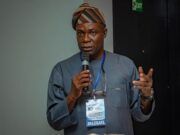



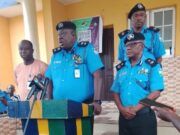




















Minister of Defence, General Christopher Musa (retd.), has explained why terrorism, banditry and other forms of insecurity in Nigeria appear difficult to address.
The former Chief of Defence Staff made the remarks on Friday while speaking at the June 12 edition of The Platform, organised by The Covenant Nation in Lagos, and aired on Channels TV.
He said the persistence of insecurity is partly due to the support criminal groups receive from individuals within local communities.
Speaking on the issue, Musa said, “Banditry, insurgency, terrorism. Why does it seem so difficult to deal with it? Perhaps, we have the people that are also encouraging and supporting these things from happening because the terrorists, the bandits, survive around the people.
“There are several stories of how people have aided them in giving them food, giving them water, and giving them information, and these are the things that keep them going, and we call this the oxygen.”
“Who is funding them? Who are those giving them information? Who are those giving them the logistics that keep them going? It is still the people,” he added.
The Minister’s remarks come amid ongoing security operations and public frustration over persistent attacks.
Nigeria has grappled with multiple layers of insecurity for over a decade. In the Northeast, Boko Haram and its splinter group ISWAP continue to carry out attacks despite significant military pressure.
In the Northwest, armed banditry has devastated communities across states such as Zamfara, Katsina, Sokoto and Kaduna.
Last month, terrorists invaded three schools in Oyo State and kidnapped over 40 teachers and students, demanding the release of their commanders, in what was described as a notable terrorist expansion into the South-West.
In his Democracy Day address on Friday, President Bola Tinubu declared that those financing and sponsoring terrorism, banditry and kidnapping will “pay dearly,” issuing a strong ultimatum to criminals and their backers.
The Defence Minister noted that in the past, warfare was clearly defined between states, but current threats are embedded within communities.
“Conventional warfare in the past used to be state to state, country to country, so you know who your enemy is. The most dangerous aspects of battle or campaign is when the enemy is within,” he said.
Musa stressed that security agencies cannot succeed without public cooperation.
“The armed forces, the security agencies, no matter what they do, if the people are not ready to support, it makes it extremely very difficult,” he said.
He urged Nigerians to support security efforts and report suspicious activities, adding that national unity remains essential in defeating insecurity.
“We must continue to work in unity because it is these gaps that exist between us that this individual sees and try to expand to separate us and divide us and we must not let that happen,” he said.
Speaking on Democracy Day, Musa said June 12 symbolises sacrifice and the collective struggle for democratic governance in Nigeria.
He said democracy requires strong institutions, responsible leadership, active citizenship and security to thrive.
“No democracy can flourish where fear dominates daily life. No democracy can deliver prosperity where violence disrupts communities,” he said.
Musa added that modern security challenges extend beyond military force, requiring intelligence, technology, institutional coordination and citizen participation.
He highlighted the role of misinformation and disinformation in worsening insecurity and weakening public trust, noting that social media has become a tool for spreading false narratives.
He also described insecurity in the Sahel region, including instability in countries such as Mali, Niger and Burkina Faso, as a factor affecting Nigeria’s security environment due to cross-border movement of arms and other threats.
According to him, lasting security depends on cooperation between citizens and institutions.
“The security forces are not the enemies of the state. In fact, what I always say is that we are all victims,” he said.
Musa called for greater national unity, warning against ethnic, religious and political divisions that could be exploited by criminal elements.
“We are all Nigerians, God doesn’t make mistakes, he has a purpose for putting us together,” he said.
He urged citizens to remain vigilant and question narratives that promote division, particularly on social media.
“To our young people, I say this, the generation that fought for June 12th secured democracy. The responsibility of our generation was to secure it, strengthen it, and pass it on stronger than we received it,” he said.
The minister added that patriotism requires collective responsibility and action.
“Patriotism means doing what is right even when no one is watching,” he said.
He also quoted President Bola Tinubu, saying, “Nigeria will not surrender to fear. We will not allow terrorists, bandits, kidnappers, or violent extremists to define who we are as a people.”
Musa concluded that Nigeria’s progress depends on security, unity and shared national purpose.
Credit: punchng.com