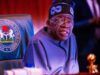






















President Bola Tinubu has reaffirmed that Nigeria’s economic reforms are bold, deliberate and essential for the nation’s future.
He said the reforms are also for Africa’s economic growth, insisting that difficult decisions taken by his administration were necessary to stabilise the economy and avert fiscal collapse.
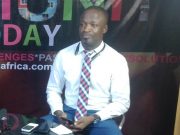
President Tinubu stated this during a high-level conversation titled “Holding the Line: Nigeria’s Reform Bet in a Fractured World” at the 2026 Africa CEO Forum in Kigali, Rwanda.
The session, moderated by Managing Editor of The Africa Report, Nicholas Norbrook, chronicle Nigeria’s ongoing reform agenda, taxation, governance, and economic sustainability amid global economic uncertainties.
He noted that tax revenue remains critical to infrastructure development, healthcare delivery, research, and the protection of vulnerable groups.
The President also emphasised the central role of taxation in national development, saying sustainable economic growth cannot be achieved unless citizens and businesses fulfill their tax obligations.
President Tinubu reaffirmed his administration’s commitment to comprehensive economic reforms, describing the measures as painful but necessary for Nigeria’s long-term stability and economic advancement.
“The reform is a very difficult decision, but necessary for the country. We cannot continue to spend our future generations’ endowment where before they were born. It is very necessary to reset, recalibrate, and reform the economy.
“It is a fake life to think you can, in a global economy, continue the subsidy that is wasteful. It’s an encouragement to falsification of papers, smuggling, and that is a very critical situation for the country. When you look at the economic problem of the country, you see that you are almost going bankrupt.
“States, of the 36 states, 27 of them were unable to pay the salaries of the workers. Where is the money? You are oil producing, you are earning, you are given fuel. You have no refinery that is functional.
“It is not possible to continue that trend. It is difficult, it is painful, but it is just like the human reproduction process. A woman carries a pregnancy, enjoys the pain of labor, and has a very big smile when she sees a live child.”
The President said the subsidy system encouraged corruption, smuggling, falsification of documents and economic distortions, while many states struggled to pay workers’ salaries despite Nigeria’s oil wealth.
“It was difficult and painful, but necessary to reset and reform the economy,” President Tinubu stated, adding that genuine leadership requires the courage to take hard decisions at critical moments regardless of political resistance.
“We had the opportunity to talk a little bit about it yesterday. But the problem about tax is that people become very demanding. Now my ancestors taxed the Americans and they ended up throwing all our tea into the sea, which is not how you make a cup of tea.
“But the point is, the Americans demanded more. And if you start taxing Nigerians, they will start demanding more. Nobody wants to pay taxes ordinarily,” he analysed.
He further said that many citizens demand improved roads, hospitals and social services without recognising the importance of taxation in funding national development priorities.
“Nobody. Taxation is not friendly to the wealthy, to the middle class, and to the poor. Every human being expects development.
“But the question they don’t answer is, how do you pay for it? You want a very good highway, but you don’t want it to go through your land. How do you develop? You want a good hospital, a well-equipped hospital, and you don’t want to pay taxes.
How do you care for the vulnerable? And how do you protect the future of the children? How do you even research and develop? Pharmaceutical industry, we remember COVID-19, we remember what happened to the world at large,” he expanded.
Reflecting on the backlash that followed the reforms, the President disclosed that he deliberately ignored criticism and media commentary in the early stages of implementation in order to remain focused on achieving long-term national objectives.
“The philosophy I came with in governance is believing that the hallmark of a transformative leader is the ability to take decisions, do what you do, at the time it has to be done on behalf of the people. If you miss that curve, you are not on the path to success. And that’s what I believe.
First I took hard decisions, regardless of pain. Stopped reading newspapers and commentary because I knew I was going to get a big pushback. And I did,” president Tinubu reiterated.
President Tinubu maintained that the reforms are already producing positive outcomes, expressing confidence that Nigeria’s economy is becoming increasingly stable and predictable.
He declared that when the economy is stable, Nigeria will be stable and predictable.