
































































The Oyo State House of Assembly has disclosed that the proposed Single-Use Plastics (Prohibition) Bill, 2026, is a step toward achieving a cleaner, healthier, and more sustainable environment for future generations.
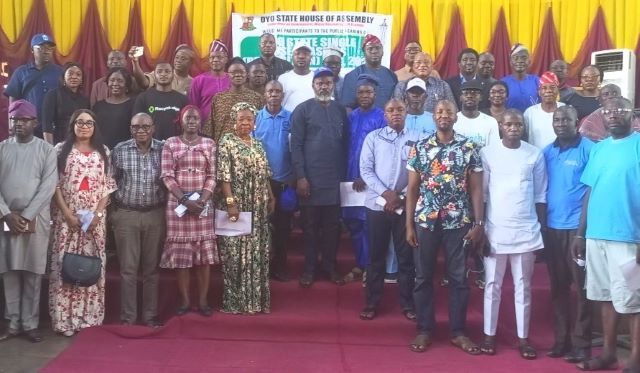
The Chairman of the House Committee on Environment, Water Resources, and Ecology, Hon. Olorunpoto Cephas Rahaman, disclosed this while engaging relevant stakeholders during a public hearing on the bill.
The event was held at the House of Chiefs, Parliament Building, Secretariat, Ibadan, on Wednesday.
Giving an analysis of the objective of the bill, Hon. Rahaman said that the aim is to develop a practical and balanced framework that will encourage responsible production and consumption practices, as well as strengthen waste management efforts and promote sustainable alternatives to ensure a cleaner and healthier Oyo State.
”We are confronted with blocked drainage channels, indiscriminate waste disposal, flooding, and environmental degradation. As policymakers, we have a responsibility not only to respond to present realities but also to anticipate future challenges and proffer solutions.
It is therefore important for me to state clearly that this bill is not anti-business. It is not intended to shut down industries, eliminate jobs, or discourage investment. Rather, it seeks to provide a framework through which government, industry, environmental experts, and the public can collectively address the environmental and public health challenges associated with single-use plastics while supporting innovation, sustainability and economic growth,” he said.
Hon. Olorunpoto appreciated the role played by industries, manufacturers, distributors, traders and other operators within the value chain in economic growth, job creation and government revenue. He, however, maintained that the State House of Assembly is responsible for making laws that are practical, balanced, enforceable, and beneficial to the people of Oyo State.
Noting that the bill acknowledges the usefulness of plastic to households, healthcare, agriculture, and food preservation, the lawmaker established that these are difficult waste streams to manage because the items often block drainage channels, worsen flooding, and accumulate in waterways, farmlands, and public spaces, lingering for many years after just minutes of use.
Hon. Olorunpoto therefore called for frank, constructive and solution-oriented submissions from stakeholders, assuring that every recommendation received would be carefully considered.
Contributing, the Oyo State Commissioner for Environment, Hon. Ademola Aderinto, urged stakeholders to look beyond immediate business gain and consider the long-term implications of plastic pollution on future generations.
He stressed that plastics, particularly single-use plastics, are major contributors to land degradation and environmental pollution.
Representatives from the Oyo State Rule of Law Enforcement Authority and the Ministry of Justice threw their weight behind efforts to curb single-use plastics, but urged the state legislative arm of government to review the bill to stay within constitutional limits and ensure smooth enforcement.
In their separate memoranda, representatives of the Manufacturers Association of Nigeria and the Association of Table Water Producers of Nigeria (ATWAP) called for a cautious, evidence-based approach to the bill, warning that an immediate prohibition could trigger massive job losses and economic disruption.
While supporting the goal of a cleaner environment, they noted that affordable, practical substitutes for essential products like sachet water are not yet widely available, urging government to prioritize scaling up recycling initiatives and invest in efficient waste collection.
Packaged by Adekunle Adegboyega