

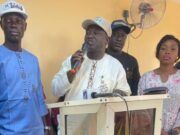
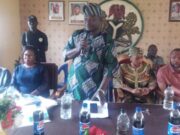







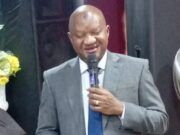



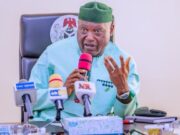
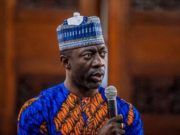
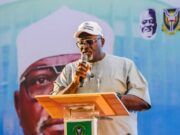




























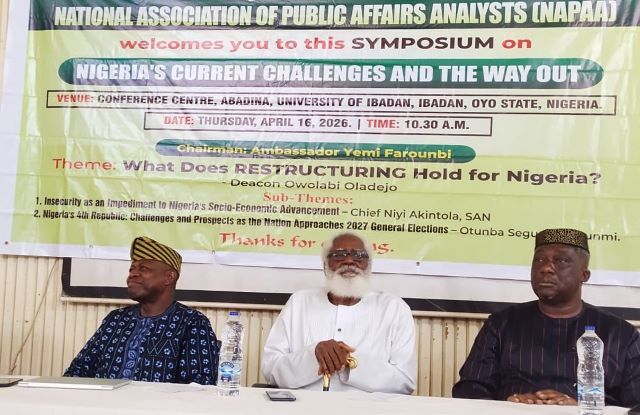
Former Nigerian Ambassador, Dr. Yemi Farounbi, a Senior Advocate of Nigeria, Chief Niyi Akintola; Otunba Segun Showunmi and other stakeholders, on Thursday, called for urgent restructuring of Nigeria’s governance architecture as a strategic response to worsening insecurity and growing strains on the country’s democratic system.
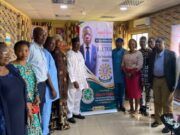
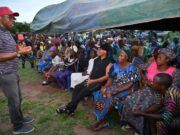
They made the call at a symposium organised by the National Association of Public Affairs Analysts (NAPAA), held at the Conference Centre, University of Ibadan, with the theme ‘Nigeria’s Current Challenges and the Way Out’.
The event brought together scholars, legal practitioners, political actors and public affairs analysts who examined the intersection of insecurity, governance failures and Nigeria’s democratic trajectory ahead of the 2027 general elections.
They argued that decentralising power and strengthening sub-national governance structures would enable more effective resource management, improved security coordination and better policy implementation.
The Chairman of the occasion, Ambassador Farounbi, described security as the most critical issue confronting Nigeria, insisting that it must be urgently addressed through fundamental restructuring of the state.
Farounbi, who described Nigeria as “a nation of paradox,” said the country’s abundant human and natural resources have not translated into meaningful development due to structural deficiencies, weak institutions and poor implementation of policies.
He argued that Nigeria’s challenges are not rooted in lack of knowledge or ideas, but in a persistent absence of discipline, accountability and effective institutional structures.
He said, “Nigeria’s problem is not absence of solutions, but absence of structure and responsibility to implement those solutions.”
The former diplomat stressed that insecurity remains the clearest indicator of systemic failure, warning that no nation can make progress when its security architecture is weak and its institutions are fragmented.
He further called for collective national responsibility, stating that “the failure of Nigeria is the failure of its people,” and warning that no society can rise above the productivity, discipline and civic responsibility of its citizens.
Farounbi urged political leaders and citizens alike to embrace reforms that strengthen governance structures, improve accountability and restore public trust in state institutions.
The Convener of The Alternative Movement, Otunba Segun Showunmi, in his own contributions, examined Nigeria’s democratic trajectory, noting that while the Fourth Republic has recorded uninterrupted electoral cycles since 1999, its democratic depth remains fragile.
Showunmi who was represented by Dr. Lateef Aremu while presenting a paper titled, “Nigeria’s Fourth Republic at a Crossroads: Challenges and Prospects Ahead of the 2027 General Election,” argued that Nigeria’s democracy is trapped between electoral continuity and genuine democratic consolidation.
He said although elections have been consistently conducted, issues such as elite dominance, weak internal party democracy, economic hardship and declining voter confidence continue to undermine democratic legitimacy.
Showunmi noted that the build-up to the 2027 general elections represents a critical inflection point for Nigeria’s political system, warning that failure to address institutional weaknesses could deepen public distrust in democratic governance.
He called for urgent reforms in electoral administration, stronger political party structures and greater responsiveness from political elites to citizens’ needs.
Also speaking at the event, Chief Niyi Akintola, SAN, underscored the centrality of insecurity to Nigeria’s socio-economic challenges, describing it as a major impediment to national development.
He noted that insecurity not only threatens lives and property but also undermines investment, disrupts agricultural production, weakens education systems and drains public resources.
Akintola warned that no meaningful economic progress can be achieved in an environment where citizens live in fear and where institutions are unable to guarantee safety and stability.
According to him, Nigeria’s development prospects remain severely constrained by persistent insecurity, rising poverty and institutional weaknesses that require urgent policy attention.
He called for stronger legal and institutional frameworks to enhance security operations, improve justice delivery and ensure accountability within the system.
He also advocated for increased investment in youth empowerment and economic opportunities as a long-term strategy for addressing the root causes of insecurity.
In his remarks, NAPAA Secretary, Comrade Jare Ajayi highlighted the importance of civic engagement and informed discourse in addressing societal challenges, describing NAPAA as an initiative aimed at sharing ideas and enlightening both citizens and authorities on prevailing political and social issues.
According to him, membership of the group requires individuals who possess strong analytical skills and the ability to proffer practical solutions to societal problems.
Also speaking, the Chairman of NAPAA, Prince Seun Adelore underscored the potential benefits of restructuring, particularly in strengthening Nigeria’s economy, healthcare system, and security architecture. He argued that decentralizing power would enable regions to harness their resources more effectively and drive sustainable development.
In his contribution, Deacon Owolabi Oladejo explained that restructuring involves creating systems that allow regions to develop based on their unique strengths and resources, noting that the current centralised system is no longer viable and called for a transition to a more regionally driven model of governance.
Oladejo projected significant economic growth for the Western region, estimating that it could expand from a current valuation of $170 billion to $300 billion within five years, and potentially reach $1 trillion in a decade.
He cited the region’s abundant resources, including oil and bitumen deposits in Ondo State, as well as favorable land and climatic conditions.
He also advocated the establishment of regional defense forces in addition to state policing, stressing the need for improved security structures.
However, a human rights activist, Comrade Moshood Erubami expressed skepticism about the repeated discussions on restructuring without tangible outcomes, lamenting that while the concept has been widely discussed in the media, little progress has been made in its actual implementation.
According to him, the major obstacle remains the lack of collective will among Nigerians to work together toward achieving meaningful change.
Packaged by Lanre Olabisi