





















































![L-R: Managing Director, BGL Securities Limited, Arnold A. Dublin-Green; Assistant Vice President, Financial Derivatives Limited, Dr. Ifeoma Nwokolo; CEO, Centre for the Promotion of Private Enterprise [CPPE], Muda Yusuf (speaker); Chairman of the Occasion, Chief Paul Usoro; Dean, Lagos Business School, Information Systems, Prof. Olayinka David-West; Managing Director/CEO, Financial Derivatives Company, Bismarck Rewane; Group Chief Branding & Communications Officer, Dangote Industries Limited, Anthony Chiejina at Dangote Petroleum Refinery & Petrochemicals IPO Roadshow tagged “Back to where it all began” in Port Harcourt. Rivers State on Monday, October 12, 2026…](https://pmparrotng.com/wp-content/uploads/2026/10/Dangote-imagee-180x135.jpg "As Dangote Refinery’s IPO Nears Close, Small Investors Take Center Stage")






In Nigeria, the stool and its occupier are two different entities. One is an institution that predates parties and politicians. The other is a man who will, one day, join his ancestors. Confusing the two is why we keep weakening our traditional institutions.
Traditional rulers are fathers to all. Once an oba, emir, or igwe wears a party cap, attends rallies, or endorses a candidate, he ceases to be a father to all. He becomes a chieftain of a faction. The palace, which should settle disputes, becomes part of the dispute.
During elections, communities need neutral elders who can call warring parties to order. A partisan monarch has no moral authority to do that. His words will be dismissed as campaign talk. The result is deeper division, and sometimes violence that could have been prevented.
The 1999 Constitution as amended assigns no partisan role to traditional rulers. Their strength is cultural, moral, and advisory. History backs this up. The stools that endured colonialism and military rule did so by standing above daily politics, not by playing it.
Partisanship also exposes the throne to danger. Governments change. A king who campaigned for the loser may face victimisation, dethronement, or the balkanisation of his domain. Neutrality protects the institution.
This is not a call for silence. Traditional rulers should demand development, preach peace, and urge citizens to vote. But they must not tell them who to vote for. Mobilise subjects to participate, not to align.
The stool is permanent. Parties are temporary. If we want our culture, unity, and peace to outlive this election cycle, then our royal fathers must remain above the fray. The throne belongs to the people — all the people.
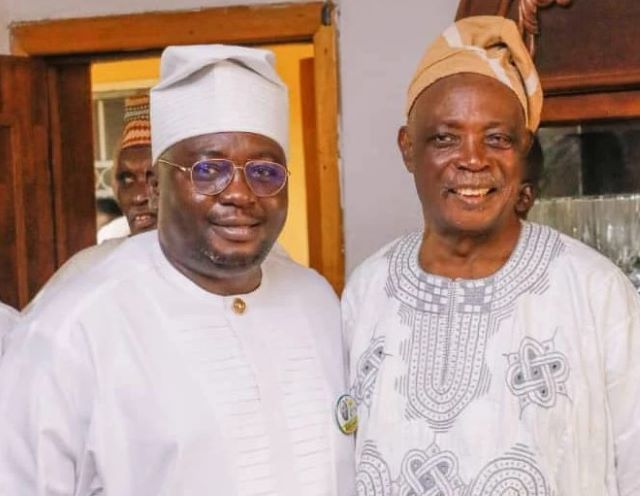
The alleged outburst by Chief Adebayo Adelabu, former Minister of Power, against the Olubadan of Ibadanland, His Imperial Highness, Oba Rasheed Adewolu Ladoja should be seen as a lesson, not a personal attack. It shows what happens when the sacred line between stool and ballot is crossed.
Traditional rulers are fathers to all. The moment the palace is perceived as partisan, politicians stop seeing a king and start seeing a rival. Adelabu’s confrontation is proof.
If the Olubadan must retain his authority to unite Ibadan, he cannot afford the toga of partisanship. The stool is bigger than any party and any election cycle. Let us not sacrifice a permanent institution on the altar of temporary politics.
To those attempting to fuel the misunderstanding: Ibadan is not a battleground for political scores. The Olubadan stool is sacred, and Chief Adelabu, like several other aspirants, is a son of the soil. Stop heating the polity.
Sent in by Adekunle Adegboyega